It was a very daunting task, to find stories that could resonate with people and at the same time capture the innocence of a childs immagination. I always opt for an old school approach and start to delve into the mindset of a child of how ambitious their imaginatios are and they way they think of stories. For example, they are absurd and have this cinematic feel to them as well.
During the process of the previous two projects, I realised what my style of storytelling is i.e., how effective it is and what kind of audiences it caters to. Rugrats is the perfect example, as the show tackled with showing babies and their immaginations running all over the place. A brain child Kalsky Csupo. The show was ahead of its time. I came accross an article that explains why Rugrats was an effective show.
Baby Curiosities
“Good morning, Champ!” a dad’s voice says while viewers look at a black background. As little Tommy Pickles open his eyes, his parents Stu and Didi exclaim, “Happy birthday, Tommy!” and shower him with confetti while blowing noisemakers. “You’re a whole year old today,” Didi coos. And with that, the Rugrats pilot begins. We go through a typical morning with Tommy, Daddy, Mommy, and Grandpa while they prepare for a birthday party. This includes getting Tommy into his party outfit and feeding him via the classic “airplane” trick while Tommy watches a dog food commercial on the nearby TV.
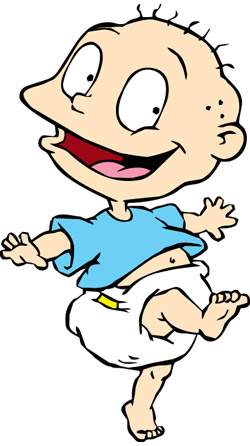
In itself, this sounds cute but potentially boring. Tommy isn’t talking or moving much yet, and it would be unrealistic for him to do so, especially in front of the adults. But the pilot does a great job of showing us Tommy’s thoughts and intentions without much dialogue or action. In the commercial Tommy watches, the dog eating the advertised food immediately runs faster, jumps higher, and has more fun. Plus, his food looks pretty good. Tommy spots the exact same brand of food in his dog Spike’s bowl. A light glimmers off the bowl, and in Tommy’s eyes. Viewers know he’s formed his first baby curiosity: What is dog food? And, is it as fun as it looks?
Later, we find Tommy in his playpen with pals Chuckie, Phil, and Lil, and his cousin Angelica, who at three is 1-2 years older than the rest of the gang. He tells them he wants to get some dog food, and that maybe if they all eat some, they’ll turn into dogs. The kids jump on board, planning how they’ll do dog things like playing fetch and scratching fleas. Angelica loves the idea of biting the mailman. Even Chuckie, who we’ll find out later is hesitant about adventures, is convinced becoming a dog would be fun. The only problem is, these are babies and toddlers. With the exception of Angelica, they aren’t expected to leave the playpen without supervision, and there’s no way Angelica would ever admit to something as babyish as a desire to eat dog food. If anything, her emerging superior attitude indicates she’s only going along with “the babies” because of what’s in it for her. But Tommy is determined–“a baby’s gotta do what a baby’s gotta do,” after all.
Tommy heads out alone on Operation Dog Food, and manages to get close enough to Spike’s bowl to grab some a few times. However, an adult is always there to stop him and return him to the playpen so he can enjoy his party. The hilarious irony is, Tommy and friends are not at all interested in the activities the adults have planned. The harder the adults try to make Tommy’s birthday perfect, the worse the situation gets. The Red Riding Hood puppet show has a stage and puppets, but no puppeteers, so Stu and Tommy’s Uncle Drew agree to perform, but this devolves into them bickering and dredging up childhood history. Didi made a carrot cake from a health food recipe, which no one wants to eat. And Stu can’t get his gift for Tommy, a helicopter-like toy with about a billion buttons and gadgets, to work. “Tommy’s not old enough for that gizmo! Heck, I’m not even old enough for it,” Grandpa scoffs. Indeed, with the adults insisting on perfect party plans and fancy toys, viewers can’t help rooting for Tommy to get the dog food. At least then he’ll reach a goal and enjoy himself on his terms.
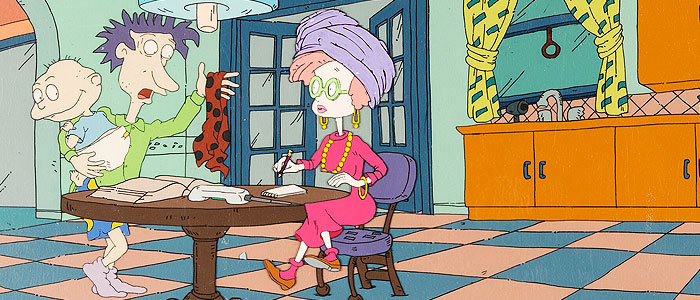
Operation Dog Food goes a little awry, and then, as TV Tropes would put it, horribly right. Basically, Tommy gets the strap of his overalls caught in the helicopter toy, ends up flying all over the house, and crashes into the carrot cake before skidding to a halt directly in front of Spike’s bowl. The adults are oblivious; Grandpa and Stu are arguing, maternal grandparents Boris and Minka are complaining about the cake, and Didi is holding an impromptu therapy session with Stu and Drew, complete with puppets. Tommy and the gang take the perfect opening to chow down. They spit out the dog food in seconds, and lament they did not become canines. This disappointment in the clash of imagination and expectation vs. reality would become a common theme throughout Rugrats‘ run.
What makes the pilot and ensuing episodes great though, is that our baby protagonists don’t act like babies when disappointed. They don’t simply cry and wait for grown-ups to solve their problems. They actually enjoy the chaos birthed from the “ruined” birthday party, and realize it’s a lot more fun to be human. At the end of the episode, they become stars of some candid photos that delight the adults and shift the focus back to the positive–no matter what, a first birthday is a milestone and family is precious. Additionally, with the end of “Tommy’s First Birthday,” Rugrats sets up a winning formula. Each set of episodes will focus on an adventure that revolves around some mundane object or concept the babies need to integrate into their understanding of how life works. The integration may well be tough, and the truth of what they imagined will probably be boring or disappointing. But as long as our protagonists stick together, the journey is sure to stay fun.
Simple concepts like these kept the characters grand and the stories fresh and hence they were etched into the mindsets of every child or adult who grew up watching this show. The characters were drawn by Darrel Bowen, while Gábor Csupó acted as lead animator.
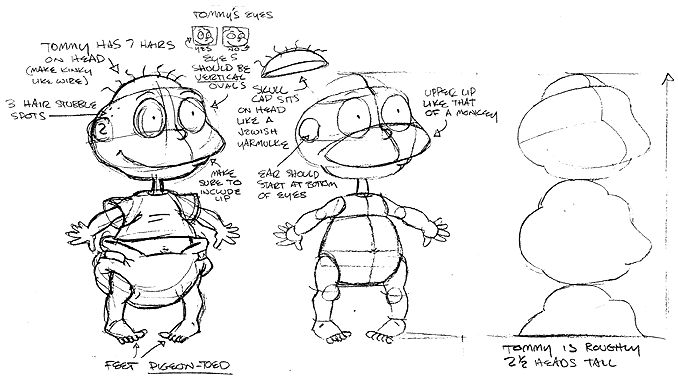
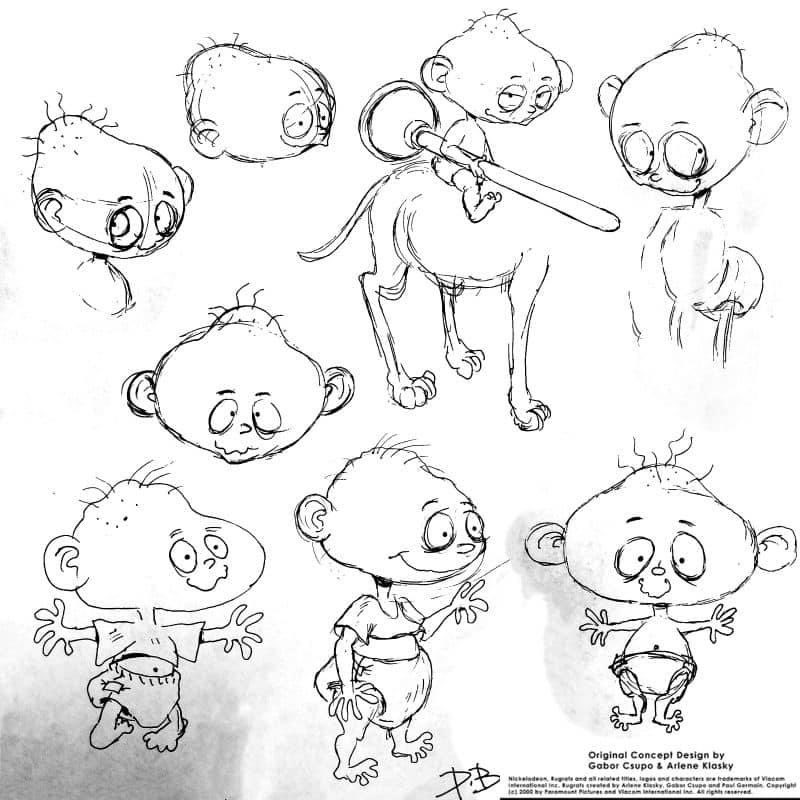
Another thing intersting about Rugrats was its art style. All the characters looked like crayon drawings and as if a child had drawn them. I do not know whether it was intentional or unintenional but effective however. I believe that this art style captures the innocence of a child and was drawn through point-of-view of a child and this is the approach that usually should be taken when tackling these type of stories. The animation itself could create and empathy factor with its audiennce.
References
Gibbs, L. (2021). Rugrats: 10 Best Life Lessons Fans Learned From The Show. [online] ScreenRant. Available at: https://screenrant.com/rugrats-wholesome-things-viewers-learned/ [Accessed 24 Jan. 2023].
the-artifice.com. (n.d.). Nickelodeon, Disney, and the Story of Growing Up. [online] Available at: https://the-artifice.com/nickelodeon/ [Accessed 24 Jan. 2023].
 Arsalan Awais