Why Cartoon Villains have a distinct design and trait? E.g., foreign accent.
Have you ever wondered why famous characters like Jaffar, Joker, Cruella and Dick Dastardly have sharp eyebrows and pointy chins? Or why they are drawn in a similar manner? There a reason behind all of this. According to a study by Warwick University, the downward pointing triangle gives a more mischievous and threatening feel in a similar manner to an angry face. Certain geometric shapes evoke negative emotions alas making them synonymous with evil.
Co-author of the study, Dr. Elisabeth Blagrove explains in a press-release:
If we look at cartoon characters, the classic baddie will often be drawn with the evil eyebrows that come to a downward point in the middle. This could go some way to explain why we associate the downward pointing triangle with negative faces. These shapes correspond with our own facial features and we are unconsciously making that link.
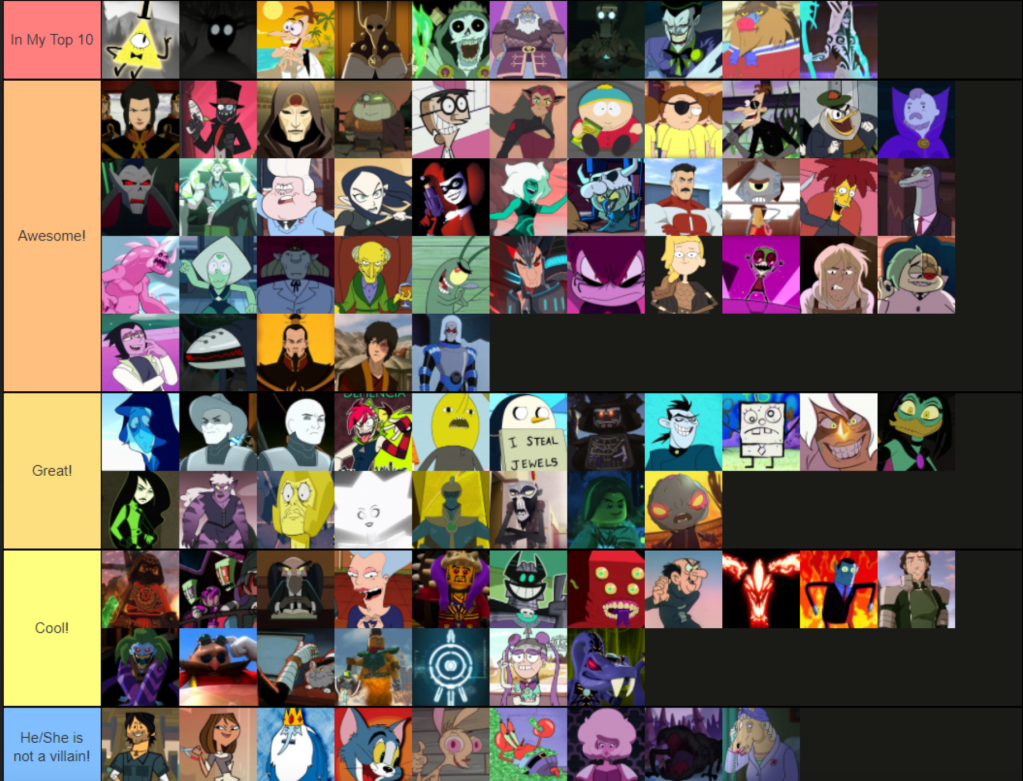
Have you ever noticed the accents and voices used by cartoon villains?
According to an article published by The Atlantic, Gidney (an associate professor in child study and human development at Tufts University who specializes in socio-linguistics) discovered something unexpected in the film The Lion King. According to him the characters don’t share many traits: although Scar is cynical and power-hungry, Mufasa is brave and loyal. Upon an in-depth analysis a striking difference in their accents can be noticed, with Mufasa having an American one and Scar, the lion of the dark side, having a British one.
It’s difficult to picture the final “r” in Scar’s accusation sounding quite as horrific in another tone when it floats up into a sky exploding with lightning in a pivotal sequence where Scar accuses Simba of being the “murderer!” accountable for Mufasa’s death.
Correlations between Language and Character Traits
If you pay attention, you’ll find that throughout many children’s media, the evil characters are given accents from foreign, non-U.S. native English speakers, almost as a defining characteristic. All of the “bad” characters were voiced with foreign accents and unusual dialects. It may not come as a surprise that language is used in children’s programming to distinguish between characters and indicate dramatic action.
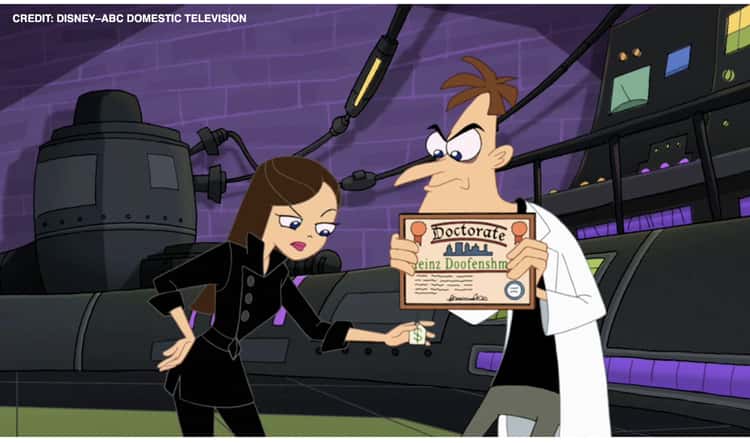
Dr. Heinz Doofenshmirtz, the villain in Phineas and Ferb, who talks with a German-like dialect and is from the fictitious European nation Drusselstein, serves as a modern day example.
This association between foreign accents and “evil” characters on television, which is a major source of cultural message for youngsters, may have unsettling ramifications for how young children are taught to appreciate diversity.
Gidney claims that it’s a frequent stereotype that the evillest foreign accent is British English. For instance, the survey discovered that British is the foreign accent most frequently utilised for villains, from Scar to Jafar in Aladdin.
For villain voices, Slavic and German accents are also typical. In addition to working-class Eastern European dialects and regional American dialects like “Italian-American gangster” (like when Claude in Captain Planet says “tuh-raining” instead of “training”), henchmen and assistants to villains frequently spoke in dialects associated with low socioeconomic status.
References
Adelson, B. L., 2018. BrombergTranslation. [Online]
Available at: https://www.brombergtranslations.com/cartoon-villains-diversity-and-implicit-bias/
Anon., 2013. Sociology Lens. [Online]
Available at: https://www.sociologylens.net/topics/communication-and-media/the-color-of-evil-how-american-media-racializes-villains/11636
Fattal, I., 2018. The Atlantic. [Online]
Available at: https://www.theatlantic.com/education/archive/2018/01/why-do-cartoon-villains-speak-in-foreign-accents/549527/
Spector, D., 2012. Insider. [Online]
Available at: https://www.businessinsider.com/researchers-explain-why-all-cartoon-villains-look-the-same-2012-5?r=US&IR=T
 Arsalan Awais