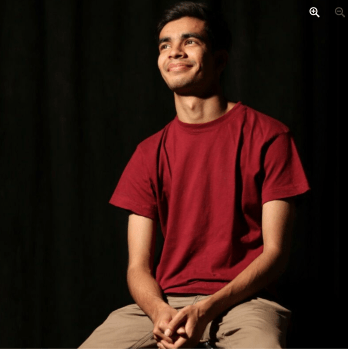
Upon reading the poem a couple of times I go the sense that there is more than meets the eyes with this one. It seems as though the mother is dead and is written in her remembrance, but after an in-depth discussion with the poet I realized that it was more about how as a child our mothers smother and pamper us. When we get older, the things we did as children have become uncomfortable, but there is a loss in this experience, as well as a nostalgia and comfort. The striking match comes from the moment when the poet’s mother and him used to pray in a small temple, in their home, by lighting a diyo (which I is a plot device and will be basis of the whole story). I think growing up is like being in prayer, so much of it is in secret and by yourself. But overall, the poem is about trying to figure out what it means to be a son growing up and getting further away from my mother, yet still hoping for an closeness that is lost when growing up.
When researching other poetry animations I came across a familiar one that we were taught in our o-levels called “o des se aane wale bata” by Pakistani Poet “Akhtar Shirani”. There is a striking similarity between the two in the sense that both talk about lost times and want a chance to to relive those memories. Although the meaning might be different but tonally are same.
Below is an excerpt from the poem “o des se aane wale bata“. In these couple of lines the poet reminisces about this homeland e.g.,
کیا اب بھی وہاں کے باغوں میں مستانہ ہوائیں اتی ہیں ؟
کیا اب بھی وہاں کے پربت پر گھنگھور گھٹائیں چاہتی ہیں ؟
کیا اب بھی وہاں کے بر کھائیں ویسے ہی دلوں کو بھاتی ہیں ؟
Which translates to; him asking about “do the those warm airs in the lands still exist?, Does the sound of music still exist?, is the land still green?”

Hence, without drifting away from the task at hand, I devised a concept for the animation. Since the diya (a pinhole candle made of mud/ceramic) plays an essential part in the story, the concept revolves around it.
Concept
We are in a dark room and we see someone lighting a match. A hand appears from the pitch dark and lights a diya. We start to follow the smoke trail from the candle fire. The smoke itself is a character and it keeps transforming in to different objects. Not only this but the smoke is traveling throughout the room and showcasing what a mess the son is. The smoke trail in a way acts as our camera and travels 360 degrees in the room and connects back in to the fire from where it first emerged. We cut to a shot of a picture frame that contains a portrait of him and his mother (as this symbolizes that he is mourning lost times). There is a flower necklace around frame, similar to Hindu tradition when they mourn the departed.
Once I start story boarding only then I will get a sense of what the smoke and environment would look like.
References
Rekhta. (n.d.). Read full nazm by Akhtar Shirani. [online] Available at: https://www.rekhta.org/nazms/o-des-se-aane-vaale-bataa-o-des-se-aane-vaalaa-hai-bataa-akhtar-shirani-nazms [Accessed 22 Apr. 2023].
Wikipedia. (2023). Akhtar Sheerani. [online] Available at: https://en.wikipedia.org/wiki/Akhtar_Sheerani [Accessed 22 Apr. 2023
 Arsalan Awais