After discussions with the program leader, we found the places of mind animation concept had potiental to be further developed. The story seemed to resonate with alot of people and I believe that was the basic intention behind it and have been sucessful in tha aspect. During the class it was pointed the concnept was similar to an already made short film coin operated. A have attached the link below for the film.
Short film – Coin Operated
The link was purely coincidental, although a key ascept is the same where the coin operated machine is a plot device, but mine was fairly different. Since there is now a threat of plagiarism or appropriation I feel it is best to deviate away from this concept and rework out some aspects.
Using what we learned about Race and Gender Theories, I would like to analyse the Culture and Race Representation in Disney animated film Aladdin.
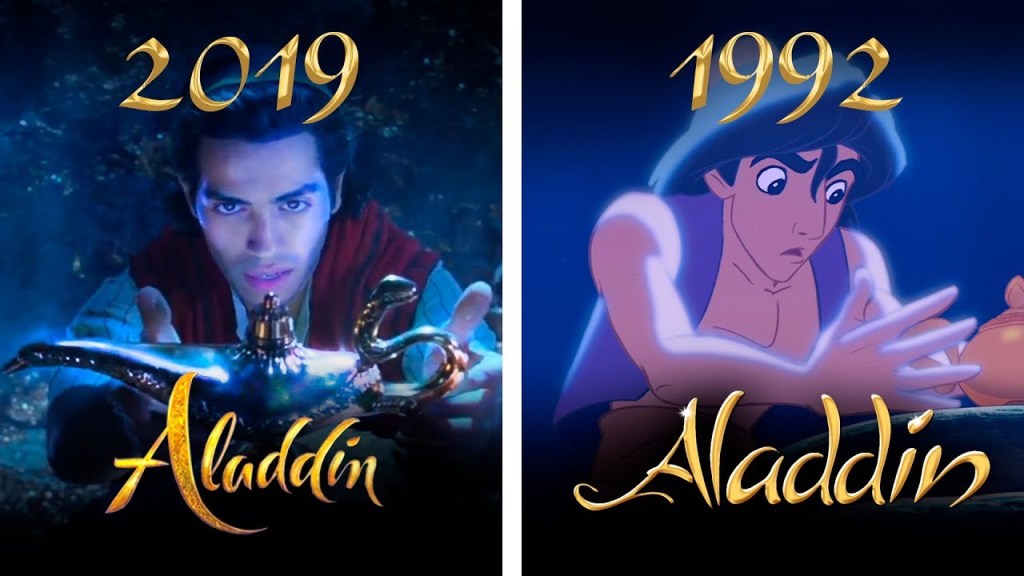
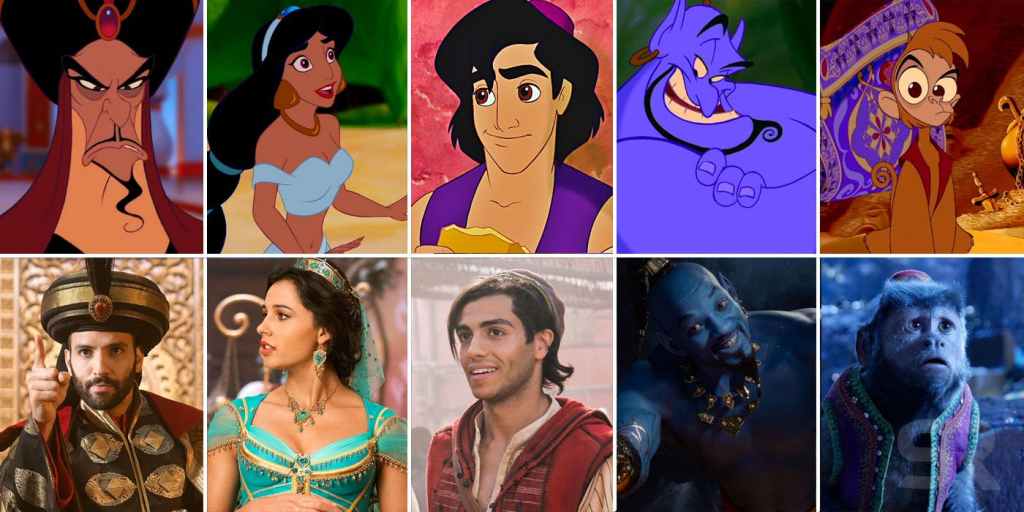
Remake vs Original Comparison
Synopsis
When Princess Jasmine, the lovely daughter of the sultan of Agrabah, meets Aladdin, a destitute but endearing street urchin, they become friends. Aladdin discovers a magic oil lamp while exploring her exotic home, and it summons a mighty, witty, larger-than-life genie. Soon after becoming friends, Aladdin and the genie must set out on a perilous journey to prevent the evil sorcerer Jafar from overthrowing young Jasmine’s kingdom.
The problem with Aladdin
The issue with fairy tales is that they offer parallel realities that clarify our own. They are sold by those who oppress us and are made to make us feel better about our privilege and ignorance. Although Aladdin is packaged as film that breaks diversity but underneath it describes how Brown people are a monolithic group of terrible people who must be subdued by Western imperialism and freed by white feminism.
Aladdin and Jasmine, for instance, speak with a very natural American accent, whilst the villains like Jaffar embodies a British accent. While Sultan and the guards attempt to imitate an Indian or Arabic accent, the rest of the town’s residents, including the salesmen, do the same. The characters are coded to support racist and Islamophobic stereotypes, and it mispronounces Arabic phrases, including “Allah,” and portrays illegible scrawl in place of authentic Arabic lettering. Jaffar’s curly beard, traditional attire, and “queer coding” serve as additional manifestations of his wickedness, whereas Aladdin is clean-shaven, mostly shirtless, and highly heterosexual. These kinds of audio-visual clues are absolutely not accidents. What’s more mind boggling is that, Aladdin is supposed to be inspired by Tom cruise.
The plot takes place in the ridiculous “Agrabah,” a country that is “barbaric, but hey, it’s home,” according to a line from a song so offensive that the next year, Disney rewrote some of the lyrics. Agrabah is essentially “Arabland,” a made-up region that actual Americans are prepared to bomb and which is rife with popular perceptions of the Middle East as a sand desert ruled by a violent Islam. Aladdin deftly escapes getting penalised for stealing in the opening scene after introducing us to the exotic climate through a seller with a thick accent who wants to sell us his goods. Later, he prevents Jasmine from experiencing the same fate—if you steal in a hostile environment like Arabland, you lose your hand. A major misconception about middle east laws and cultures are.
Disney may be facing harsh criticism for these misconceptions, but let’s not forget that the company was once a pioneer in creating stories that were exclusively about white people. Additionally, in its “biggest ethnic marketing campaign ever,” Disney sold the movie Aladdin to Black and Hispanic children in the United States. In order for a “Brown” story to be appealing to and represent all skin tones, Disney therefore conceptualises “Brown” as a monolith that may embrace Middle Eastern, South Asian, Black, and Latinx experiences making “representation” yet another irresponsible rendition of the Other. Christian society is implied rather than mentioned in contrast to the gruesome representations of a hybrid Arab-South Asian society.
The weaponization of oriental stereotypes by the West is misrepresenting Islam. “Whenever in modern times there has been an acutely political tension felt between the Occident and its Orient (or between the West and its Islam), there has been a tendency in the West to first turn to the cool, relatively detached instruments of scientific, quasi-objective representation,” according to Edward Said in his essay “Orientalism.” Without major adjustments, this movie is tacitly supporting Islamophobia due to the source material’s anti-Muslim bias.
“In this way, Islam is made more evident, the genuine nature of its threat revealed, and an implied plan of action against it is proposed,” Said continues. Between the timing of the movie during a huge rise in anti-Muslim hate crimes and the (mostly white) people behind the camera, it’s hard to be hopeful about Disney’s motives.
How to fix it?
A problem that cannot be resolved exists deep within the blatant orientalism of Aladdin’s scenery and cannot be separated from the plot of this boys’ adventure story. Jasmine is here. We are introduced to Jasmine, who has a very non-Arabic name that is yet oriental and feminine and was named after a non-Arab actress. She is undoubtedly a girl who is being forced to get married within three days of the movie’s start “by law” and by her Santa-faced, inept father. She serves as the blank canvas for white feminism’s portrayal of itself. She plays with caged birds while yearning for love in a marriage and doesn’t wear a hijab (unless when she pretends to be a poor and so “backward” Muslim). She is the “correct kind of Muslim”—a wealthy individual with few obvious cultural traits.
Jasmine has very little control over the narrative; her part in the movie depends solely on the males in her life. Her father, for example, reveals that he is pressuring her into marriage not just because it is required by law but also because he wants a man to “take care of her;”
Jafar, who at first wants to wed her for the power but later admits it’s just passion for young flesh; Aladdin, who spends the most of the film following her, even going so far as to break into her bedroom at night and pretend to be someone else.
Furthermore, let’s not forget the sex slave scene where Jasmine is restrained and seduces Jafar in what is undoubtedly BDSM material. What is the most egregious example of Aladdin’s intersectional misogyny? The lone female character is Jasmine. That is, unless you count the “loose” women and simple people who briefly appear in songs with bare-bones lyrics. Misogyny and orientalism work together to oppress women of colour in a special way.
A couple of years ago animators and voice actors began a campaign about to culturally accurate and rich the shows should be and the characters of such ethnicity should also be voiced by a person of the region rather than hiring a mimic. A successful feat and movement in itself. The 2019 live action remake of Aladdin retains the same problem. I believe it could be toned and rewrote grounded in actually reality rather than fantasy.
What strategies could I adopt to avoid biases in my practice?
It all boils down to research (documentation, conducting interviews etc) and spending time with people of those cultures rather than word of mouth (which most people do). Not all literature is accurate, so it is best to meet people in states and try to get a sense of their traits. Get frequent feedback etc.
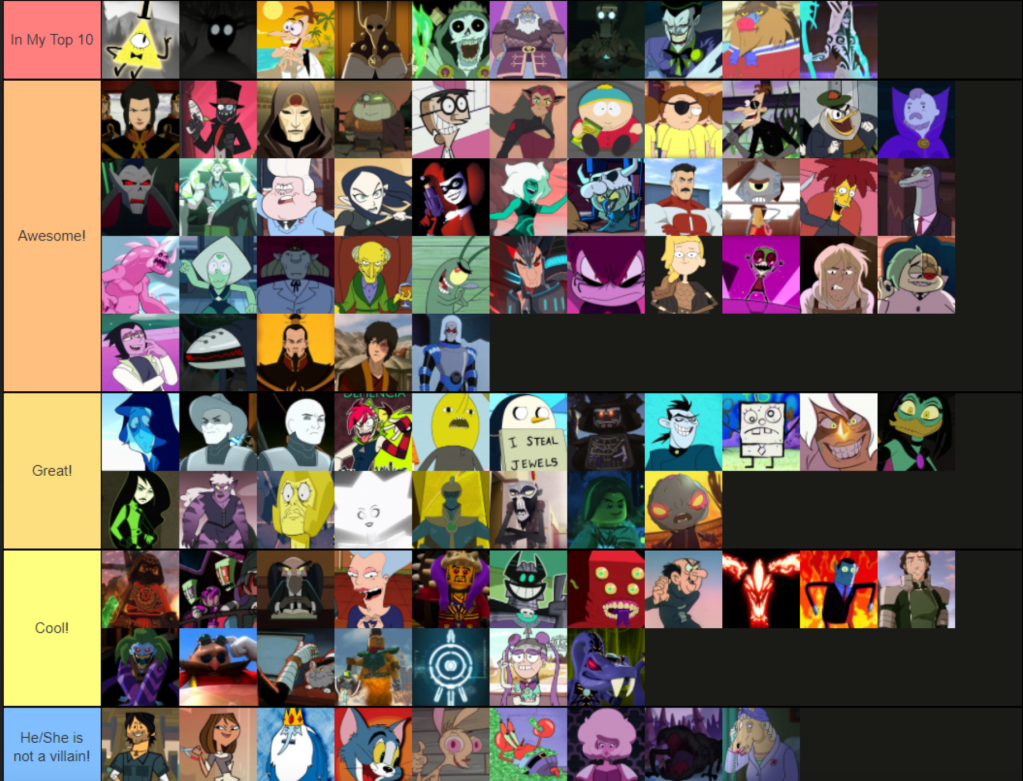
Why Cartoon Villains have a distinct design and trait? E.g., foreign accent.
Have you ever wondered why famous characters like Jaffar, Joker, Cruella and Dick Dastardly have sharp eyebrows and pointy chins? Or why they are drawn in a similar manner? There a reason behind all of this. According to a study by Warwick University, the downward pointing triangle gives a more mischievous and threatening feel in a similar manner to an angry face. Certain geometric shapes evoke negative emotions alas making them synonymous with evil.
Co-author of the study, Dr. Elisabeth Blagrove explains in a press-release:
If we look at cartoon characters, the classic baddie will often be drawn with the evil eyebrows that come to a downward point in the middle. This could go some way to explain why we associate the downward pointing triangle with negative faces. These shapes correspond with our own facial features and we are unconsciously making that link.
Have you ever noticed the accents and voices used by cartoon villains?
According to an article published by The Atlantic, Gidney (an associate professor in child study and human development at Tufts University who specializes in socio-linguistics) discovered something unexpected in the film The Lion King. According to him the characters don’t share many traits: although Scar is cynical and power-hungry, Mufasa is brave and loyal. Upon an in-depth analysis a striking difference in their accents can be noticed, with Mufasa having an American one and Scar, the lion of the dark side, having a British one.
It’s difficult to picture the final “r” in Scar’s accusation sounding quite as horrific in another tone when it floats up into a sky exploding with lightning in a pivotal sequence where Scar accuses Simba of being the “murderer!” accountable for Mufasa’s death.
Correlations between Language and Character Traits
If you pay attention, you’ll find that throughout many children’s media, the evil characters are given accents from foreign, non-U.S. native English speakers, almost as a defining characteristic. All of the “bad” characters were voiced with foreign accents and unusual dialects. It may not come as a surprise that language is used in children’s programming to distinguish between characters and indicate dramatic action.
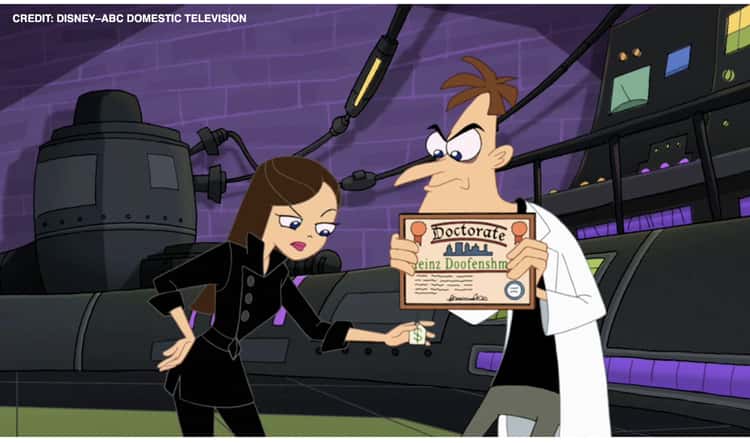
Dr. Heinz Doofenshmirtz, the villain in Phineas and Ferb, who talks with a German-like dialect and is from the fictitious European nation Drusselstein, serves as a modern day example.
This association between foreign accents and “evil” characters on television, which is a major source of cultural message for youngsters, may have unsettling ramifications for how young children are taught to appreciate diversity.
Gidney claims that it’s a frequent stereotype that the evillest foreign accent is British English. For instance, the survey discovered that British is the foreign accent most frequently utilised for villains, from Scar to Jafar in Aladdin.
For villain voices, Slavic and German accents are also typical. In addition to working-class Eastern European dialects and regional American dialects like “Italian-American gangster” (like when Claude in Captain Planet says “tuh-raining” instead of “training”), henchmen and assistants to villains frequently spoke in dialects associated with low socioeconomic status.
This week we talked about Semiotics. A very vague topic and has different schools of thought about its definition. It’s a very big concept, and there’re many strategies for semiotics, one of which is painting. Therefore, I’d like to discuss Realism through the work of an impressionist painter Edward Hopper (1882) famous for Nighthawks.
Realism, in philosophy is a perspective that grants things that are known or observed an existence or in nature that is unaffected by who is thinking about or viewing them.
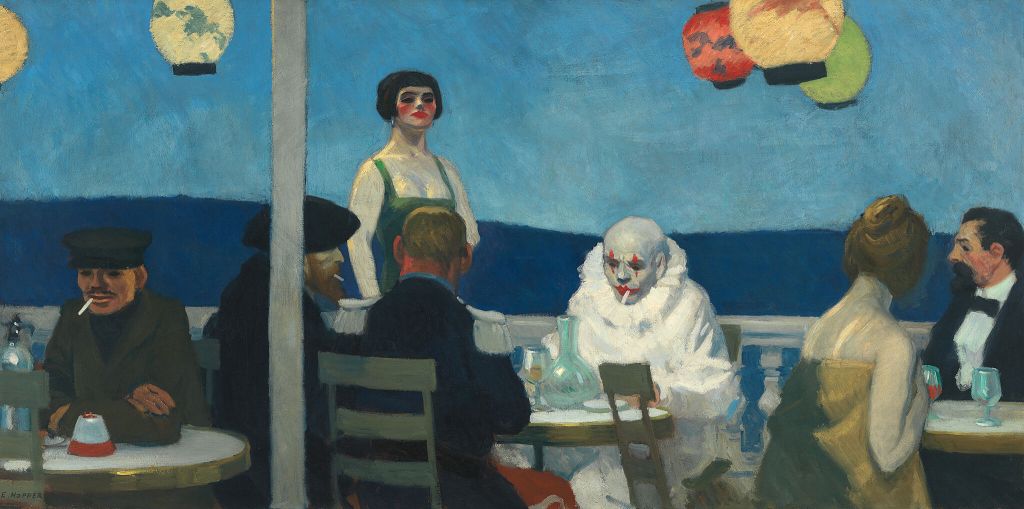
Soir Bleu (1914) Hopper, Edward
The following is the painting Soir Blue (1914) or Blue night. The painting is more grounded than it looks. The focal point is a white clown in his stereotypical white puffy clothes and is following the myth of being a depressed and smoking. This is the connotation and myth that a clown is a symbol od fepression and two faced. One face/personality that he shows the world (his happy side), the other he is in actuality (the depressed side).
The Denotion here is the way people of certain stature are supposed to dress. If you observe the people around it tells you different stories, they all emit e.g. the way the people are dressed highlights a stature in class. The couple on his right are much disturbed by his smoking and appearance or act. Across from him are two other interesting characters: judging by the patches on his shoulder one seems to be a military officer in full uniform and bearded man dressed in black is visually similar to Van Gogh.
The women behind could either be a waitress or another customer at the restaurant, has a haughty posture and looks down at the clown. The bloke on the far left of the painting sported in mud colour seems to be indifferent of the situation. It is worth noting the colour scheme of the people in it. Colour depicts character traits.
The setting itself is a vital character, to justify the story. Some might say it is a restaurant, while some a café but the Chinese lights suggest something else entirely. All in all, it can be agreed that story is about loneliness and how alienated one can feel. It also tells about how one feels the society perceives him or how one is fooling his way through life.
That’s the beauty of this piece that it can be depicted in as many ways as one wants. Regardless of these interpretations the painting tackles and everlasting concept.
I hold lights and shadow very close to my heart as I have seen this since my childhood. I wanted to shed light on the ongoing dispute over Kashmir and how both sides are similar and only seem different because of their outer shells which are their differences caused by world affairs. Even though my professor and peers liked the story and concept they were a little sceptical about whether I’ll be able to justify the story within the 30-second time limit that we all have. My professor, Alex, gave me some constructive criticism by voicing his concerns. There were some issues that he highlighted: It is very difficult to depict violence through animation and he thought the scale of the entire project seems very ambitious, especially within the given time limit. However, he suggested that I choose this project as my thesis as he sees a lot of potential in it as a short film. After discussing with Alex, I’m trying to complete the animation within one minute. Keeping my discussions as well as my personal bias towards this story, I am considering this project for further development on the back burner for my thesis.
It took ages to compile and create the animatic. As the concept was ambitious, I took some to get the right look and feel of the story and do justice to the storyboard as well. There might be some glitches in between and as usual the pacing seems of as some scenes require time to establish while some pass by quickly.
Music Copyright – Warner Music Tower (The Dark Knight Rises)
I felt the project had potiential and if properly executed it could turn out something beautiful. For a while I have been researching as to why animation is a perfect tool for documentaries. After interviews with people who served during the war for independence, I realised that some people go throught surrealistic events and since there is no documentation of it, aniamtion would better justify that recreation.
I took my time in world building, and storyboarding the visual style I wanted to take. The project is very personal to me as I have seen the horrific events that took place on my visit to Kashmir. The horror that I wittnessed cannot even be depicted in film or media and that is why I believe that animation is the medium best suited for this.
I think the animated documentary film Waltz with Bashmir was a good template. It tackled the 1982 Lebanon War thorugh the eyes of a solider and his quest to regain his memories. I think animattion was a great tool for such story and genre. The grotesque violence could only have been mimicked through animtion and would not offend anyone. Attached along is the trailer and art style.
Waltz with Bahir – Trailer
waltz with bashir – the dream
This time around I wanted to challenge myself and go for an artsy style as seen in Kung Fu Panda’s opening dream sequence. The grainy texture and somewhat absract drawing style would be a good fit for my concept.
Kung Fu Panda – Dream Openinng
References
Kung Fu Panda. 2008. [Film] Directed by Mark Osborne. s.l.: Dreamworks.
Waltz with Bashir. 2008. [Film] Directed by Ari Folman. Israel: Sony Pictures.
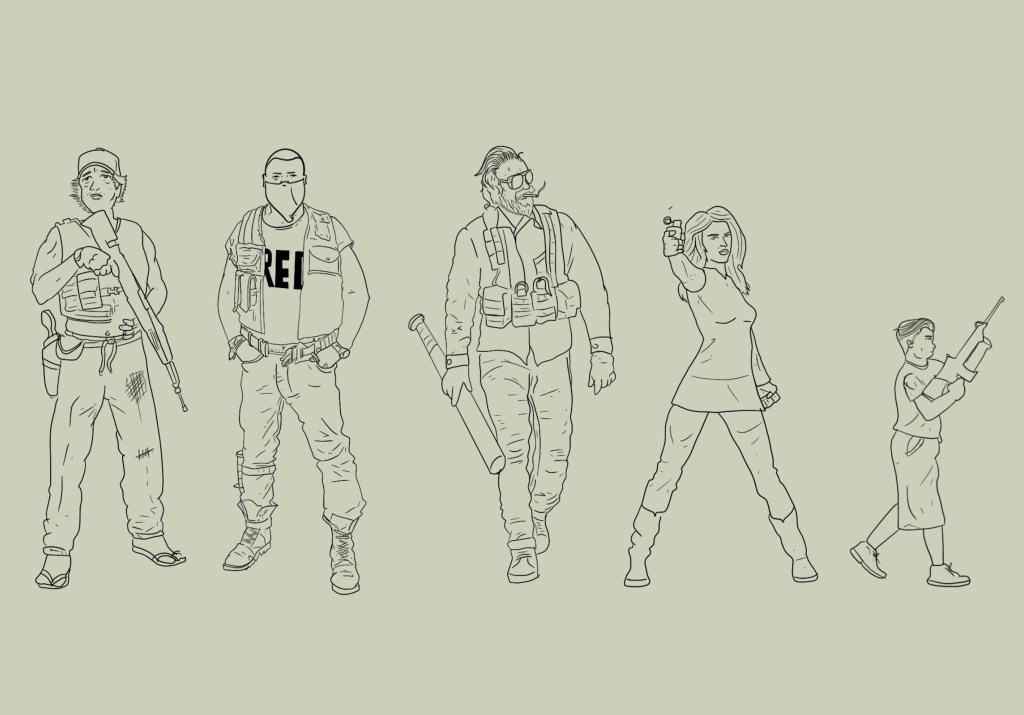
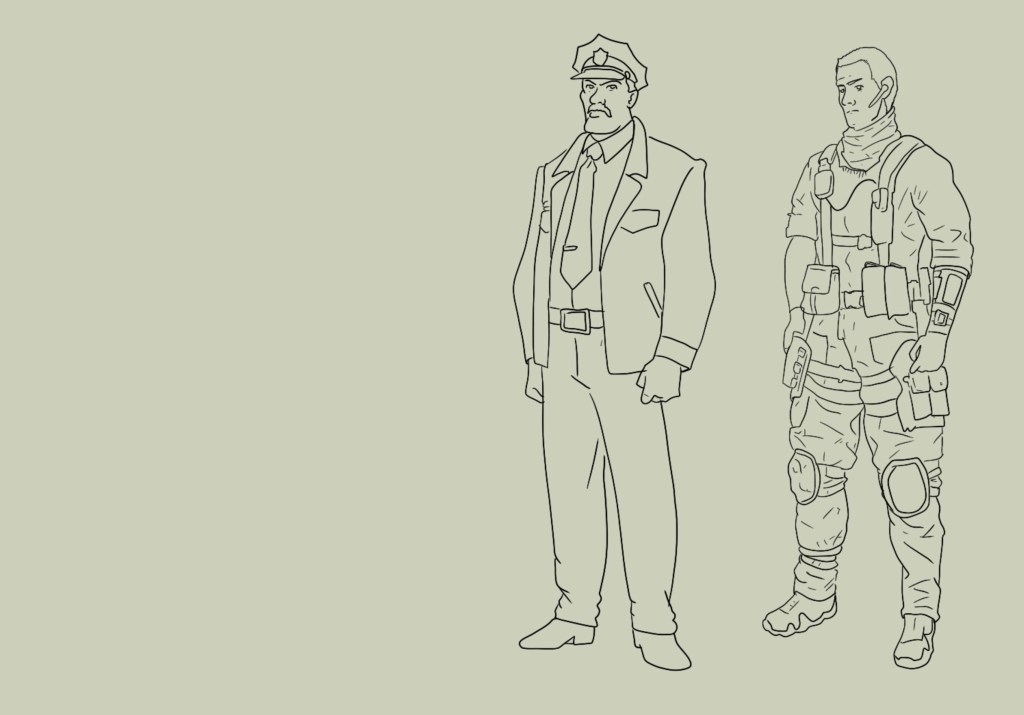
The character designs are inspired by real life people during riots, where the civilians are geared up with all kinds of weaponery and use stones as an answer for gernades. I have taken a similar approach, and even conceptualized what a child would look like during this situation.
The CiviliansThe Officials
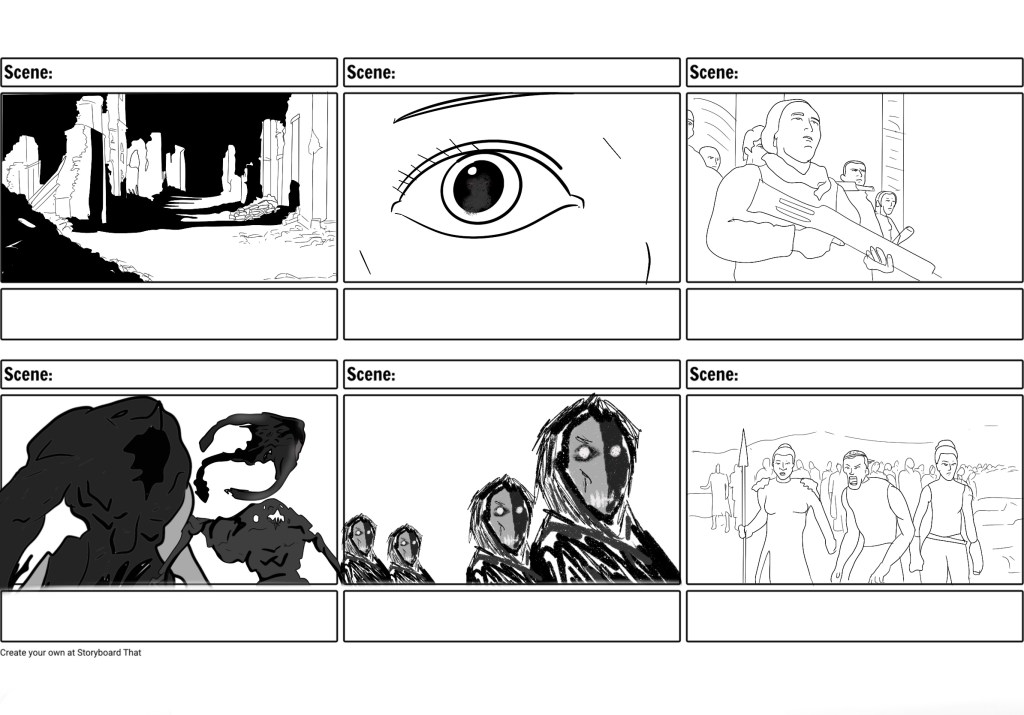
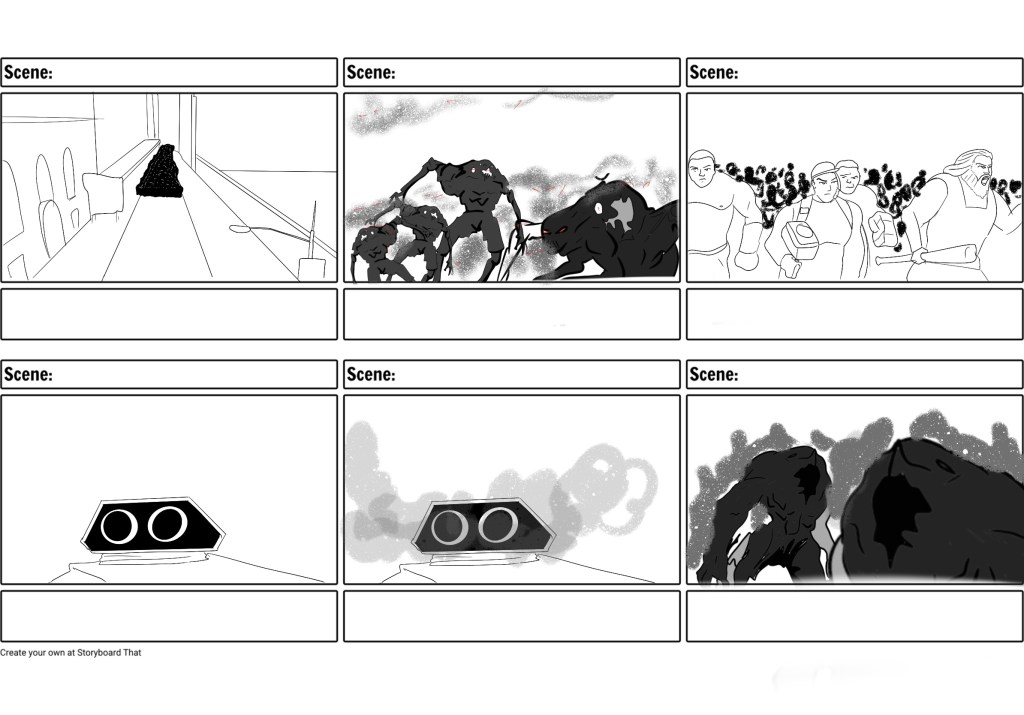
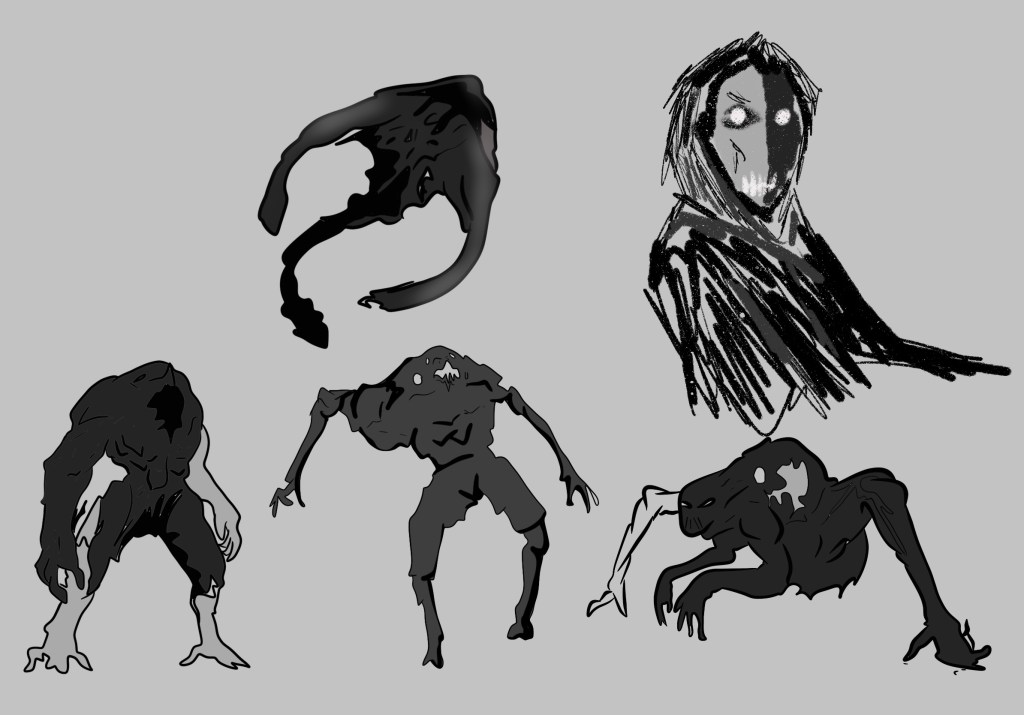
The designs for the shadow monsters are an amalgamation of what people have reported seeduring sleep paralysis and hooded figures from noir films.
Shadow figuresTanks designs
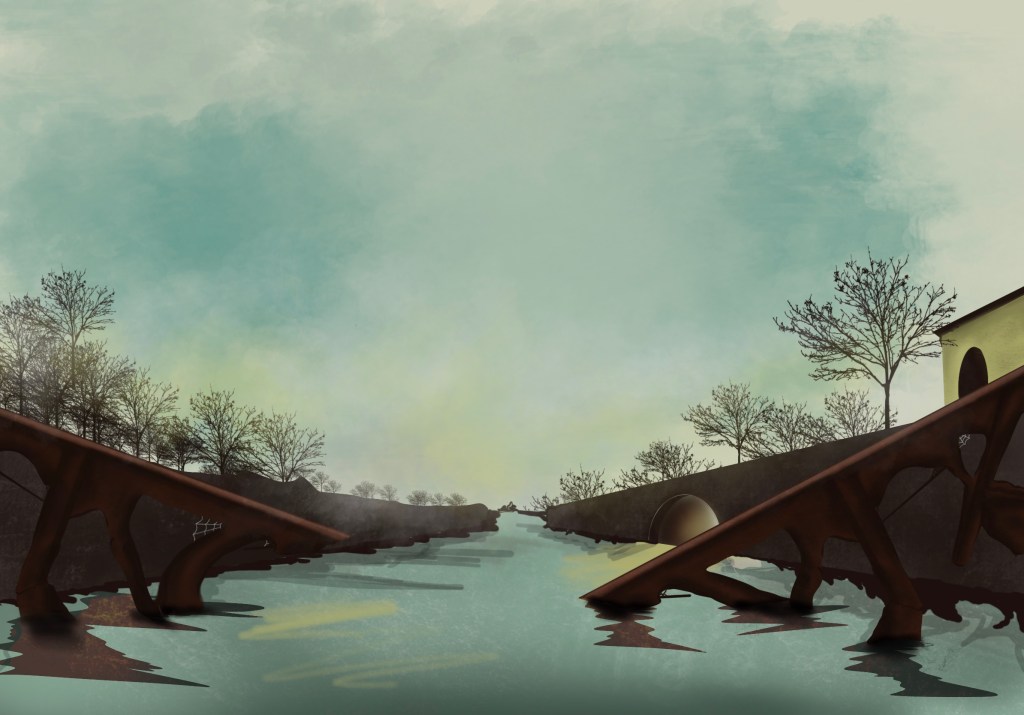
The city where is the story is situation is inspired by both no man’s land and the after effects on war ridden lands. I have tried to keep it as close to reality.
This time around I wanted to give a social message and pick a problem that has plagued mankind for centuries i.e. War.
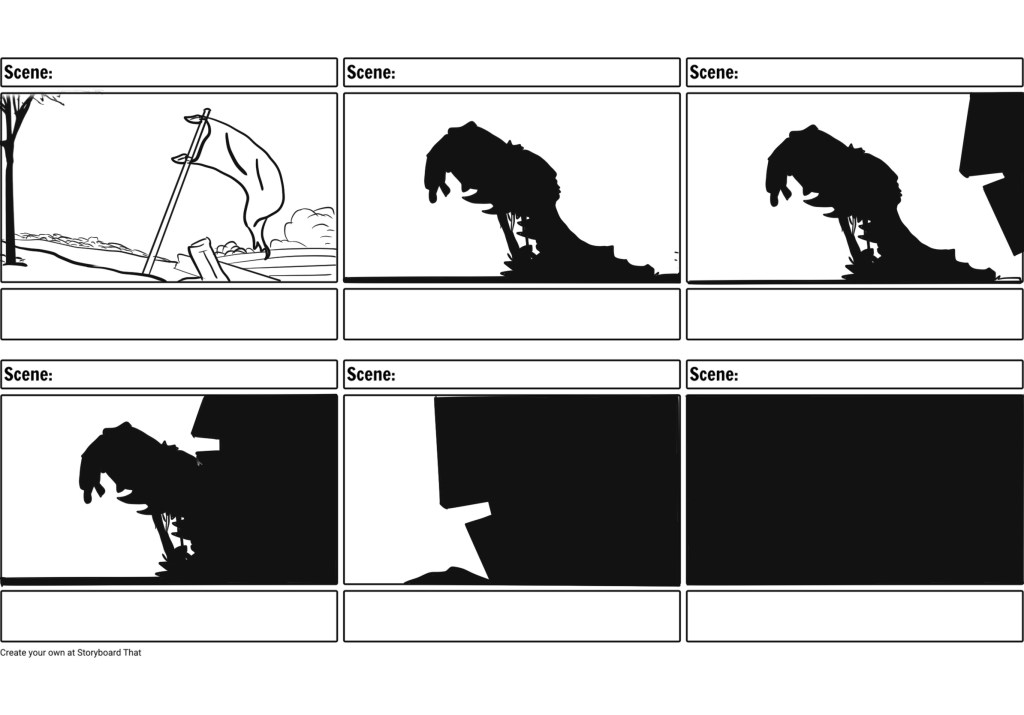
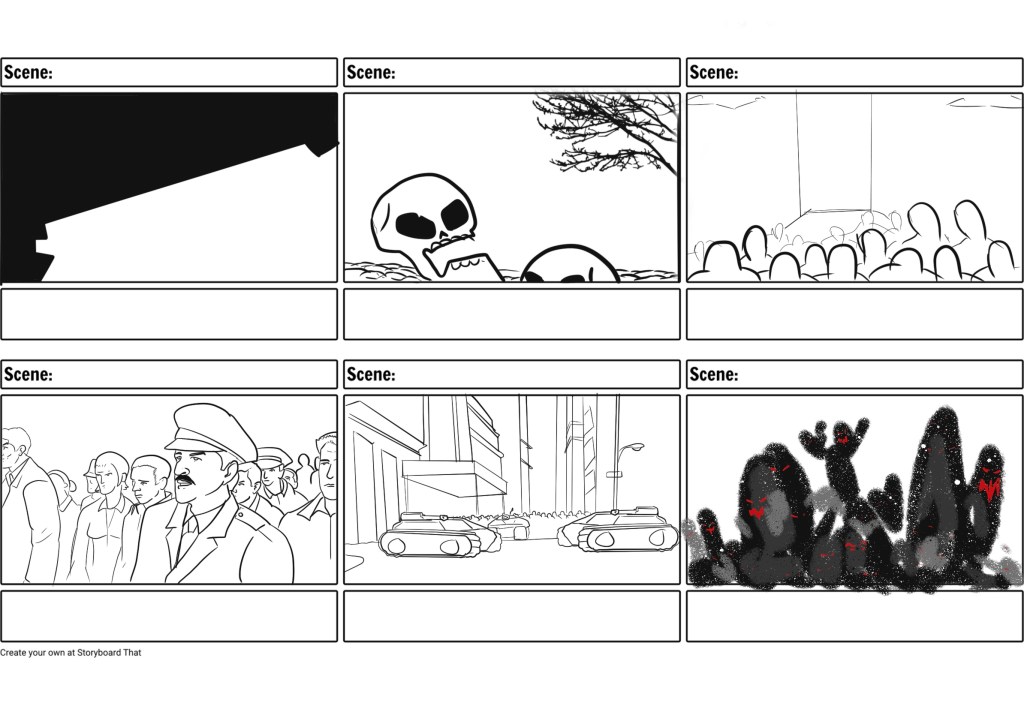
The Story
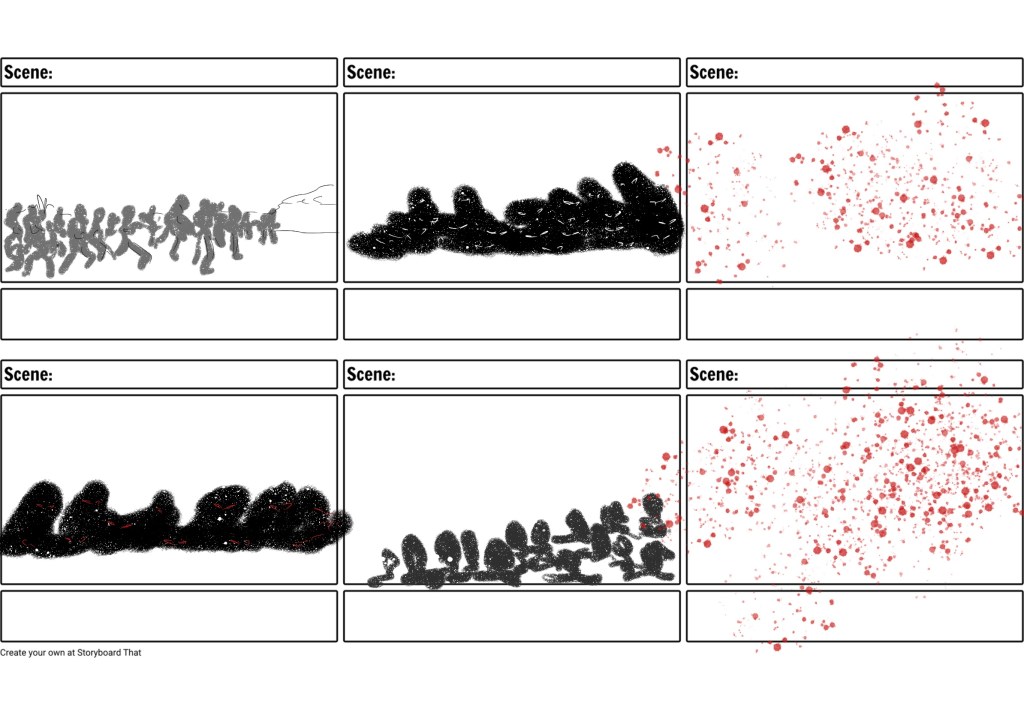
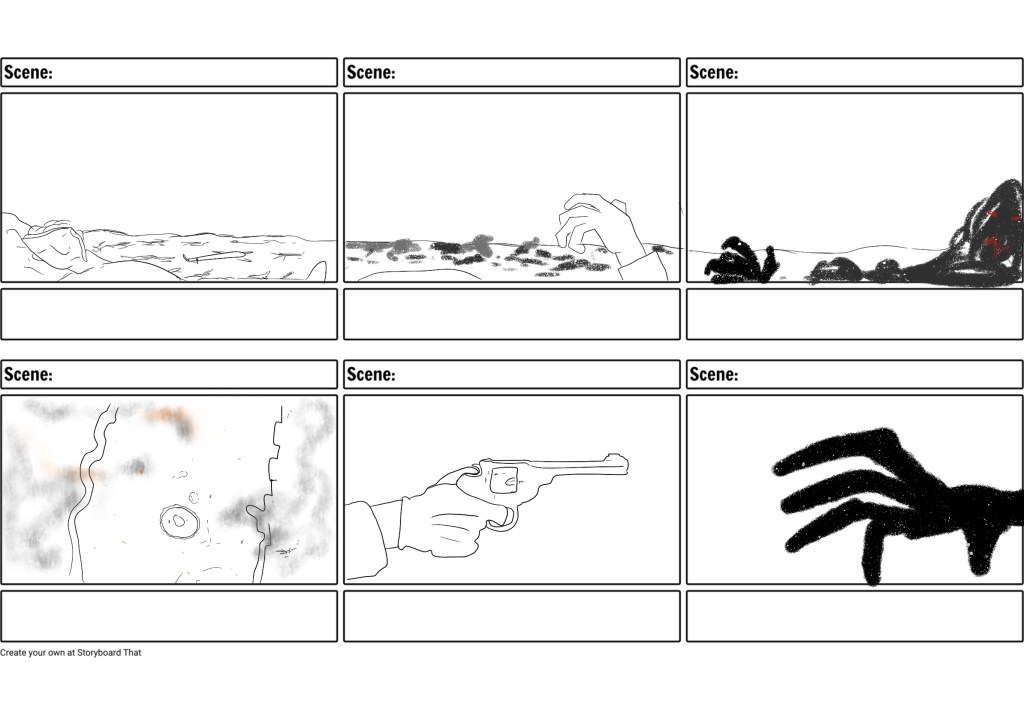
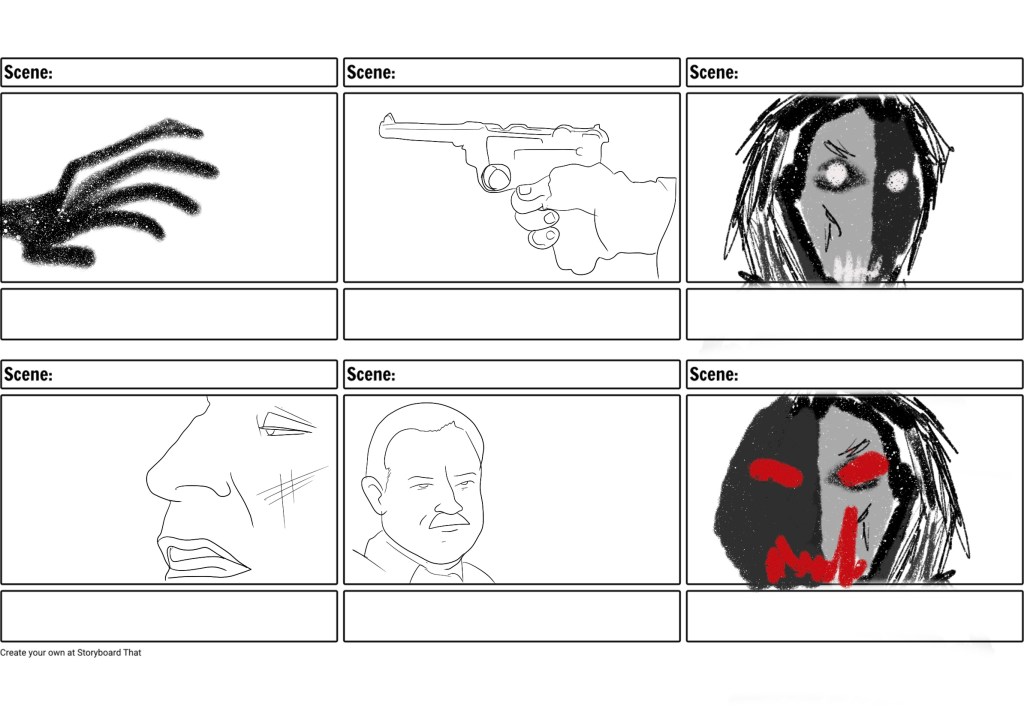
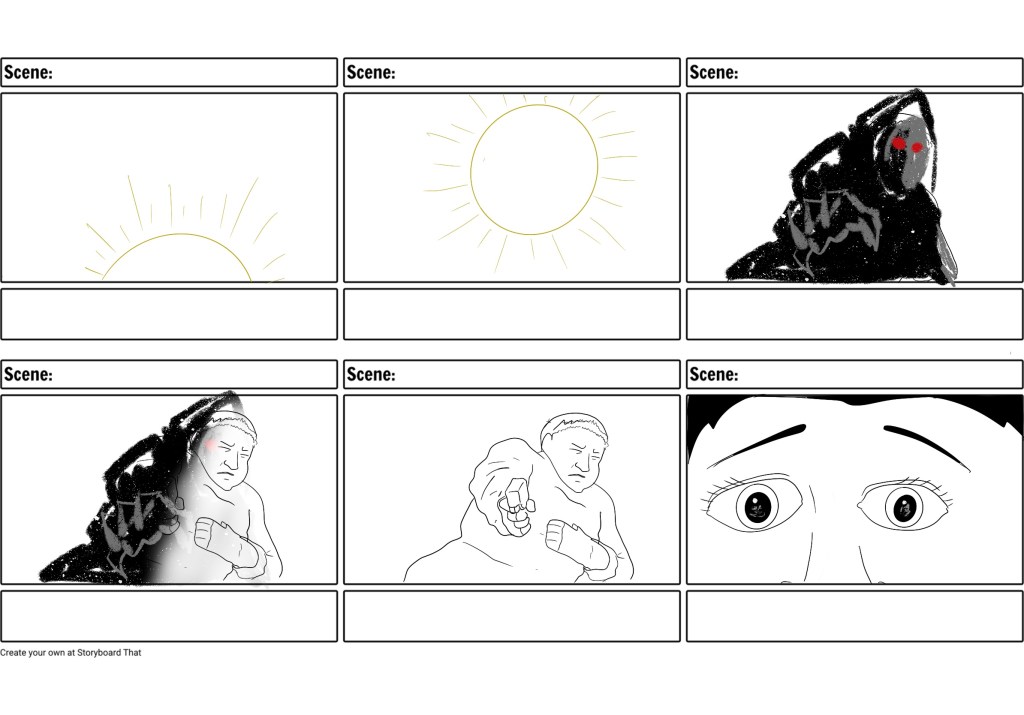
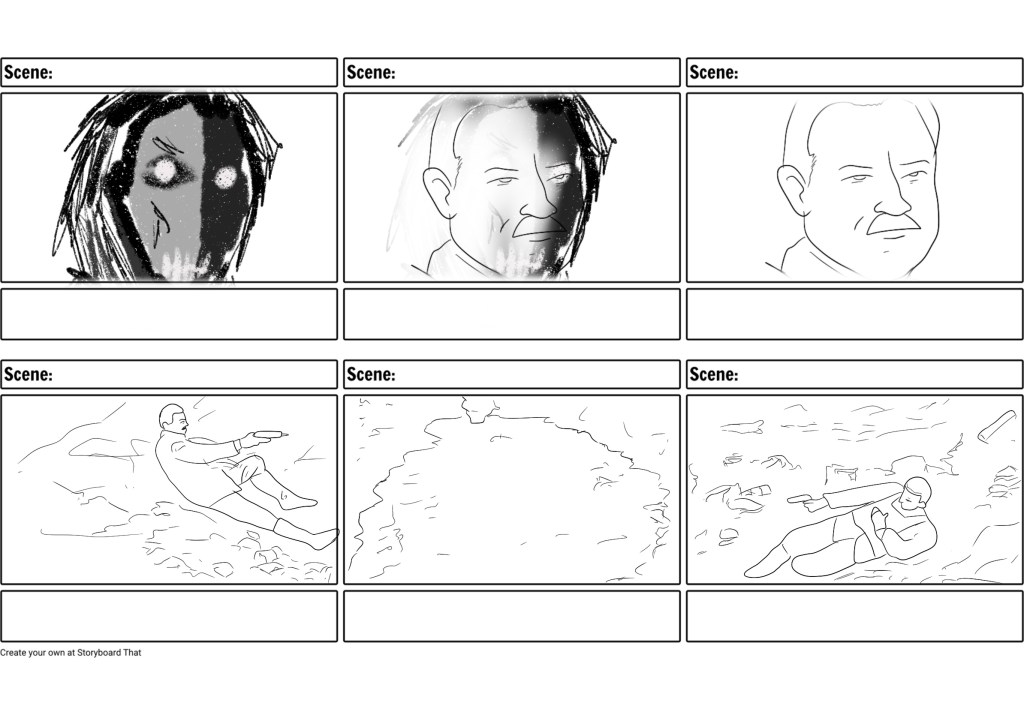
The story depicts a battle between two sides, 1. Officials (army, police, black ops etc) who are depicted as Light vs. A shadow army, 2. Civilians (lights) vs. Shadow army. The story begins in an apocalyptic world and the two sides are about to face off. In a gory match, both sides are have tremendous losses and in the battlefield two soliders (one of light(civillians and officials) and other of shadow) are left pointing guns at each other. Just as the sun rises, the shadows starts to dissapear and it is revealed that the shadows figures were infact bodies of offcials and civilains. For the civilians, the officials were seen as evil shadow figures and for the officials ,the civilians were shadow creatures. In a way, the story is about how people have lost humanity and are blocked by worldly resticrictions and over shadowed by greed and power etc.

 Arsalan Awais