Forefront#6 | Feel the ‘Chop’; Why choppy animation takes the lead!

Have you ever pondered why choppy animation can sometimes feel more satisfying?

Then step into the whimsical world of animation, where the magic lies not only in the frames but in the spaces between them. As an animator who cherishes the golden era of Looney Tunes and old-school charm, you understand that there’s more to crafting captivating animation than just the smoothness of movement.

Unlike the steady frame rates seen in video games, animation dances to its own rhythm. It’s a delightful symphony of “ones,” “twos,” “threes,” and “fours,” each beat carefully orchestrated to create an impact that leaves the audience spellbound. Just like a jazz improvisation, the animation shifts seamlessly from 24 fps to lower numbers, weaving a spellbinding tale of movement and emotion.

Remember those classic scenes from Cowboy Bebop, where the characters’ actions were beautifully accentuated by dancing between different frame rates? It’s these purposeful variations that give life to your work and keep that zany factor alive. The gaps between frames allow the viewer’s imagination to fill in the blanks, adding an element of surprise that hits the bullseye of their hearts like a sudden arrow (www.youtube.com, n.d.).

In your world, you embrace the duality of animation styles, celebrating the fast-paced, cartoony American approach while also appreciating the subtle aftereffects that Japanese animation brings to the table. Both styles have their unique charm, and as an animator, you wield the power to choose the perfect brush strokes for your masterpiece.

The nostalgia of the 90s with its limited, choppy animation style still holds a special place in your heart. It was an era where economic constraints pushed artists to emphasize impact over excessive frames. Yet, even with technological advancements paving the way for smoother animation, you see a resurgence of the limited, choppy style, proving that the allure of impact and artistic flair is timeless.

You find yourself in sync with this new trend, where digital animation meets deliberate limitations to create an art form that brims with personality. Embracing this style demands courage and artistic vision, as you challenge the computer to embrace your creative touch. The result is a viewing experience that fills the soul with satisfaction and appreciation for the craftsmanship behind it.

The groundbreaking Spider-Verse movie showed the world how animation can become a canvas for bold artistic decisions. Studios are now opening their doors to embrace the unique essence each artist brings, bringing back the soulful touch of hand-crafted animation. Instead of leaning onto one medium it honoured both and forced animation/animators to evolve with it (Spider man into the spider verse, 2018).

In my personal journey as an animator, I’ve discovered that animating on “threes,” “fours,” and beyond offers the perfect harmony of fluid motion and classical techniques. You play with overshoot and smears, infusing your creations with life and character, a true tribute to the art you adore and this is what my process is when I develop a particular scene.

In the end, it’s the deliberate choices and artistic finesse that elevate choppy animation to an engaging and impactful medium. As you pour your heart into each frame, you’re excited to witness this style’s resurgence, hoping that viewers, too, will recognize and embrace the sheer artistry that lies behind the magic of animation. So, keep spreading the joy of your zany creations and let the world revel in the enchanting dance of your animated wonders.

References

  1. Spiderman into the spiderverse. 2018. [Film] Directed by Phill Lord, Chris Miller. USA: Sony.
  2. http://www.youtube.com. (n.d.). How ‘Spider-Verse’ forced animation to evolve. [online] Available at: https://www.youtube.com/watch?v=l96IgQmXmhM&t=126s [Accessed 30 Jul. 2023].
  3. http://www.youtube.com. (n.d.). Spike vs Asimov. [online] Available at: https://www.youtube.com/watch?v=Yf48R459HSk [Accessed 30 Jul. 2023].
Forefront# 5 | A lesson for every age group

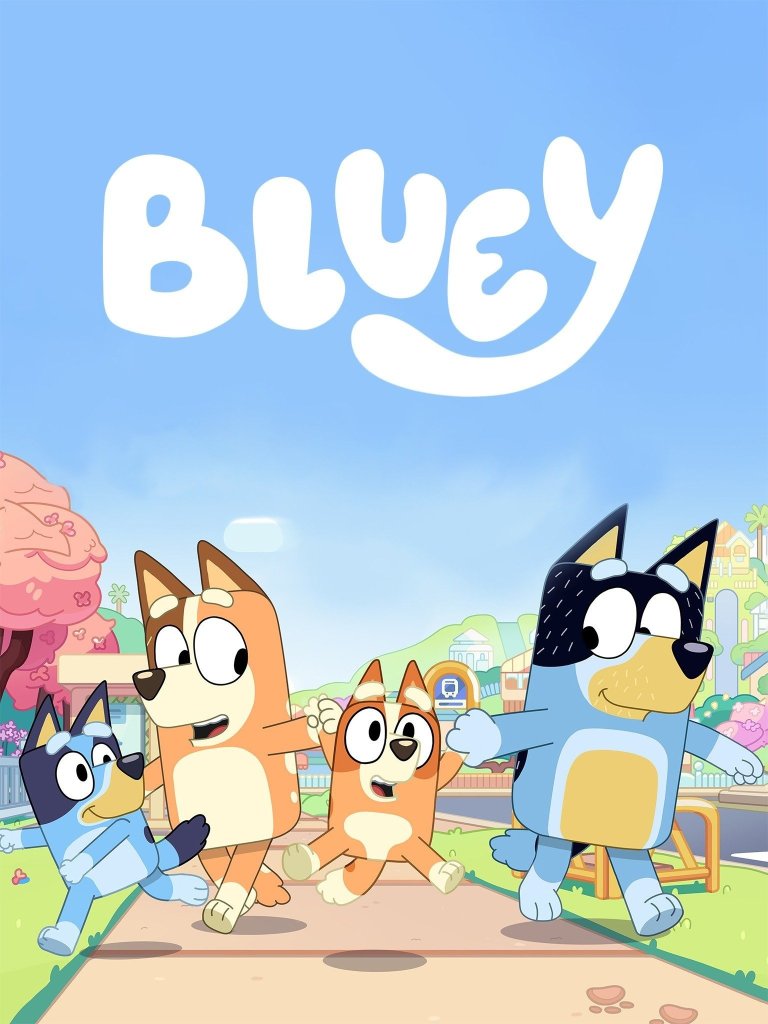
Bluey TV Sereis (2020-present)

Bluey is an epitome of children’s show aimed at parenting. The series is available on Cbeebies and Disney+. It chronicles the exploits of Bingo’s sister Bluey. frequently accompanied by either or both of parents. Each episode’s plot is typically built around a single concept drawn from the author Joseph Brumm’s early years or his experiences as a parent: “He made notes on the games his two girls dreamed up. As Bluey revealed to an Australian professor in 2019: “The games… were so weird and bizarre and idiosyncratic, and those memories get lost in the sands of time,” Bluey would become a sort of personal time capsule. Brumm would immortalise them in the culture rather than letting them fade away.

I see a lot of appeal in the concept of constructing a time capsule for memories, recording them in episodes, and animating them. The wording is innocent enough for kids not to be afraid, and the occasional adult humour is done tastefully and intelligently enough for kids not to pick it up. The bond that their father Bandit has with her and her sister is one of the most discussed aspects of Bluey.

The planning and preparation that seems to go into each and every episode pay off in spades as Bluey has fast become of the most well-liked children’s shows of the present. These storylines have the impression of being spontaneous and adventurous.

This is both what I want to use as inspiration for my own animation and the reason I think this show is significant. It is crafted with such love and is just pure, honest fun as it is not just aimed at children but is a treat for parents as well. It gives a lesson to the parents that are watching the show with their children. The colour scheme, particularly the tone of the leaves, served as inspiration for my own artwork. However, Bluey demonstrates what can happen when you put your all into something. How a children’s programme may produce an episode like “Sleepy time.” One might cry at the usage of metaphor to represent the bond between a mother and child and the grandiose soundtrack.

Just like bluey, I adopted the same psyche in my undergrad thesis, where I created a puppet tv show. In it I showed the puppets living in a foster home and with puppet came different problems and each problem was tackled in every episode and the viewers were also taught about its solution. For example, in one episode I showed a cross-eyed puppet being bullied and he realizes that if he owns his disability then no power in the world can take him down.

Hence, in bluey the lessons of love and acceptance of people who are different from yourself, it also shows a father figure and mother figure as significant figures who are worth their weight in gold rather than as clumsy buffoons deserving of scorn and derision.

Bibliography

Pbs.twimg.com. 2022. [online] Available at: <https://pbs.twimg.com/media/FZybrZDX0AAikob?format=jpg&name=900×900&gt; [Accessed 10 April 2022].

the Guardian. 2022. The cult of Bluey: how a kids’ cartoon became a bible for modern parenting. [online] Available at: <https://www.theguardian.com/tv-and-radio/2022/jun/11/bluey-australian-children-cartoon-joe-brumm&gt; [Accessed 10 April 2022].

Disneyplus.com. 2022. Watch Bluey | Full episodes | Disney+. [online] Available at: <https://www.disneyplus.com/en-gb/series/bluey/1xy9TAOQ0M3r&gt; [Accessed 7 April 2022].

Forefront# 4 | Narrative theory and Interactive Narratives

The Little Prince (2015)

The little prince is the prime example of an unconventional way of following Vladmir Propp’s eight-character types where some characters are symbolically portrayed. Moreover, it is very rare to see how the movie was not an exact adaptation of the book. The actual book itself is used as an actual book here i.e., as a plot device. The film is not bodged down, in the sense that it has to stay true to the source material. In a a way it does that but then again brings something new to the table. The movie is executed is a very unconventional and playful manner that doesn’t let the watchers lose interest.

The film features a linear plot and adheres to Todorov’s narrative paradigm. Has an unstable balance when the girl begins to believe that everyone is alone at some time. She sets off on a quest to discover the Little Prince and determine what is meant to be. She recognises the meaning of life, which produces a new equilibrium.

Speaking of Vladimir Propp’s 8-character types, some characters act as more than one while some are symbolic characters.

The Hero – Little Girl, a smart, feisty and precocious girl with a kind heart. She has a very inquisitive mind and struggles to balance growing up and basking in her childhood.

The Aviator as various characters e.g. the Father and the donor. The Aviator, an eccentric and retired aviator who befriended the Little Prince in the Sahara Desert and acts as a mentor to the Little Girl.

The False Villain – The little girl’s mother, who organises her entire life according to her will and is an absentee parent.

The Villain – though there are not any such villains in the story but I regard as time itself being one. One of the messages given in the film is ‘Growing up is not a problem, but forgetting your childhood is’.

The False Hero – The little prince an eternally young boy and resident of “Asteroid B612”, a small asteroid roughly the same size as him. The adult version of Little Prince who has forgotten his own childhood and becomes an anxious, incompetent janitor for the Businessman.

Levi Strauss’ Binary Oppositions 

The film clearly makes it about Childhood VS Growing Up, or more precisely Little Girl VS society that dictates her life. The film is resolved as Little girl realises what it means to be a kid and enjoy the moments of life.

I am continuously impressed by how this endearing narrative interacts with its characters to create a compelling plot. Similarly, I attempt to produce artwork that does not just intrigue children by its visuals but also pique the interest of their parents through having a deeper and relatable layer to it. It has the ability to tackle complex themes in a way that is appealing to people of all ages. The narrative covers fundamental topics like grief, love, and the purpose of life using metaphors and symbols. As an animator, I want to incorporate similar topics into my own work while being lighthearted and engaging.
The Little Prince does this by combining realistic and fantasy aspects to create a distinct visual style. This helps the audience to suspend their disbelief and immerse themselves completely in the tale. Similarly, with my own work, I want to mix reality and whimsy in order to create an interesting and unforgettable experience.

Another thing I admire about Little Prince is how the characters are given different personalities and goals that propel the narrative forward. Each character has their own quirks and weaknesses, making them real and charming to children and adults alike. In my own work, I strive to create characters who are as memorable and dynamic as they are, each with their own set of strengths and weaknesses.

The film taught me a lot about creating cartoons that are both amusing and relevant to a larger audience. I intend to produce cartoons that both children and their parents will love for years to come by drawing inspiration from its distinct visual style, vibrant characters, and thought-provoking subjects.

References

Media, A. C. o. C. a. t., 2016. Raising Children. [Online]
Available at: https://raisingchildren.net.au/guides/movie-reviews/the-little-prince

The Little Prince. 2015. [Film] Directed by Mark Osborne. France: Netflix.

Saint-Exupéry, A. d., 1943. The Little Prince. s.l.:s.n.

Forefront# 3 | Dogme95

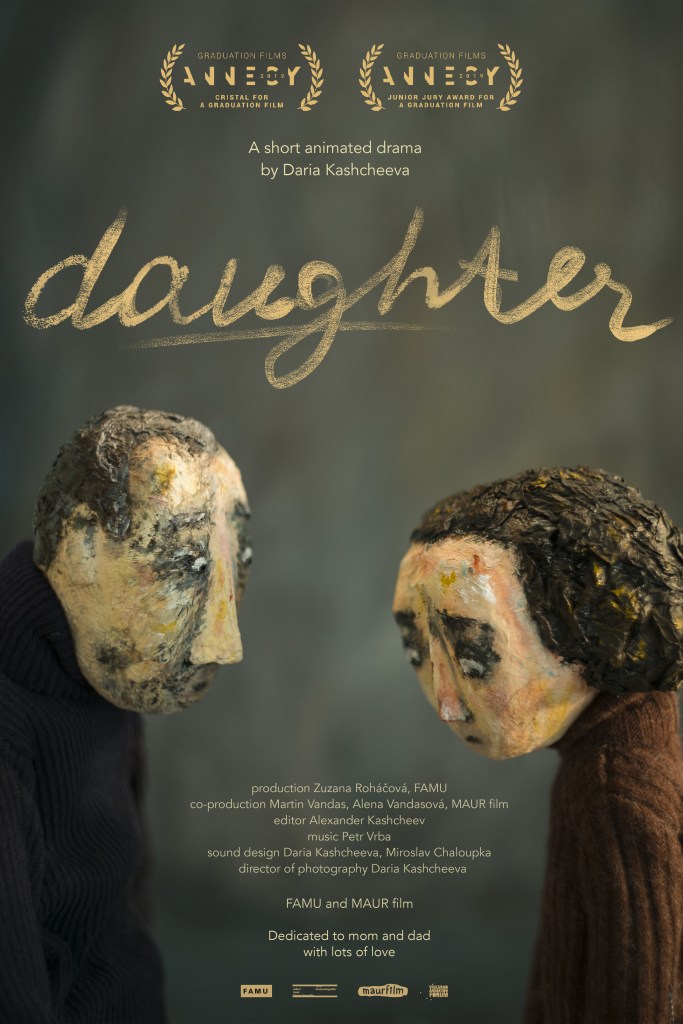
Daughter (2019)

Daughter is a silent film and I think that is a good point. Expanding upon my previous forefront post, the film also emphasizes on a good performance can go a long way. As Rudlop Arhiem very well states;

“Not only does speech limit the motion picture to an art of dramatic portraiture, it also interferes with the expression of the image.” ~ Arhiem (1938:228)

Reflecting on her childhood as well as parts of growing up that she believes are universal, Kashcheeva composed the short, which examines the relationship between a father and his daughter—which has deteriorated over the years due to misunderstandings. “I recalled times when I needed help from my parents but they were busy. I was offended as I went to my room and thought, “Oh, if I died, they would cry.” Things that are very odd,” the director says. Although I have excellent parents, I believe that every child experiences times when they require more love and care. Silence is the real killer here.

The film is a case study about a complicated relationship between a young woman and her father. She finds him in a hospital ward and recalls their tumultuous connection as children, how they eventually separated ways, met again, and were reunited. Having worked in theater for a while (mostly mime and puppeteers), I can fully resonate with the approach here, e.g., sometimes expressions are enough to convey an emotion that words can not fully justify. Being a millennial, I think the unfinished look of the characters gives it a unique richness. For Kashcheeva, part of the challenge of creating Daughter stemmed from her desire to bring a dirty, imperfect, documentary feel to a stop-motion world. I believe this intentional rough art style gives it a nuance. The art style sells you effectively that it is told from the point of view of a child. Kashcheeva tries to achieve is the Dogma95 feel (it was a movement in the late 1990s where filmmakers worked on limited budgets and as a result came up with much creative work). This is something I firmly believe in. Early in my career, I wanted a big budgets for my films, but later on realized that you only make a mess when you have a lot of budget on your hand. Hence fewer creative outputs. A concept that is interesting to me as a filmmaker, when you are on a limited you produce better work then.

References

Grobar, M. (2020). How ‘Daughter’ Director Daria Kashcheeva Brought Documentary Aesthetic To Oscar-Nominated Stop-Motion Short. [online] Deadline. Available at: https://deadline.com/2020/01/dcera-daughter-director-daria-kashcheeva-oscars-animated-short-interview-1202836194/.

http://www.youtube.com. (n.d.). Daughter – 2020 Animated Oscar Shorts. [online] Available at: https://www.youtube.com/watch?v=nGcP4hmUyZY [Accessed 1 May 2023].

Forefront# 2 | Affairs of the Art

One of the most intriguing animators working in the industry is Joanna Quinn, who continues to break barriers all across the board. Affairs of the Art is no exception. The film is a character case study of Beryl, who is exploring her childhood, artistic career, and motherhood.

The stunning 2D hand-drawn artwork in this animated short perfectly conveys Beryl’s personality and attitude with each stroke of the artist’s brush. The aesthetic is evident through the use of intricate animation, which is accentuated by oversized character designs and dynamic performance.

I am a firm believer that Performance is everything and this is prevalent in this film as we get the full Beryl performance from childhood to adulthood and motherhood. Through her drawings, Quinn manages to convey obsessions and compulsive behaviour: “Like Beryl, Quinn calls herself “just a little obsessed” when it comes to extracting the best performance possible from a line of dialogue. She stated, “I act it out in front of a mirror.”

It’s within this quote that I find my reason to reference her in my work. The performance is everything, letting oneself go and fully committing as Joanna Quinn obviously has done here as seen in this NFB interview from 11th Jan 2022:

I believe and follow this phrase religiously when I approach a scene. This applied to both the environment and the actor, because if the audience can’t empathize with the characters then the illusion will fall through. As with every interview Quinn, has really inspired me to do better. To continue my obsession with drawing and animation.

2D traditional animation is as relevant and influential today as it’s ever been. This has been shown by Quinn being nominated for an Oscar for her work, further pushing traditional animation into the public consciousness as a medium worth preserving. Without this medium we would never have been given Spider-Man: Into the Spider-verse or even the likes of Puss in Boots. Even when we have scenes like this: “The part where Miles Morales, realizes what it means to be Spider-Man and the sacrifice he must give and that it the moment he truly embraces his destiny.” Just wonderful.

Quinn continues to question conventional conventions through the story of female empowerment through the nastiest methods and a real feeling of femininity, once more taken to its extremes, and she demonstrates both for us in the change of Bev when she finishes her cosmetic surgery trip.

References

Wolfe, J., 2022. How Oscar-Contending Animated Short ‘Affairs of the Art’ Continues Harnessing Family Obsessions. [online] IndieWire. Available at: <https://www.indiewire.com/2022/01/affairs-of-the-art-animated-short-joanna-quinn-1234692612/&gt; [Accessed 7 October 2022].

2022. [online] Available at: <https://womenwriteaboutcomics.com/2022/03/women-in-british-animation-joanna-quinn/&gt; [Accessed 7 May 2022].

Forefront# 1 | Cartoon Network for new generations

The interesting thing about art is that it is ever-evolving and innovative. But there comes a time when you have to draw the line and say enough. For me, the new cartoon network animation trend is that. 

CN Anything

The above animating is provided by Ronda, an Argentinian company that has done tv Ads for big brands. A while ago, they did a tv spot for Cartoon Network. The Animation is really strong. I have no idea how they manage to move that camera around with those exaggerated movements and character expressions all over the place, which I must say I really like it. It’s all fun and games, but the colour… is hard to digest. 

The colours palettes that I am used to are a bit washed up colours mostly pastel tones. I am not saying the I am not a fan of brightly couloured scenes but I am certainly not a big fan of brightly lit characters, environments and scenes because I find them a bit to distracting. I believe animated content should have more mellow colour tones but then again bright, over-the-top and exaggerated colour palettes are what set animations and live action films a part

Is it that this is a new trend for future generations? Am I too old to see cartoons now? I really don’t feel connected with this colour scheme and I don’t know how can it be perceived by the audience. I think it could be a thing to get used to, but in my opinion, it is too radical a makes me want not to see it for far too long.

Is it possible that we are looking at a new trend in 2D Animation in the near future? I will have to keep looking and find out what would be the pallets that will be done in the near future.

References

Ronda (2019). CN Anything. [online] Vimeo. Available at: https://vimeo.com/351221876 [Accessed 25 Apr. 2023].