Creative Decision | Update# 5

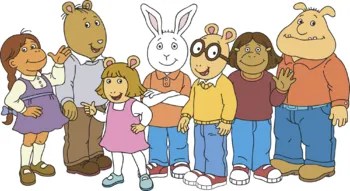
The most important aspect when creating any show especially for a children’s series is the character designs. During my research I realized that in majority of series aimed at elementary school kids had either anthropomorphic characters, abstract or animals. For example.

In the shows shown above, the animals mostly mimic human characteristic while being intact with their animal nature e.g., a fox character might be cunning but also thief, while a rabbit is very quick so he might be a science wizz, or a cat who might have a low attention span and is engaged in various activities at the same time. I could take on a similar approach but I feel that when transferring such characters on a mockumentary series (set in an elementary school) it might break the illusion of the medium. Children might not resonate with such characters.

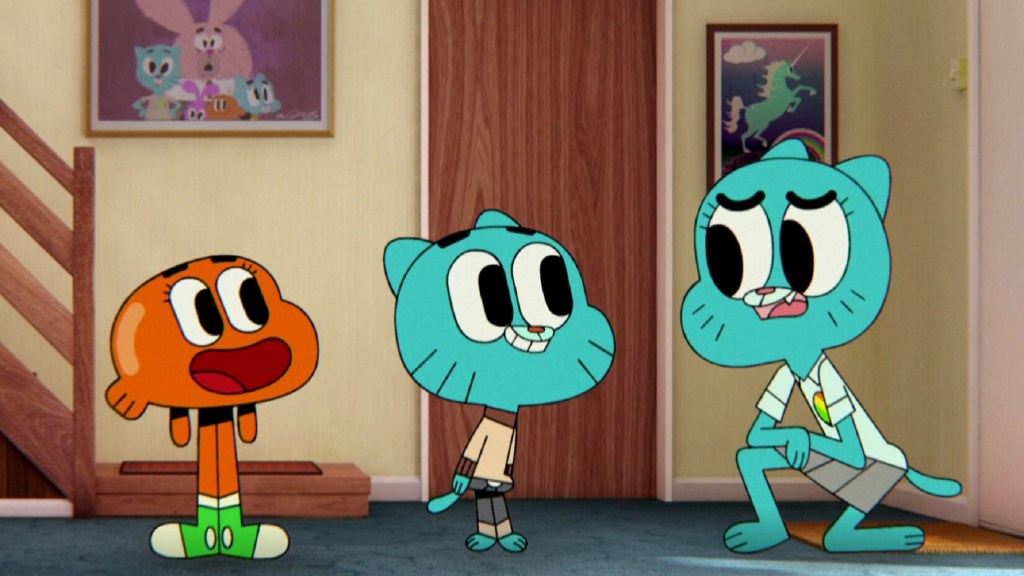
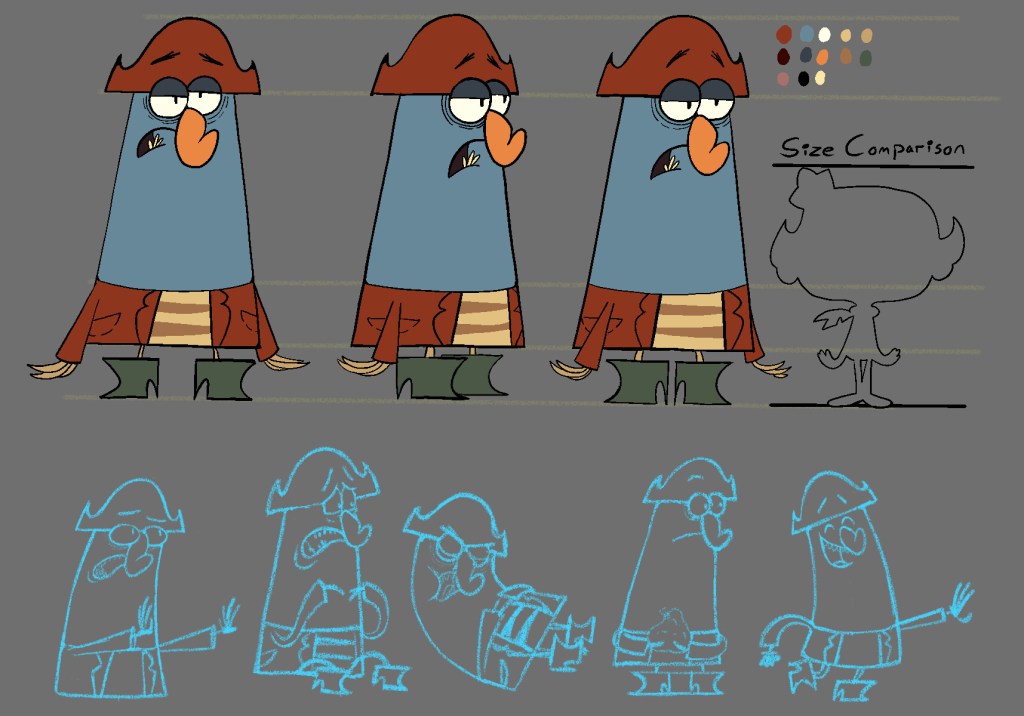
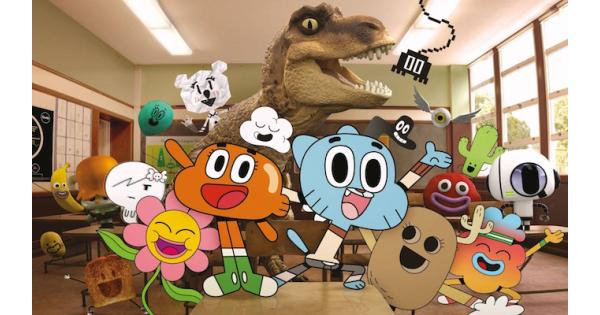
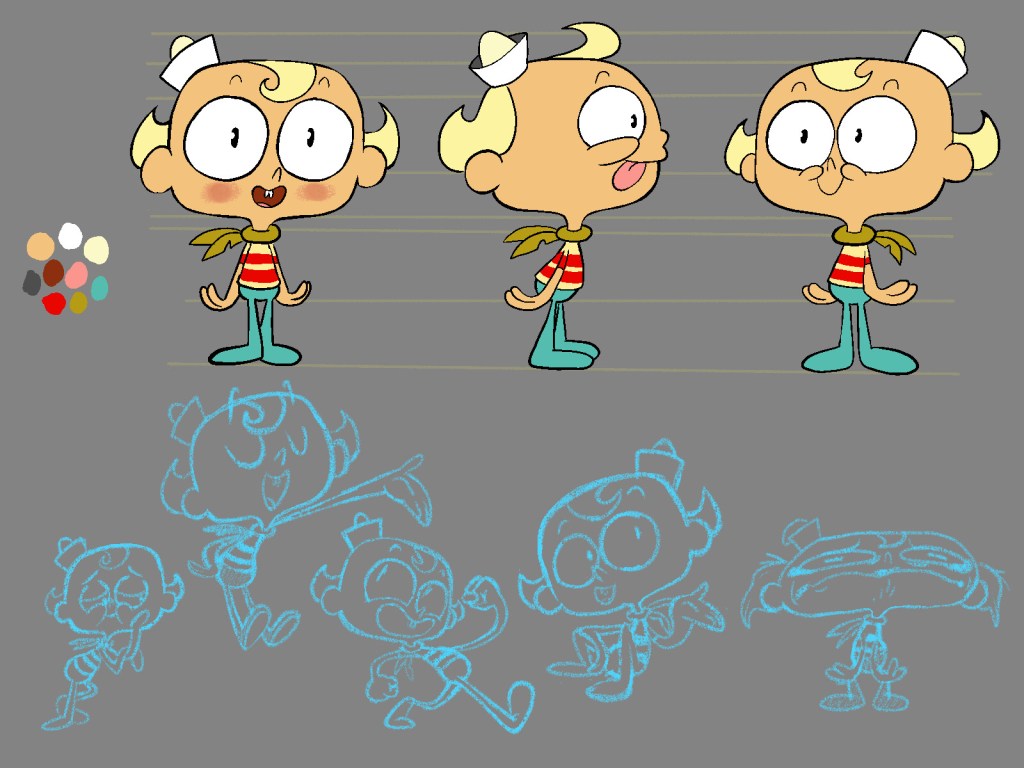
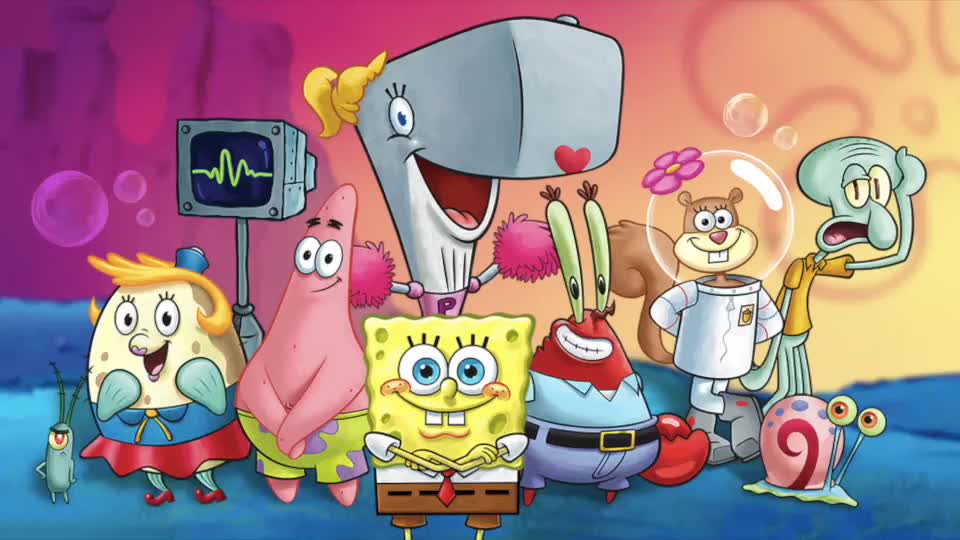
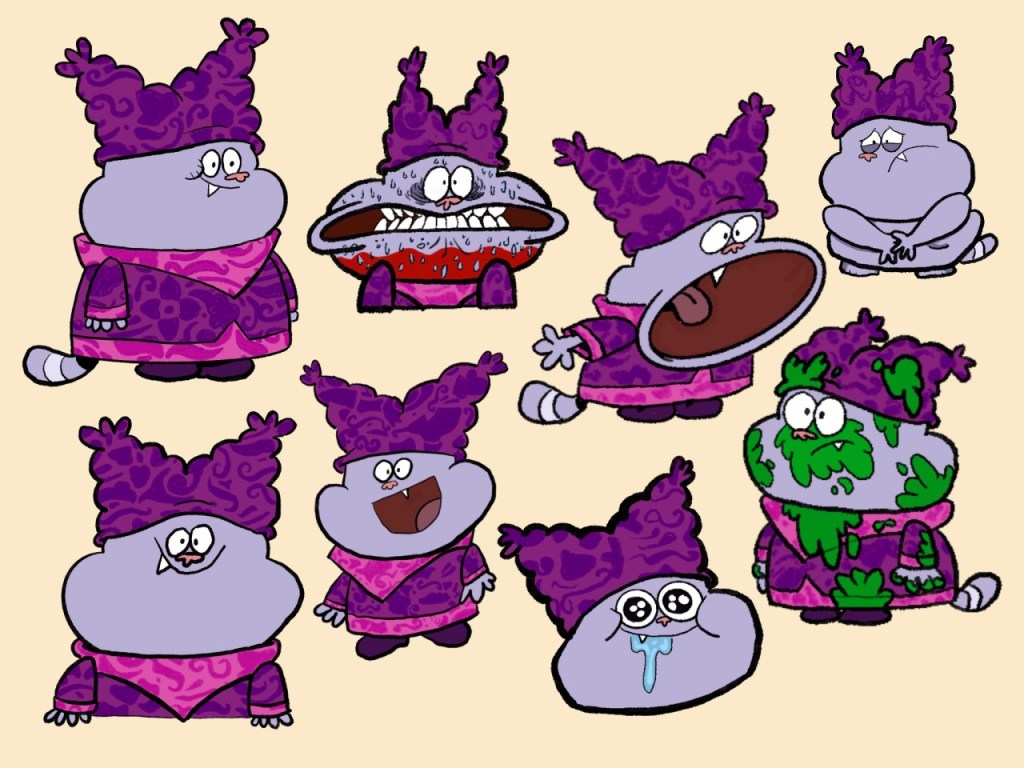
On speaking of anthropomorphic characters shows like; The misadventures of flapjack, chowder, Spongebob or the adventures of gumball, the characters have their own visual language and could move freely.

They could have over-the-top exaggerated expression and I think children appreciate these kind of character quips.

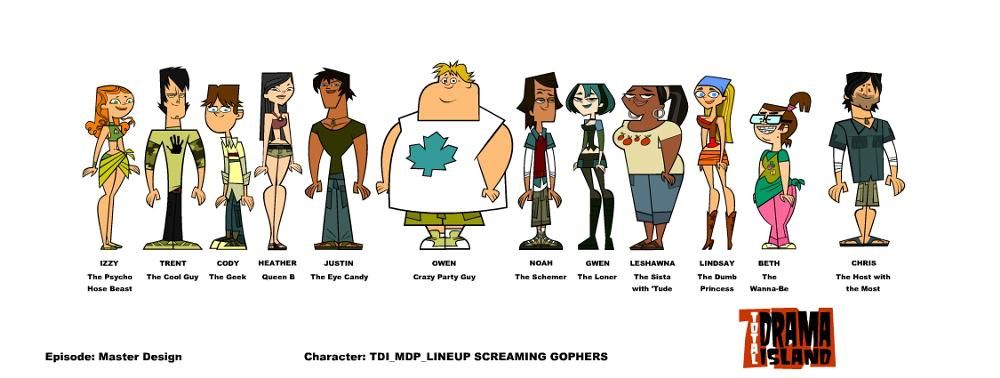
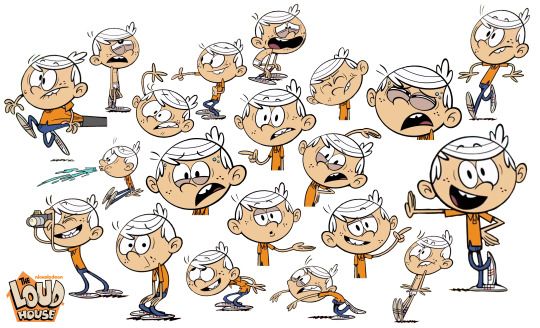
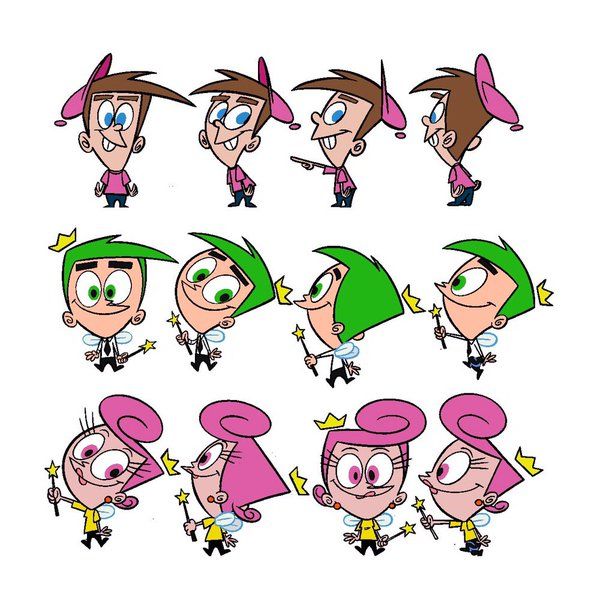
Another character style I feel most resonates with children are the actual human figures themselves, but instead of being to detailed or realistic a more stylized, simple and shape oriented approach is more easy to empathize with. For example;

Show like; The fairly odd parents, total drama island, the loud house, or Ben and Holly’s little kingdom the characters are mostly floating heads and each character has a unique shape that is linked to it attributes.

Hence, I feel going for the simplistic design approach (where characters are based on shapes) would amplify and compliment my concept.

References

Arthur (Tv series). 1998. [Film] Directed by Marc Brown. USA: PBS.

Camp Lazlo. 2005. [Film] Directed by Joe Murray. USA: Nickelodeon.

Franklin. 1997. [Film] Directed by Brenda Clark Paulette Bourgeois. Canada: Nelvana.

Spongebob Squarepants. 1999. [Film] Directed by Stephen Hillenburg. USA: Nickelodeon.

The Amazing World of Gumball. 2011. [Film] Directed by Ben Bocquelet. USA: Cartoon Network.

The Fairly OddParents. 1999. [Film] Directed by Butch Hartman. USA: Nickelodeon.

The Loud House. 2016. [Film] Directed by Chris Savino. USA: Nickelodeon.

The Marvellous Misadventures of Flapjack. 2008. [Film] Directed by Thurop Van Orman. USA: Cartoon Network.

Total Drama. 2007. [Film] Directed by Jennifer Pertsch Tom McGillis. USA: Cartoon Network.

Research | Update# 4

Before writing a mockumentary series I needed to familiarize myself with the genre. I found articles on Mockumentary as a Transmedial Narrative Style (by Cristina Formenti) and How Bill Nichols modes of representation are applied in animated documentary films .

The article further emphasized how mockumentaries are malleable enough to be applied over a broad range of media forms. In fact, texts that record fictitious events but are totally created as nonfictional works by copying the veridictive markers of their medium of destination fall under this category. In other words, they mimic the aesthetics and narrative elements we typically identify with the factual creation of that particular medium. It also becomes clear how this narrative style can be easily adapted in various forms of communication given that almost every media platform has its own nonfiction realm and, as a result, one or more factual modes of representation on which to draw in order to give an invented story the form of a nonfictional text.

However, in order for a text to be deemed a mockumentary, it must also display (more or less overt) signs that it is fiction, such as a disclaimer, the use of renowned actors, an absurd plot, the use of parody, or more subtly visible signs like glances in the direction of the camera and minor narrative inconsistencies. Such hybrids actually differ from fictionalized documentaries in that, in contrast to what occurs with the latter, their actual ontological position must be indicated in some way. There isn’t a pre-compiled list of tips to employ for this purpose, though.

Most well-known and popular mockumentaries are comedic feature
films such as Woody Allen’s Zelig (1983) and Rob Rainer’s This Is Spinal Tap
(1984), the medium within which this narrative style has first been employed
was not cinema, but radio.

In particular, among the mockumentaries initially created, we recall Orson Welles’ famous radio drama War of the Worlds (1938), wherein H.G. Wells’ homonymous novel has been retold in the fashion of a live bulletin, by deploying aural codes and conventions associated with news reporting, like interviews with eyewitnesses, declarations of experts and feeds from on location journalists. It must also be noted that, in line with what was previously described as characteristic of this style, it was as well hinted at the program’s fictional nature through four disclaimers, a near-future setting, and the date of its airing.

It might be an overestimation to declare the small screen best suited to house these hybrids. However, it cannot be denied that over the past 20 years, mockumentaries have entered the mainstream of television programming and have evolved into a new genre that can be used for both commercial and artistic purposes. The four primary typologies of texts that this form of narration is used to construct are one-off episodes inside otherwise plain fictional series, individual news feeds in factual programmes, non-serial products, and full series. The Grey’s Anatomy episode These Arms of Mine (2010) is an example of the first. It preserves the episodes’ normal narrative framework while adopting the point of view of an outside documentary team, entered the diegetic space to attest to how a shooting, which had occurred in the hospital a few months earlier, had changed the lives of the characters as if they were real-life doctors.

The Swiss Spaghetti Harvest, an April Fool’s Day hoax that is regarded as the first audio-visual mockumentary, is an example of the second, while the third category includes films made specifically for television, like Costa Botes and Peter Jackson’s Forgotten Silver (1995) or shows like Lesley Manning’s Ghostwatch (1992). The popular sitcoms The Office (2001–2013) (both US and UK versions) and Modern Family (2009–2020), which pretend to be vérité gazes on the daily life of an extended Los Angeles family and a British workplace, respectively, are examples of the final group.

Mockumentaries have increased at a constant rate in the last decades they are not just limited to film and television but have leaped into the digital medium as well e.g., the web. In addition to serving as a platform for the distribution of individual videos or entire series that use this mode of narration, the internet is also home to what Federico Zecca refers to as “hoax websites,” or webpages, blogs, or websites that portray a fictional character, an invented company, or an imaginary community as if it were actually real. This growth of hybrids has been observed concurrently with the emergence of online documentaries. For instance, on the Internet, we may find the webpage for the purportedly Indiana city of Pawnee, about which James Hay noted Although the website has evolved over time and, as of this writing, its homepage does not match what was described by Hay, it still strongly resembles those of actual towns. Yet, this city is fictitious as are its councilmen, who are embodied by popular television actors (a fact that we can ascertain, for instance, through the photographs that accompany their biographies in the City Council Bios page). Indeed, not only are we here dealing with a hoax website, but the latter was also constructed in order to extend on the web the story world of the televisual mockumentary sitcom Parks and Recreation (2009–2017 ). However, it replicates the structures and the aesthetics of nonfictional websites and at the same time presents hints to its fictitious nature—through parodic written contents, a link to the Parks and
Recreation series’ webpage, and the aforementioned photographs—, we can consider it a mockumentary in itself.

Developing visual metaphors to plot Nichols’ theoretical framework of documentary

Bill Nichols identifies six modes of representation in documentary films. They are the expository, participatory, observational, performative, reflexive and poetic modes. Bill Nichols’ proposed modes of documentary create six subdivisions akin to sub-genres in his book, Introduction to Documentary (2001, p. 99, 1st ed.). His topology was composed of the “poetic mode”, which places emphasis on aesthetics rather than a subject; the “expository mode”, which presents a linear authoritative perspective; the “observational mode”, documenting a subject naturalistically; the “participatory mode”; focusing on the relationship between the filmmaker and subject; the “reflexive mode”, focusing on the relationship between the filmmaker and the audience; and the “performative mode”, attempting to represent subjective knowledge (2001, p. 125 & 138, 1st ed.). Collectively the modes appear, at first glance, to be a method for dividing the spectrum of documentary productions into distinct camps.

After reading the articles, I had a much better understanding of what had been done and how it was done. I need to go back and revise my concept and script to fit within the setting and characters styles.

References

Formenti, C. (2015). Repositorium für die Medienwissenschaft Expanded Mockuworlds. Mockumentary as a Transmedial Narrative Style 2015. Zeitschrift für interdisziplinäre Bildwissenschaft. Themenheft zu Heft, [online] 21(1), pp.63–80. doi:https://doi.org/10.25969/mediarep/16508.

Widdowson, A., 2019. Animating Documentary Modes:. Navigating a theoretical model for animated documentary practice, Volume 3.

Nichols, B. (2001). Introduction to Documentary, First Edition. 1st ed. [online] JSTOR. Indiana University Press. Available at: https://www.jstor.org/stable/j.ctt16gznjb.
Research | Update# 3

Writing for children media requires a very different set of skills, it is a very different medium. In order to write a mockumentary set in a primary school, I first had to peek in to my past and resonate with stories I want to tell myself. After talking to my childhood friends, I listed what kind of games we used to play, the competitions we used to have, what kind of politics and antics we were engaged in, just to name a few.

Below is a list of few of the activities we used to do in school;

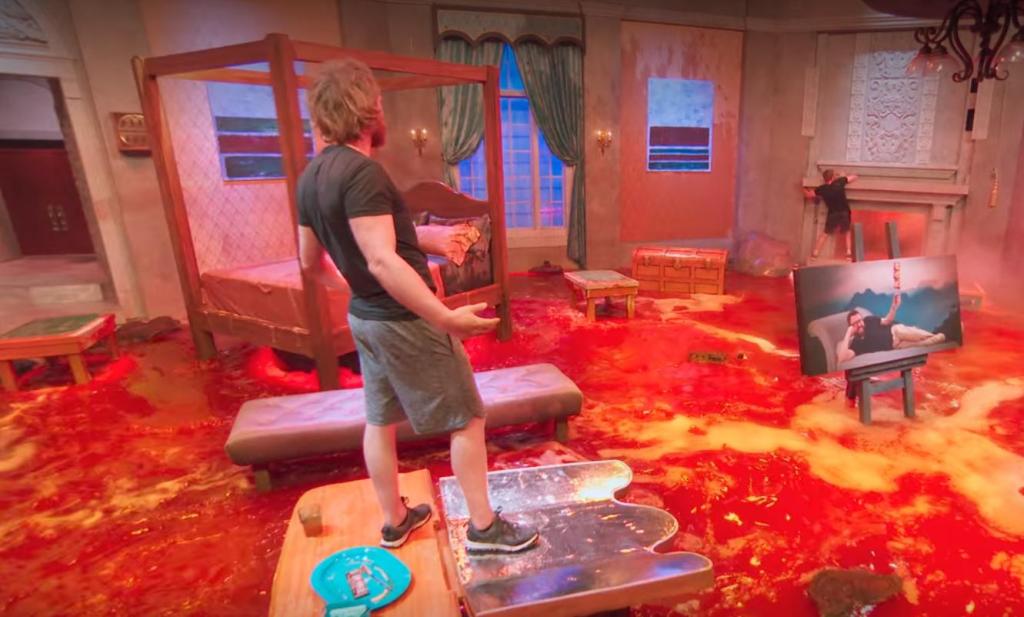
  1. Floor is Lava
  2. A break up with a friend is equivalent of a divorce
  3. Groupings
  4. Sports
  5. Lunch Swap
  6. Admission Day
  7. Cheating during exams
  8. Preparation fro Exam
  9. Exam result
  10. Kadi-Kadi ( catch-catch)
  11. Kings Stop
  12. Costume day
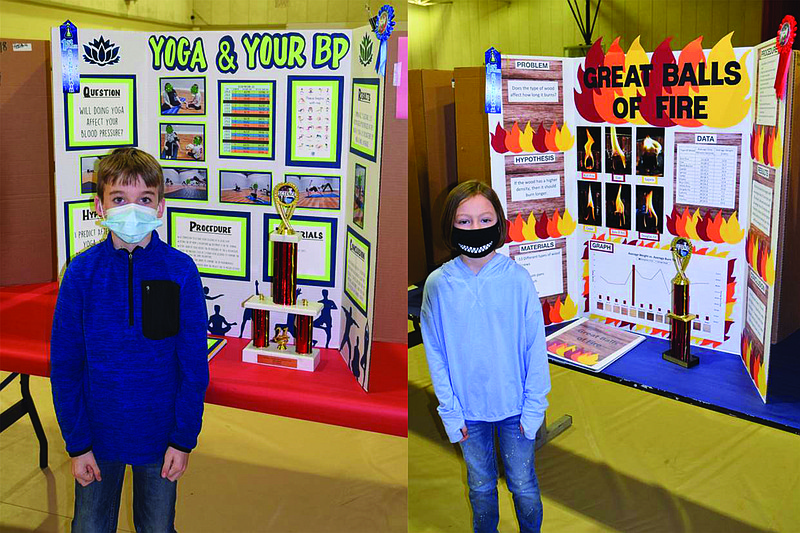
  13. Show and Tell
  14. Chinese Whisper/rumours
  15. School Plays
  16. Art competitions
  17. Spelling Bee
  18. Fights in schoolyards
  19. Re-enacting famous lines and scenes from films and TV series
  20. Food fight
  21. Getting locked up in the toilet
  22. Class bunking
  23. Eagle trying to steal your lunch
  24. castle wars
  25. Drawing on the tables
  26. Bullying because of a disability

For now I will use one of these as the basic story for the pilot episode and use the rest as a pitch to show, if ever picked by the producers these are the stories we can tackle in the following episodes.

I think the floor is lava game has the potential to be an engaging episode as there is a lot of room to play here. Every child in this game would a different role e.g., the classroom could be divided in to zones, some are doing an activity or some are doing a call back to the climax scene form the Revenge of the Sith. Hence, there is a lot to play here.

References

‌Advancement Courses Blog. (2018). How to Manage School Fights | Advancement Courses. [online] Available at: https://blog.advancementcourses.com/articles/how-to-manage-school-fights/.

Floor is Lava. 2020. [Film] Directed by Brian Smith. USA: Netflix.

Magnolia Banner News. (2021). Central Elementary School holds science fair. [online] Available at: https://www.magnoliabannernews.com/news/2021/mar/04/central-elementary-school-holds-science-fair/ [Accessed 29 Apr. 2023].

Creative Decision and Research| Update #2

To get a mockumentary right, first I needed to decide what it the actual documentary going to be about so that I can mock it, because if I look at mockumentaries like The Office (UK and US versions), Modern Family, Parks and Recreation or what we do in the shadows (which are going to be my case studies as well); they are set up in very unusual places and the characters are very conscious of the camera when it is around so it leads to them create humorous situations.

The Office (US version)

As you can see in the video, Dwight is using the camera crew as a plot device for his disastrous plan. He tells the crew what he is about to do i.e., giving a fire safety drill. Which eventually backfires and leads to one humorous after another (One of the best series episodes as well). A risky move on his part, but seeing the camera crew is what gave Dwight courage to do such a crime.

The Office (UK version)

This is a perfect example of when a human becomes aware of the camera and acts in a different manner e.g., in this case Brent is doing an employee evaluation and acts in a very sophisticated manner to sound smart on camera and this leads to a very awkward banter for Keith (who is less conscious of the camera and more focused on the task at hand).

What we do in the shadows

The comedic style in What We Do in the Shadows flips between self-aggrandizing and self-effacement. These vampires believe that they’re superior to humans, though the story constantly proves that they’re not half as intelligent or responsible. Well, except Nadja — unless her perennially reincarnating human lover, Gregor, is involved.

Seinfeld started the trend of “No hugging, no learning,” which forms the basis of several modern TV comedies. It implies that sitcom characters shouldn’t waste time on emotional development when they could be making audiences cringe-laugh, instead. The characters in What We Do in the Shadows mock and insult each other non-stop, but the show still manages to evoke heartfelt responses from viewers.

Hence, when it comes to children, they are going to be acting like how they are regardless of the camera. So either I change the concept a bit or design characters that fit this narrative device. Why not do both?

I thought why not add a character that has a knack for film making and decides to make a documentary on his school adventures and the characters could be of different ethnicity who over act in front of the camera.

One that can be noticed is that, the mockumentary format has a very guerrilla style film making and instead of steady cams they use handheld ones. It will be an interesting thing to create in animation.

References

The Office. 2000. [Film] Directed by Ricky Geravis, Stephen Merchant. UK: BBC.

The Office. 2005. [Film] Directed by Greg Daniels. USA: NBC.

What We Do In The Shadows. 2019. [Film] Directed by Jemaine Clement. New Zeeland: FX.

Ideation | Update #1

It is that time of the year when are allowed to pitch films for the final project. I had a couple of ideas in the back pocket for while now and in today’s lecture I got to share it with the class and get their feedback on it. Before coming up with ideas we were asked by our HOD; what we want to achieve with our final project e.g., use it as a pitch for a TV series or make a film that you want to send in to festivals etc. Since everyone is opting to create a short film, I thought why not take this opportunity to make a pilot for a children’s tv series. However I did ideate other ideas as well.

Idea 1 – Light and Shadow Further Development

The initial idea was to further develop my practice 1 concept of light and shadow and to make it a full fledged film. A quick recap of what the story was; The story depicts a battle between two sides, 1. Officials (army, police, black ops etc) who are depicted as Light vs. A shadow army, 2. Civilians (lights) vs. Shadow army. The story begins in an apocalyptic world and the two sides are about to face off. In a gory match, both sides are have tremendous losses and in the battlefield two soldiers (one of light(civilians and officials) and other of shadow) are left pointing guns at each other. Just as the sun rises and the shadows starts to disappear. It is revealed that the shadows figures were in fact bodies of officials and civilians. For the civilians, the officials were seen as evil shadow figures and for the officials ,the civilians were shadow creatures. In a way, the story is about how people have lost humanity and are blocked by worldly restrictions and over shadowed by greed and power etc.

Although I love the concept but the problem with it remains the same that it is too ambitious and 3 mins of time will be doing injustice to it. So I don’t know for sure but will see what I can do with it in the future.

Idea 2 – Meethay Chawal ( Sweet Rice)

Meethay chawal i.e., Zarda means sweet rice and it is a dish popular in Pakistan. Meethay Chawal is derived from the traditions that is common in Pakistani villages. Whenever an old person dies, as tradition meethay chawal are distributed at their funeral.

The story starts on a rainy day. People are coming and going in a small cottage. We see that a funeral has taken place and we track the crowd towards a room when an eight year old is sitting alone, dressed in white eating “Zarda“. This is when his obsession with meethay chawal starts on the day his grandfather dies. The next day he goes to a parchoon (a small convenience shop in the neighborhood) shop to get some things his mother has asked. There he befriends an old man who resembles to his grandfather. He gets to know of his obsession with sweet rice and the both bond over them. He tells him stories in exchange he gets to eat all the rice that he can. One day the man and the boy get in to a fight and don’t see each other for days. One day the door bell rings and an unknown person brings meethay chawal to the boys home and says that they were sent to him as a token of apology. He accepts them and eats to the brim only to later find out that he had died and were distributed as part of the tradition.

The reception of the story was unanimously positive and I also believe that if executed right it can turn in to something beautiful that can be sent to festivals. Fingers crossed.

Idea 3 – A mockumentary comedy set in a Primary School

The series is set during lunch break, when the child get vivid imaginations, exaggerate a lot of stuff and are engaged in various schoolyard politics. Primary school seemed like a perfect setting for this because of children of this age bracket (6-12) have very ambitious ideas. In those 15 minutes a lot can happen especially when the teacher is not around.

After taking a vote the ideas 2 and 3 were the favourite ones.

In a tutorial with the teacher later on, we further dissected both ideas. While idea 2 was good, we felt that it needs a longer run time to justify the premise and concept, while would not be possible this time. While Idea 3, can be something very nostalgic for everyone and people can relate to the adventures.