
The works of Sylvain Chomet | Reflection on other practitioners

Sylvain Chomet might not be your traditional animator or artist. Being a huge fan of ‘The Simpsons’, I found out about him when he created the couch gag opening for The Simpsons. He is one of the few artists that use real life figures and use their caricatures as characters. I never imagined what real-life caricatures of the characters would look like. his visual style convinced me that the Simpson characters are inspired by real people, not simply random characters, and that they are a part of us as well.
He stylizes caricatures like they belonged to the 1920s but with a modern touch which gives his art style a very unique touch. He places these characters in modern environments, buildings, etc.
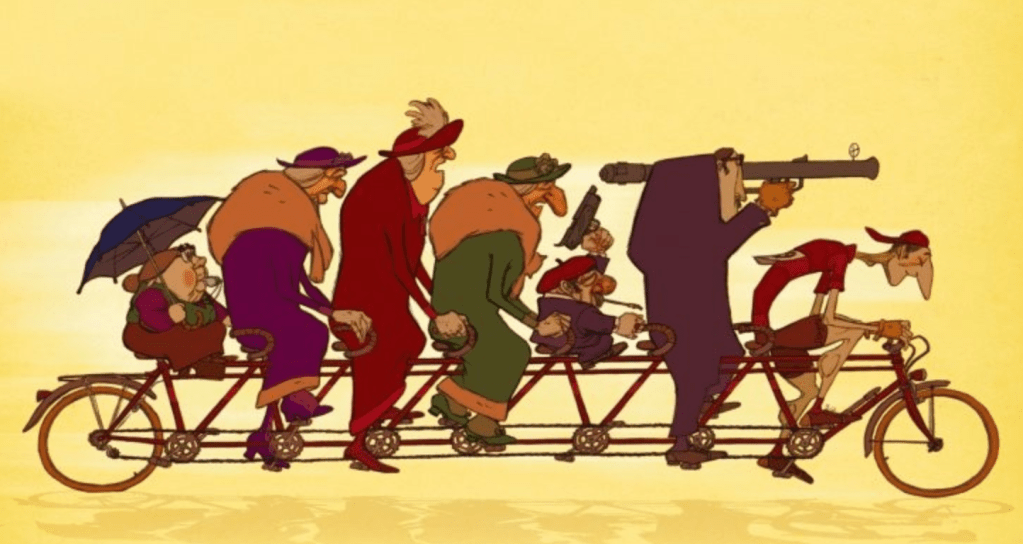
I admire Sylvain Chomet’s film The Triplets de Beville, and one of my favourite aspects of the film is the character design.
What makes his work avant-garde and his narrative so effective, despite the fact that they are silent pictures is what intrigues me.
All the characters are very exaggerated e.g., so huge noses, long legs, a particularly very fat dog with the features of the characters are so exaggerated that is almost satirical and these characters are full of flaws and this is what makes them so lovable.
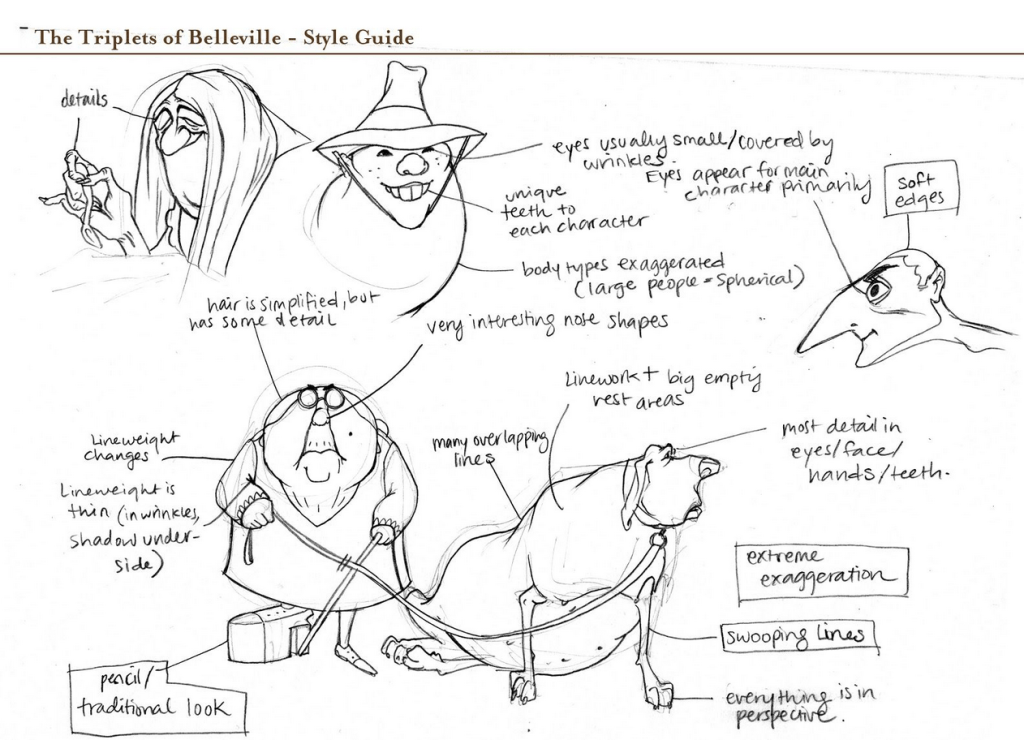
At the same time we’re having quite an accurate anatomy and a realistic feel so we have this mix between realism and then goofiness which makes the film and the feel of the characters very unique in my opinion. If we look at the linework we can see that it’s done in pencil giving it a traditional look which seems fitting for the film that seems to be set in the period of the 1920s. You can also notice how the line is kind of sketchy in the feeling of it and it gives it a sense of informality turning our attention to the design. There’s a clear line with overlap at intersections and this makes the design very readable which is often the case for cartoons in general but I think in this case here. It’s just very beautiful work on the animators’ and character designers’ sides. I think one thing I should mention about the design is that it has many quirky details such as the grandmother’s shoe, where one heel is really large because obviously a short leg and a long leg and this is what gives her a lot of character also the very thick glasses and the dimensions of the head there’s also something that’s exaggerated here also notice the very fat dog.
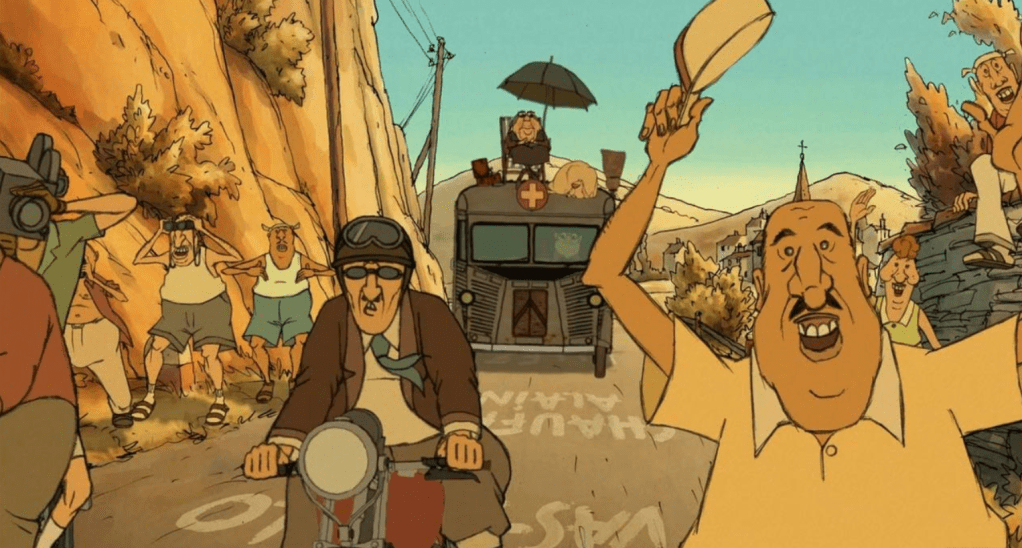
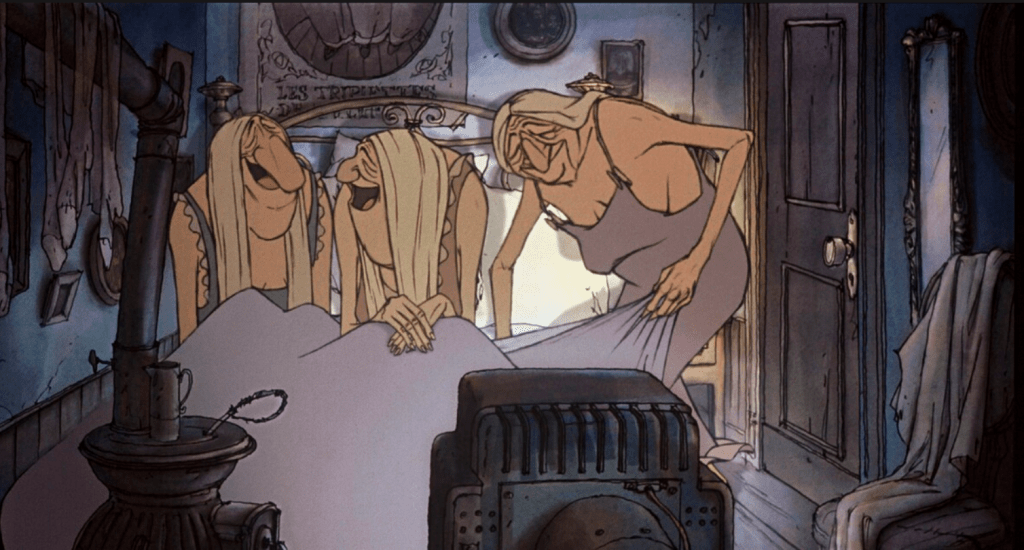
The director is said to have gone through something similar in his life. It is like he observes people around him and creates their caricatures and in a way his films are a version of his reality.
Reflection on my learning

hroughout the semester we tackled different concepts and each time I went for a different approach and challenged myself. The results turned out to be hit-and-miss. For example, there were some stories which looked good on paper but did not materialize that well, maybe it was due to a lack of skills or time, but I was satisfied with the way things moved. During this whole process, I found my style of storytelling and the stylized visual approach.
Over these past few months and constant discussions with Alex I realized that initially, I did not have a specific art style which was both, an advantage, and a disadvantage. After completing these projects, I realized that I have an art style which resonates with people of all age groups, especially children. This can be seen in the initial stages and concepts of all my artworks but I keep pushing myself to try out different styles, so my work often looks dissimilar to one another, which is exactly what Alex said as well. ‘Places of mind’ and ‘Memory and nostalgia’ are the primary examples of how I subconsciously have a specific style as I did not push myself to make these projects with different styles. After reflecting on this I realized that my favourite shows and movies have always been of similar concepts and styles.
Whenever Marvel works on a new movie, they look into old superhero shows from the 70s as they are considered to be from the Golden era and then they compare it to their new movies to set a standard. Similarly, I watch episodes from my favourite shows such as ‘The Simpsons’ and ‘Rugrats’ for inspiration and even though my work is lacking, I aim to achieve similar standards. Their creative scripts and stories have always been a major inspiration for me since my school days.
Initially, when we were told that we would be required to make 3o second animations for these projects I was sceptical about it. I questioned how one would be able to portray proper full-fledged stories within this timeframe. After doing these projects I realised the true potential of this medium and how impactful it is. Even in such a short time, one can achieve a lot. This semester has been very educational for me, and I believe my skills have improved after discussion with Alex and my peers and also by sharing each other’s works. Moreover, we learnt more about 3D camera rotations within a 2D environment, different perspectives, fisheye lens and various styles and artworks. animation but lacked a proper process and workflow which was basically the core of this course but I believe that I am improving and have learnt a lot in this semester.

Reflective Blog #5| Light and Shadow

I hold lights and shadow very close to my heart as I have seen this since my childhood. I wanted to shed light on the ongoing dispute over Kashmir and how both sides are similar and only seem different because of their outer shells which are their differences caused by world affairs. Even though my professor and peers liked the story and concept they were a little sceptical about whether I’ll be able to justify the story within the 30-second time limit that we all have. My professor, Alex, gave me some constructive criticism by voicing his concerns. There were some issues that he highlighted: It is very difficult to depict violence through animation and he thought the scale of the entire project seems very ambitious, especially within the given time limit. However, he suggested that I choose this project as my thesis as he sees a lot of potential in it as a short film. After discussing with Alex, I’m trying to complete the animation within one minute. Keeping my discussions as well as my personal bias towards this story, I am considering this project for further development on the back burner for my thesis.

Light and Shadow | Animatic

It took ages to compile and create the animatic. As the concept was ambitious, I took some to get the right look and feel of the story and do justice to the storyboard as well. There might be some glitches in between and as usual the pacing seems of as some scenes require time to establish while some pass by quickly.

Music Copyright – Warner Music Tower (The Dark Knight Rises)

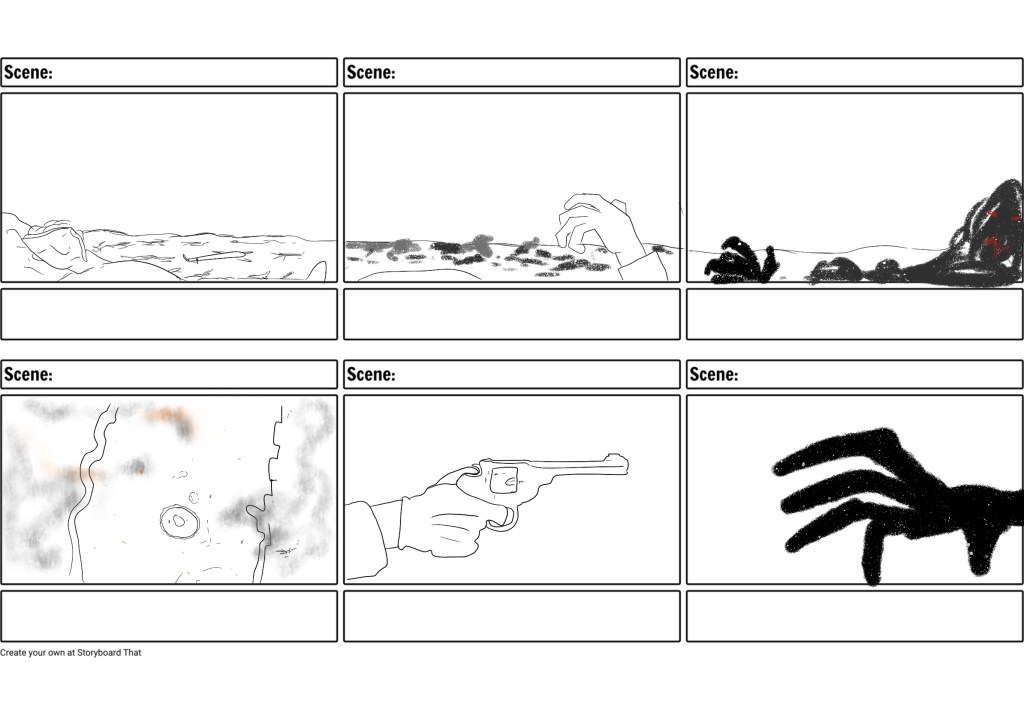
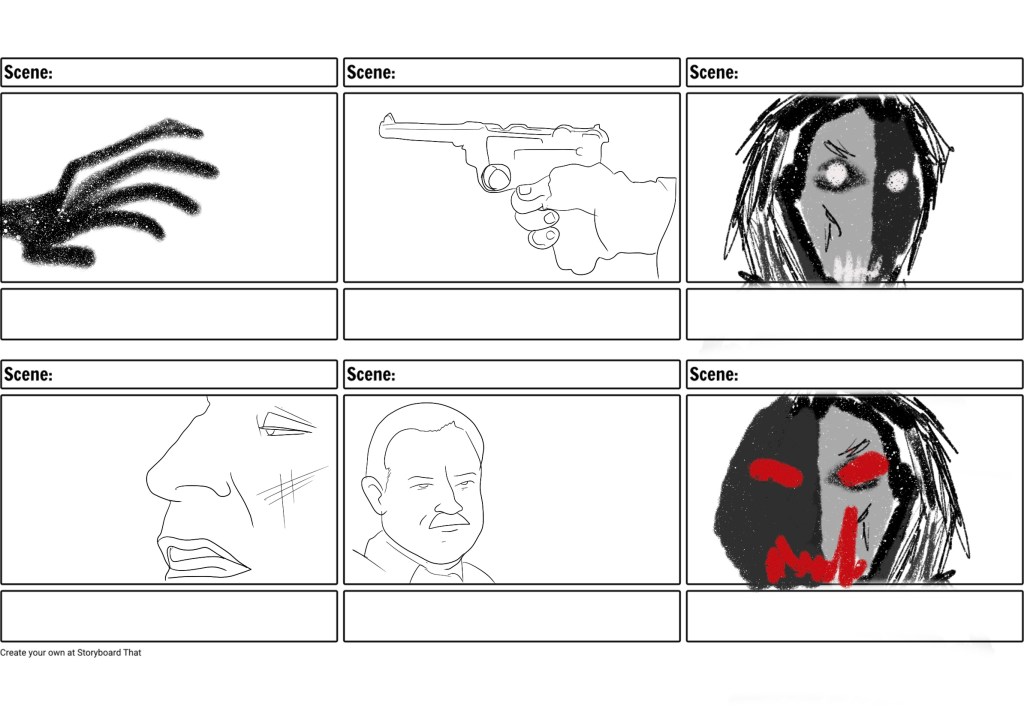
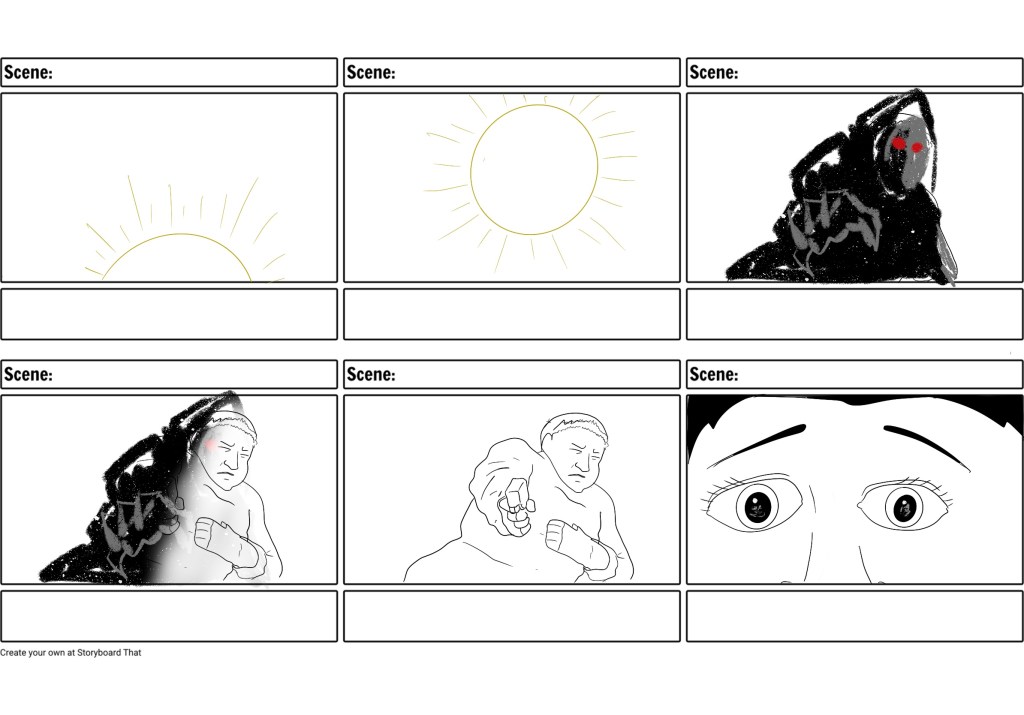
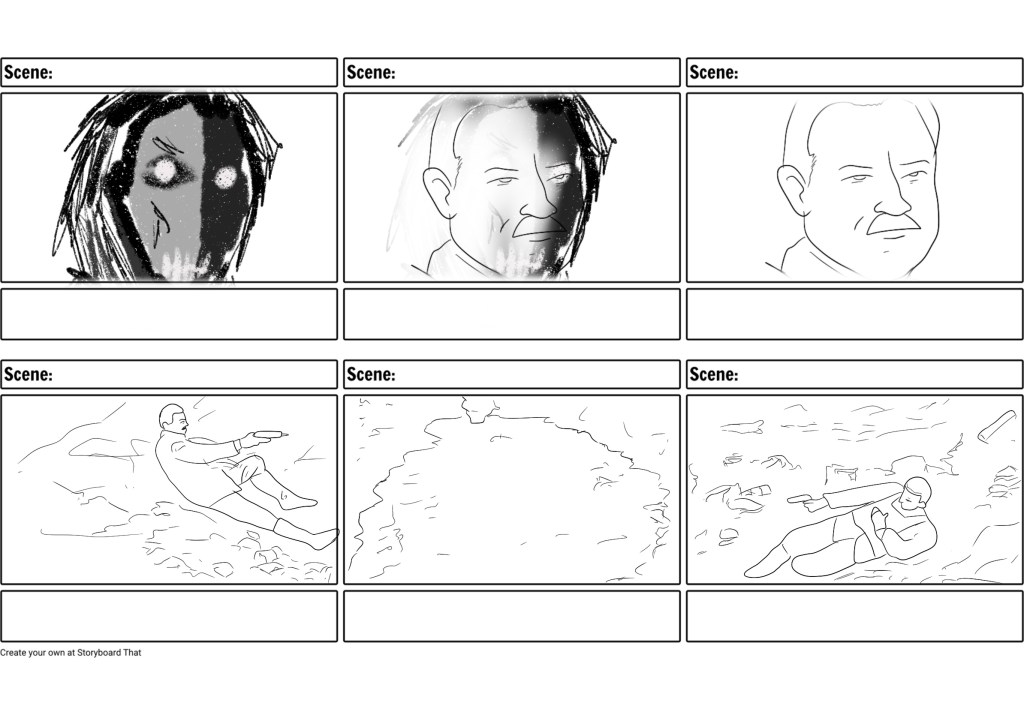
Decision Making | Storyboard

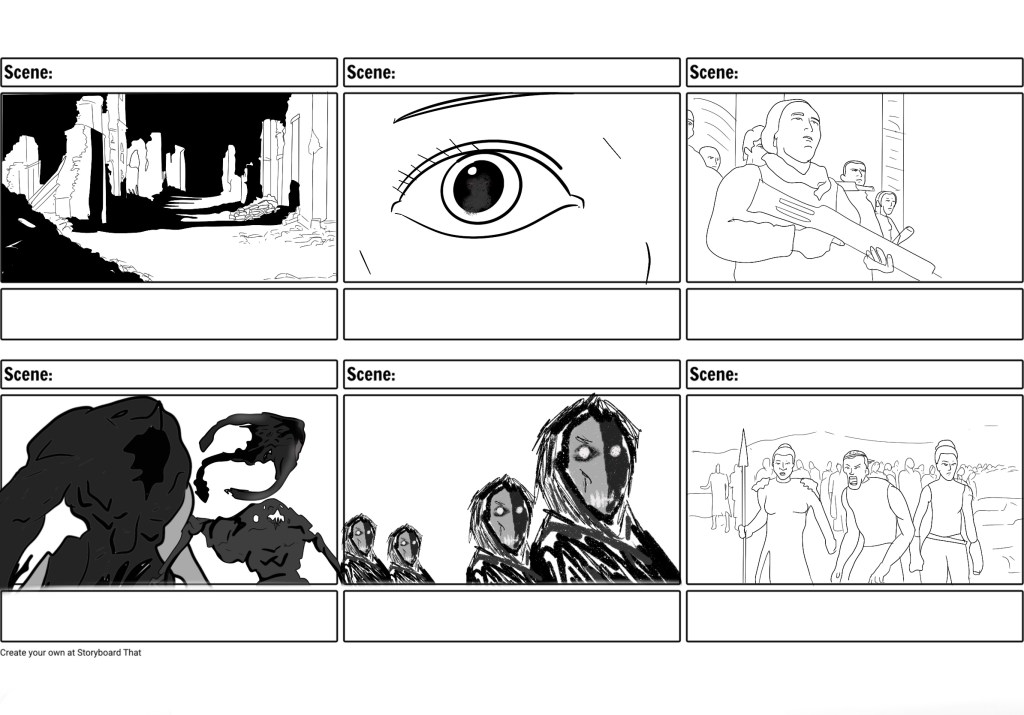
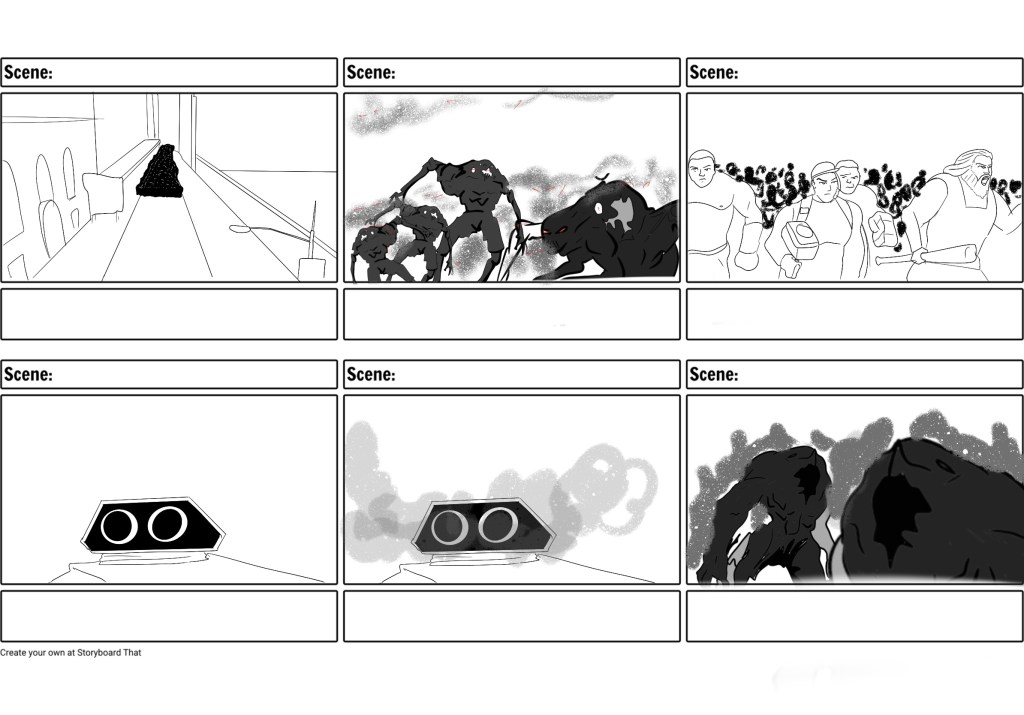
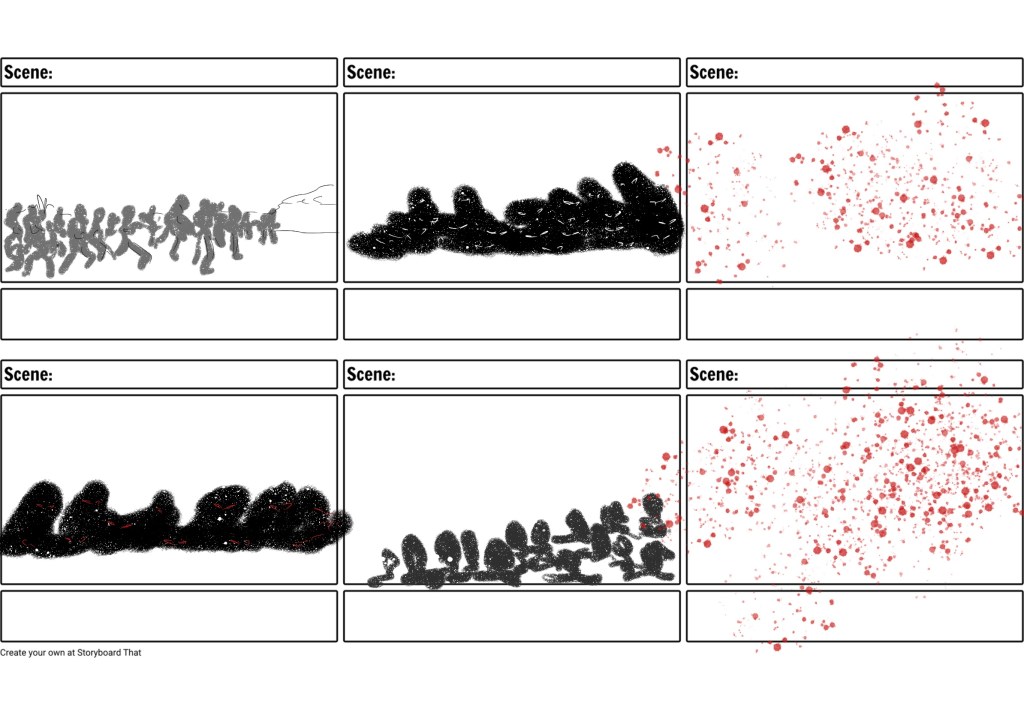
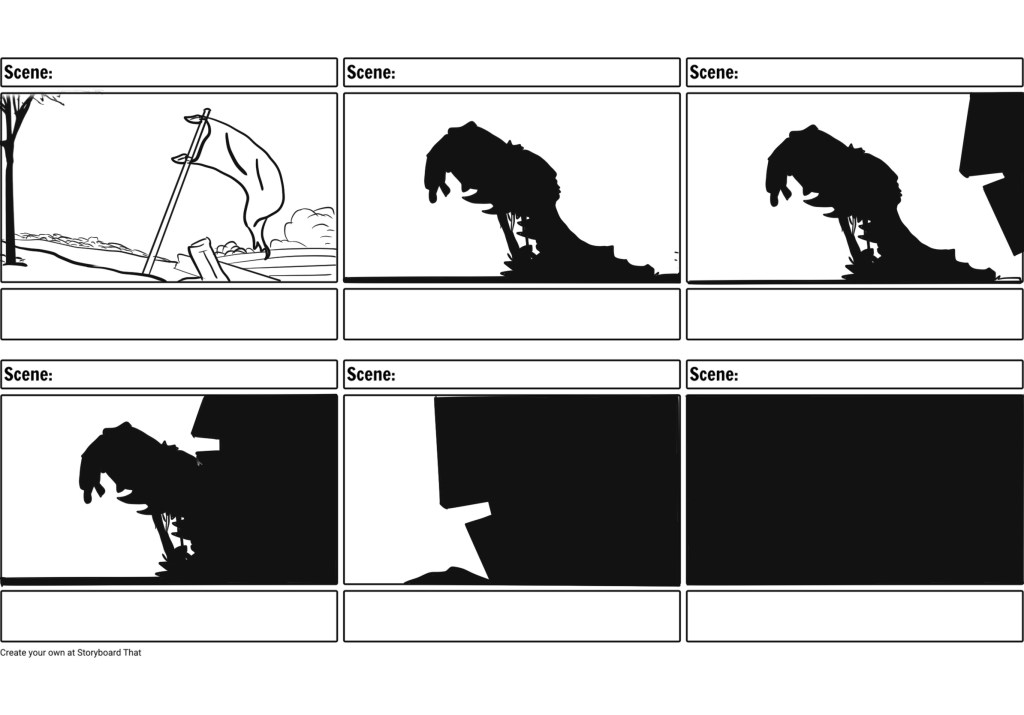
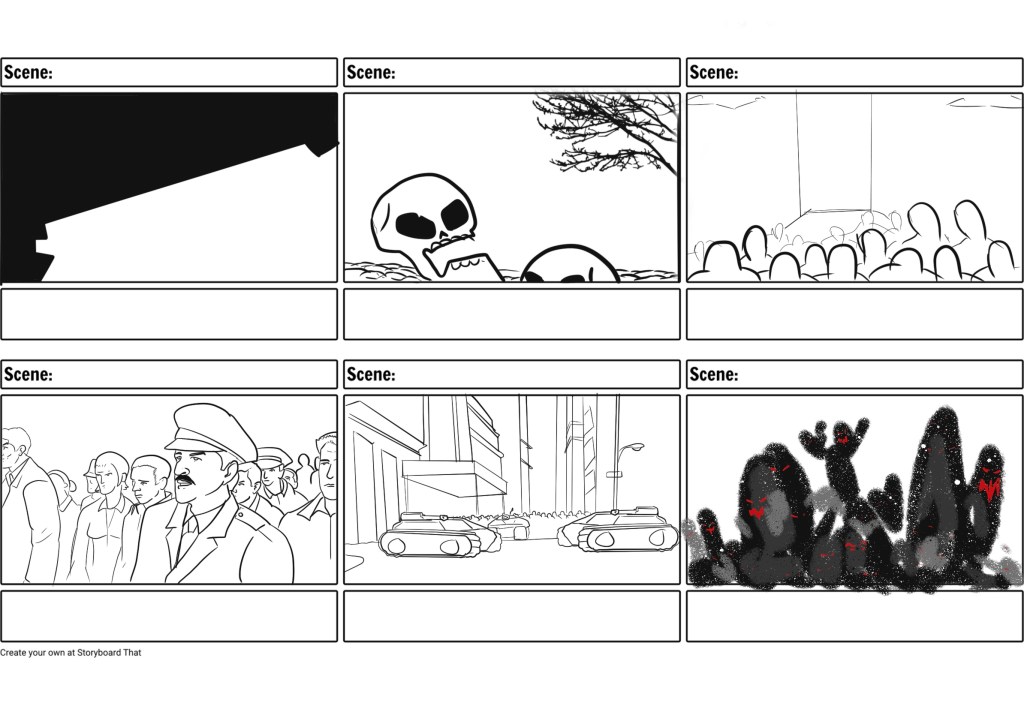
I felt the project had potiential and if properly executed it could turn out something beautiful. For a while I have been researching as to why animation is a perfect tool for documentaries. After interviews with people who served during the war for independence, I realised that some people go throught surrealistic events and since there is no documentation of it, aniamtion would better justify that recreation.

I took my time in world building, and storyboarding the visual style I wanted to take. The project is very personal to me as I have seen the horrific events that took place on my visit to Kashmir. The horror that I wittnessed cannot even be depicted in film or media and that is why I believe that animation is the medium best suited for this.

Page 1
Page 2
page 4
page 5
page 6
page 7
page 8
page 9
page 10

Light and Shadow | Reference and Research

I think the animated documentary film Waltz with Bashmir was a good template. It tackled the 1982 Lebanon War thorugh the eyes of a solider and his quest to regain his memories. I think animattion was a great tool for such story and genre. The grotesque violence could only have been mimicked through animtion and would not offend anyone. Attached along is the trailer and art style.

Waltz with Bahir – Trailer
waltz with bashir – the dream

This time around I wanted to challenge myself and go for an artsy style as seen in Kung Fu Panda’s opening dream sequence. The grainy texture and somewhat absract drawing style would be a good fit for my concept.

Kung Fu Panda – Dream Openinng

References

Kung Fu Panda. 2008. [Film] Directed by Mark Osborne. s.l.: Dreamworks.

Waltz with Bashir. 2008. [Film] Directed by Ari Folman. Israel: Sony Pictures.

Character Development | Concept Art

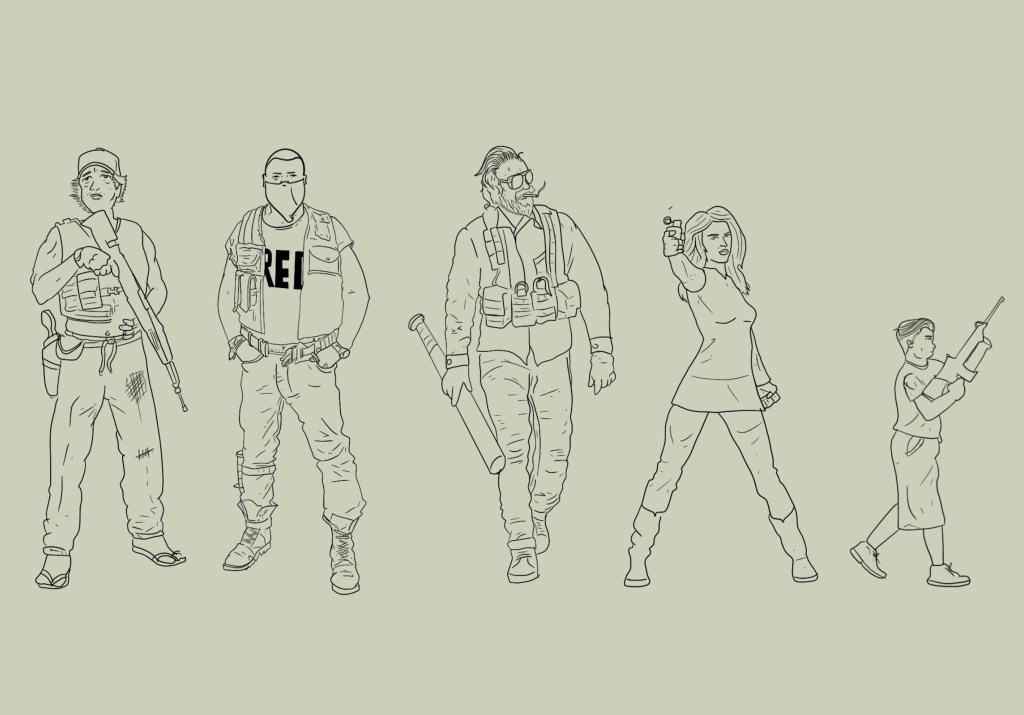
The character designs are inspired by real life people during riots, where the civilians are geared up with all kinds of weaponery and use stones as an answer for gernades. I have taken a similar approach, and even conceptualized what a child would look like during this situation.

The Civilians
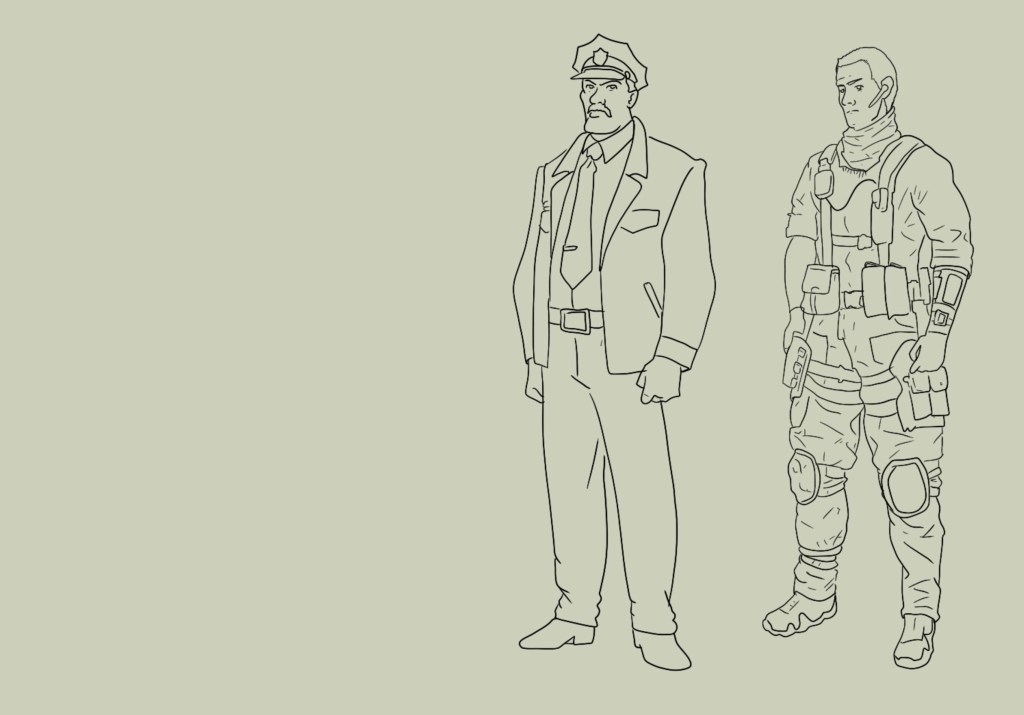
The Officials

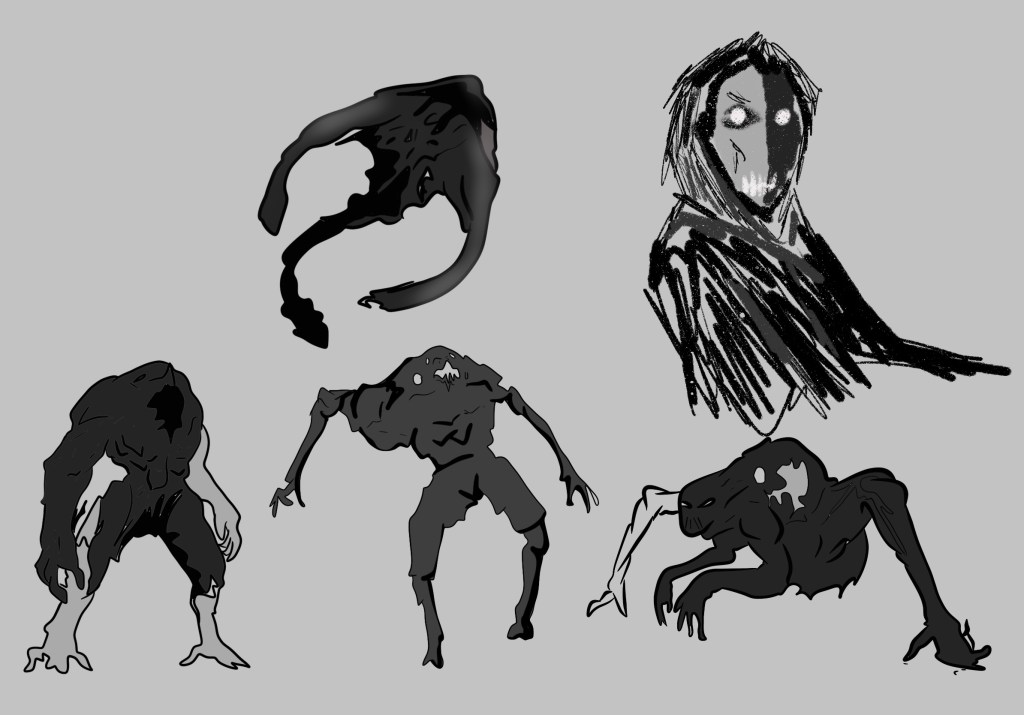
The designs for the shadow monsters are an amalgamation of what people have reported seeduring sleep paralysis and hooded figures from noir films.

Shadow figures
Tanks designs

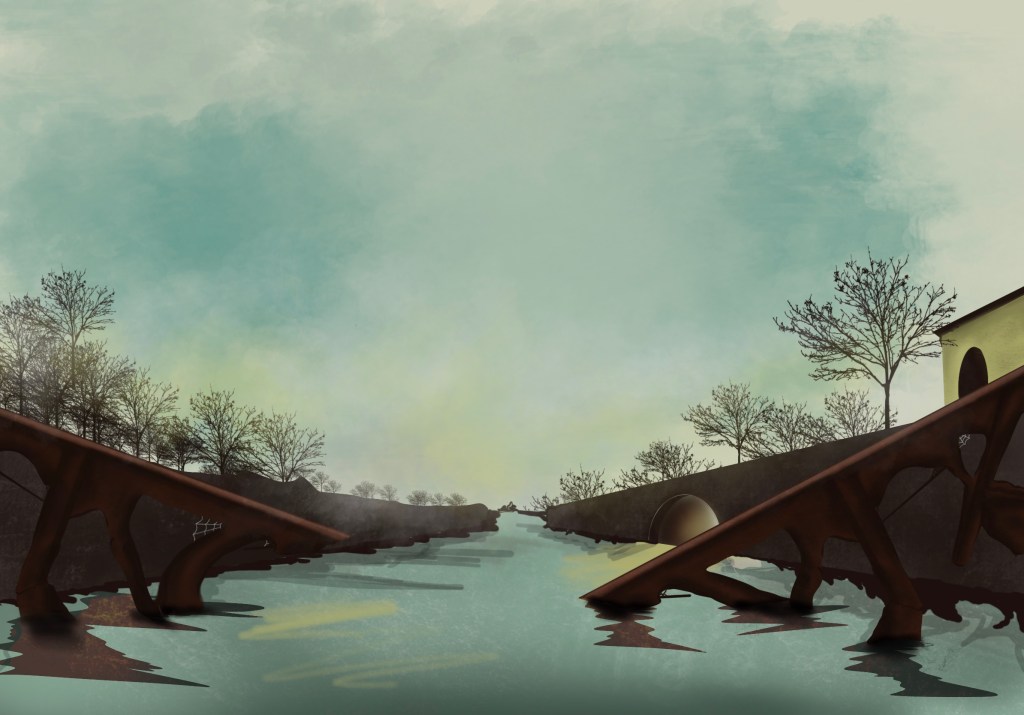
The city where is the story is situation is inspired by both no man’s land and the after effects on war ridden lands. I have tried to keep it as close to reality.

Battlefield inspired by No Man’s Land

Experimentation | Concept #2

This time around I wanted to give a social message and pick a problem that has plagued mankind for centuries i.e. War.

The Story

The story depicts a battle between two sides, 1. Officials (army, police, black ops etc) who are depicted as Light vs. A shadow army, 2. Civilians (lights) vs. Shadow army. The story begins in an apocalyptic world and the two sides are about to face off. In a gory match, both sides are have tremendous losses and in the battlefield two soliders (one of light(civillians and officials) and other of shadow) are left pointing guns at each other. Just as the sun rises, the shadows starts to dissapear and it is revealed that the shadows figures were infact bodies of offcials and civilains. For the civilians, the officials were seen as evil shadow figures and for the officials ,the civilians were shadow creatures. In a way, the story is about how people have lost humanity and are blocked by worldly resticrictions and over shadowed by greed and power etc.

Experimentation | Concept # 1

The second concept is inspired by the life of Robbin Williams. A person who brought joy to the world at the extent of his own sadness. It was little known how depressed he was, regardless kept a smile on his face and use to entertain the world. Such is the story of a sad clown.

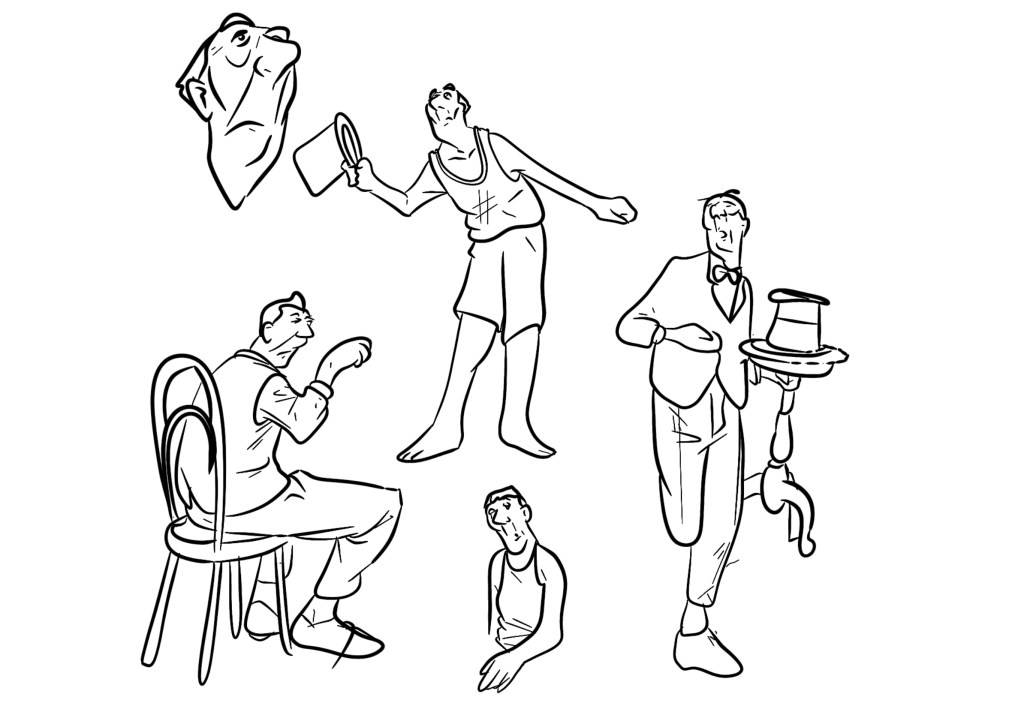
My story is somewhat similar. The story shows a contrast between the lives of a performer i.e. the face he shows to the world and the one he shows to only himself. On stage we see his different antics, while behind the scenes the polar opposite

(Concept Art)

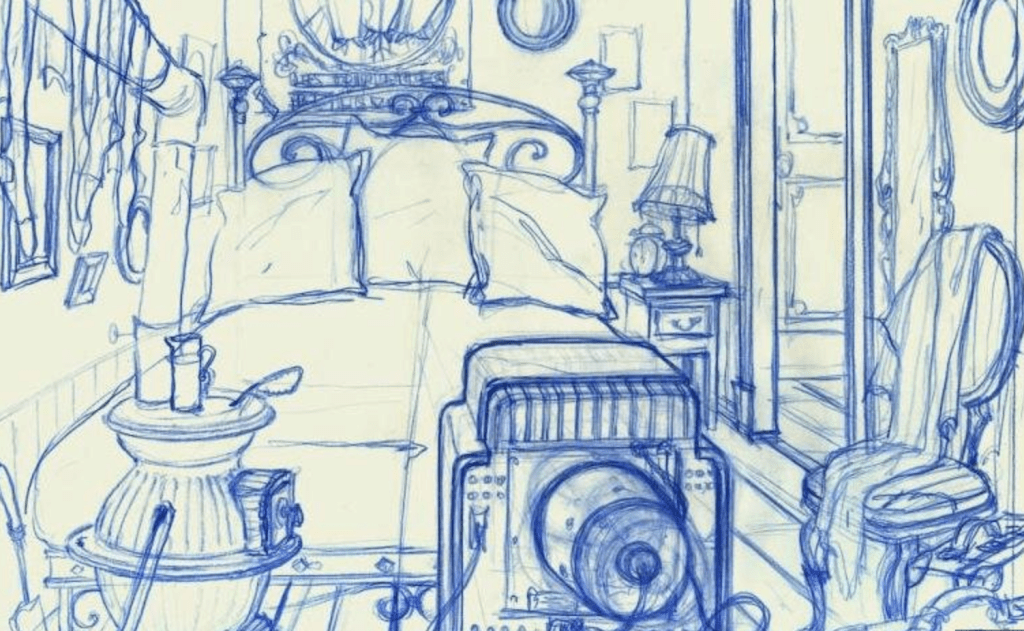
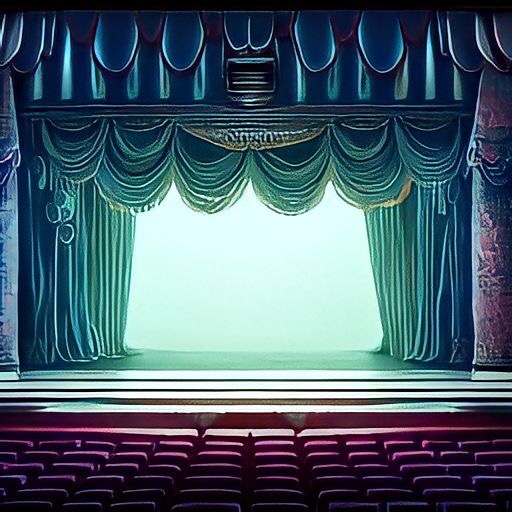
A rough sketch of the theatre stage
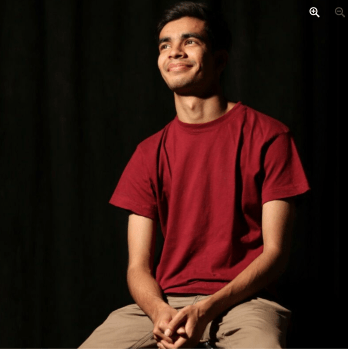
The Protagonist

References

The Illusionist. 2010. [Film] Directed by Sylvain Chomet. France: Pathé, Django Films, Allied Filmmakers.

Project #5 | Lights and Shadow

The last breif for the semester was lights and shadow. We have to create an animatic based on the principal of lights and shadow. There are several ways to creates stories on this and the most common one would be to use light and shadow in their literal interpretation. However, I think it should be used as a metaphor e.g. light being good and shadow being evil.

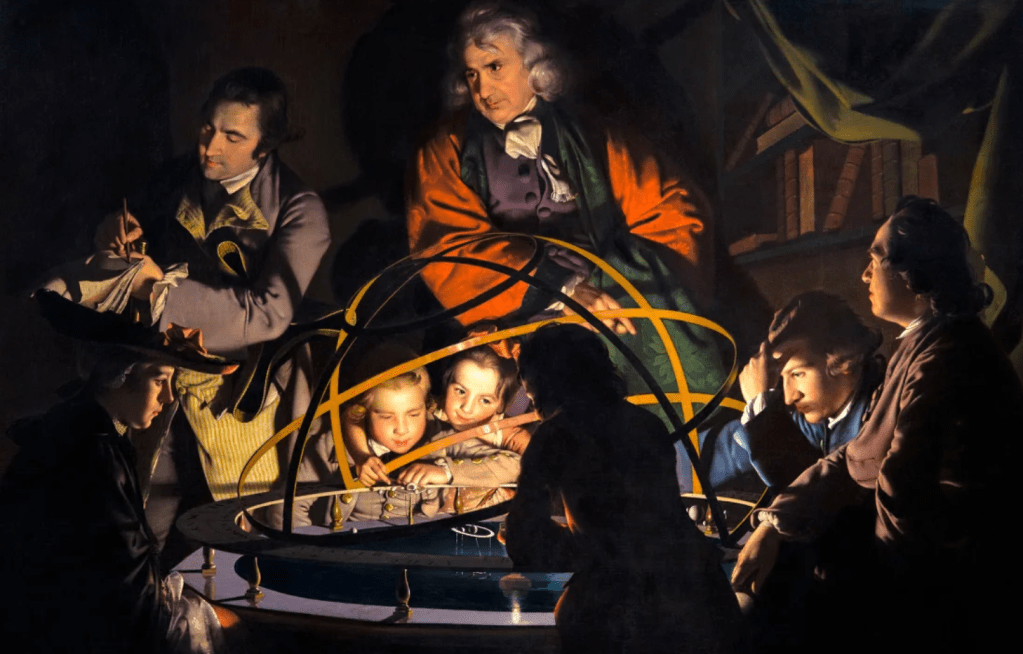
While attempting the assignment I took inspiration from the paintings of enlighment era. During the 17th and 18th centuries, the writings of influential philosophers and scientists formed the Enlightenment, a philosophical movement centered on rationalism, tolerance and liberty. Its influence was strongly felt in the art of the period, in work such as British artist Joseph Wright of Derby’s A Philosopher Lecturing on the Orrery, 1764-66. Its dramatic use of light was intended to show how inquiry and learning are profound and deeply solemn.

A Philosopher Lecturing on the Orrery, 1764-66.

It was during this period that artist tackled real world problems and used dramatic lighting to highlight the situation. Hence Lights and shadows were used as metaphors.

References

Wright, J., 1764-66. A Philosopher Lecturing on the Orrery. [Art].