Reflections on the field of animation – Klaus

n today’s world we are surrounded by 3D CGI films and traditional 2D animation has become a niche style, a lost art/craft of sorts. It has become harder for 2D animation to catch up with these trends and the scales of storytelling done by 3D animated films. It is a common practice to use both 3D and 2D technique in animated films and shows, but usually the characters are 2D and the environment is 3D or vice versa. Spider-Man into the spider verse was the first film to break this barrier and pushed the envelope as to what the medium could achieve. For example, although the characters were 3D models, their expressions were all 2D hand drawn frame-by-frame. The Netflix film pushed it even further.


Klaus – synopsis
When Jesper stands out as the postal academy’s worst student, he is assigned to a frigid island beyond the Arctic Circle, where feuding people seldom exchange words, let alone mail. Jesper is about to give up when he meets Klaus, a strange carpenter who lives alone in a cabin filled of homemade toys, and finds an ally in a local teacher. These odd alliances bring joy back to Smeerensburg, building a new tradition of kind neighbours, mystical legend, and stockings carefully hung by the chimney. This demonstrates how a little act of generosity always inspires another, even in a freezing, distant land, much as when Jesper met toymaker Klaus, their presents dissolve an age-old animosity and deliver a sleigh full of seasonal traditions.
Behind the scenes


When the animation process for “Klaus” began, it looked like an impressive 2D film. But then the animators went one step further to create a film that looked like this. Suddenly the characters looked three-dimensional. But unlike most animated movies these days, the characters in “Klaus” aren’t CGI and can’t even be considered 3D. It’s all just a trick of the light.
About 300 people, including 40 animators, worked on the movie “Klaus,” which took over two years to make. And it was completed under the wire, just one month before it premiered on Netflix. So, why did it take so many people and so much time? To understand, we have to dial back to 2010, to when director Sergio Pablos came up with the idea. Because his story was about the origin of Santa Claus, it appealed to nostalgia. And he thought a nostalgic, 2D animation style like we saw in the ’90s Disney films would be a better fit for the story. But he also wanted to advance the look so his team at SPA Studios in Madrid added a few new crucial steps to the animation process.
“I never looked at 3D as an evolution of 2D. I looked at it as a split, like there’s a new way of making animation now.” As claimed by by Sergio Pablos
First, they storyboarded the script and made an animatic using temporary voices for the characters. They swapped these out later once the real cast was recorded. The next step was layout, where the team designed backgrounds and figured out the placement of the cameras. Animating the characters and coloring the backgrounds happened simultaneously. The characters were all hand drawn using digital tablets and a program called Harmony by Toon Boom. The animators used live-action reference videos of themselves as a guide. The initial sketches were very rough, but there was a cleanup stage in which artists refined the drawings with crisp, bold lines. Then they painted the characters with basic flat colors. While everything still looked very 2D, an important addition bought the characters to life with a very important addition usually reserved for 3D animation: lighting.
They partnered with a French company called Les Films du Poisson Rouge to help advance the technology, which they called KLaS, short for Klaus Light and Shadow. Poisson Rouge was able to make the tool much more efficient and easier for the artists to work with. The KLaS tool allows the artists to paint with light using a num ber of different types of lighting in various combinations, like “key light” and “ambient light.” With 3D CGI, light is added automatically to objects, but it’s trickier with 2D.
According to Pablos; the lines, with drawings, the computer needs a certain level of AI to even understand that this line corresponds to this line and this hand is also this hand. KLaS tracks movement of the characters so the light and shadows will move with it. The program takes a very educated guess, but it’s not 100% accurate, so the artists can go in and fine-tune it by hand. Painting with light allowed the artists to get creative with details down to the tiniest reflections in their eyes. The team used lighting not only to make the characters feel more real, but also to help tell the story.
For example, when Jesper is handing out papers to the kids like a drug dealer, he’s always standing in the dark to illustrate his shady behavior. And when he’s exposed at the end of the film by his father, he’s the only one standing in the light, while the others are in the dark.
Inspiration for detailed lighting techniques came from movies and TV shows, like using just a sliver of light to illuminate a character similar to “Apocalypse Now.” It’s important that the backgrounds also look three-dimensional and follow the same lighting pattern as the characters, so they used “color keys” as a guide.
The team created a total of 3,160 scenic layouts for the movie. After they’d merged the characters with the backgrounds, they used a second major step that really gave the 3D characters that intricate detail to bring them to life: texture.
With another tracking tool, they used contour, lighting, and motion to add various effects to specific parts of a character. In the end, the characters looked much more 3D and like a part of their environment, as opposed to looking like stickers on top of an elaborate painting.
But it’s really a combination of the light and the texture that makes that illusion and sells the effect. While the majority of the film followed the 2D process, the animators did use 3D models for some characters and objects and combined the two seamlessly. And even though these were created using CGI, they were lit the same way as the 2D characters were: by hand.
The whole process seems very daunting but quite enjoyable as well, as so much experimentation went into making the characters and backgrounds Avant Grande and this is whole purpose of art to keep reinventing itself. The look, feel and scope alone of the film affirmed my decision to become an animator and create stories for every generation to remember.

References

Snyder, C. (2020). How Netflix’s Oscar-nominated ‘Klaus’ made 2D animation look 3D. [online] Insider. Available at: https://www.insider.com/how-netflixs-klaus-made-2d-animation-look-3d-2020-1.

Toon Boom Animation. (2019). Sergio Pablos on the creative process behind Netflix’s Klaus. [online] Available at: https://www.toonboom.com/sergio-pablos-on-the-creative-process-behind-netflixs-klaus.

Brewer, J. (2019). How Netflix’s Klaus is bringing hand drawn 2D animation back to the big screen this Christmas. [online] http://www.itsnicethat.com. Available at: https://www.itsnicethat.com/features/sergio-pablos-klaus-netflix-animation-201119.
Reflective Blog #4 | Optical Sound

I wanted to challenge myself with this project. I realized that I often lose focus while trying to do something different each time. Usually, my work is based on stories and events but this time I wanted to focus on my visuals. I worked on different visuals following the beats of the music. I drew whatever interesting visual came to my mind and the final video seemed visually appealing and was appreciated in class. However, I got too caught up with the visuals and the final product seemed to be somewhere between motion design and 2D animation. I did not have a proper thought process or storyline. By prioritizing the visuals I overlooked the rest of the factors which was looked down upon. Even though I had all the ingredients I was not able to bake the best cake as it lacked a flow and thought process which was visible. If I were to further develop this project I would have to start from scratch to make a proper storyline and adapt the visuals to it.

Optical Sound | Concept and Experimentation

This project seemed like a good opportunity to test myself in evry aspect. Selection of music, its composition, different camera angles, a more niche approach. I wanted to take a more psychaedllic approach, wher one shape transforms into another i.e. a more abstract one. This time around I skipped the storyboard process and took more of a leeway here and improvising on the imagery and story. The visuals are basically based on the sound design rather the other way around.

The Music

Composing the music was the most fun part where, I collaborated my old colleage and learned various new insturmental combinations. I tried for a more orchestral music as I felt it as a certain gravitas value to it and could fit more in line with my concept. The music at its center has sitar music and incorporates an aousitc guitar to give a sense of chakras and give a sense of how balance is important in life.

The final selected music – with vocals
Ideation -2
Ideation – 3

The Concept

Ideatio – 4

Your life is supposed to be a roller coaster. There are good things and bad things. You need a ying to your yang, as life would be much mundane if you did not experience both sides. In order to experience those emotions and get a sense of realisation you need your ying to be a yang, so that you could truly appreciate what matters. You need vicious eyes to your sitar. I took inspirations from my friends who have mentals breakdowns once a month in their perfectly going lives and in those down moments only then they apprecaite their value and lifes.

Ideation and Research

I was really inspired by Aangs Harnessing Chakra scene form Avatar. It one of the basic lession in being a hero that yould must become one with yourself. I think that this would be a great pallette for the projcet.

The following is an animation project I did for a senior of mine. Altough I worked as a character animator, but was involved throughout the whole process. The concept was fairly similar of about accepting your flaws and being one with yourself.

References

Avatar The last Airbender. 2005. [Film] Directed by Bryan Konietzko Michael Dante DiMartino. s.l.: Nickelodeon.

Optical Sound | Research

Some times different visuals on the same piece of music can have differnt imapcts as well. For example the The Weekend music video – Save your tears. Both have the same music but the visuals are differnt i.e. one is live action while the other is animated. The live action one seems more upbeat as compared to the animation one, where is feels like more robust. Here is a link to both the videos. Try comparing them.

Save your tears – live action version
Save your tears – animated

For this assignment I will try to play it safe but will play along the above mentioned lines.

References

The Weekend – Save your Tears. 2021. [Film] Directed by Cliqua. s.l.: s.n.

The Weekend – Save your Tears. 2021. [Film] Directed by Jack Brown. s.l.: s.n.

Project #4 | Optical Sound

I think good sound design/music can lift up any ordinary scene and give it graviats. For example what makes superhero films epic is the music. The is the real hero in media. For example;

The Avengers assemble scene

Avengers Endgame (2019)

The video depicts the showdown between the heroes and villains. Just the mere orchestral sound of trumpets made in ten times more impactful.

Not every music is meant to have the same impact. It must compliment the visuals as well. Here is a video that explains this very well. A sort of C grade student guide.

impact of music in films

Lets take a look at another example

The video excerpt is form the Lion King (1994) and how different music pieces have a different impact on films. For example the titanic music would show it as a much more emotional film while the subtle animation would suggest something else.

References

Avengers Endgame. 2019. [Film] Directed by Russo Brothers. s.l.: Marvel.

How Music Affects Film #17: The Lion King. 2017. [Film] Directed by Loud Son. s.l.: Youtube.

THE POWER OF MUSIC IN FILM – How music affects film. 2017. [Film] Directed by Jack Pierce. s.l.: Youtube.

Inspiration | Animated Show Rugrats

It was a very daunting task, to find stories that could resonate with people and at the same time capture the innocence of a childs immagination. I always opt for an old school approach and start to delve into the mindset of a child of how ambitious their imaginatios are and they way they think of stories. For example, they are absurd and have this cinematic feel to them as well.

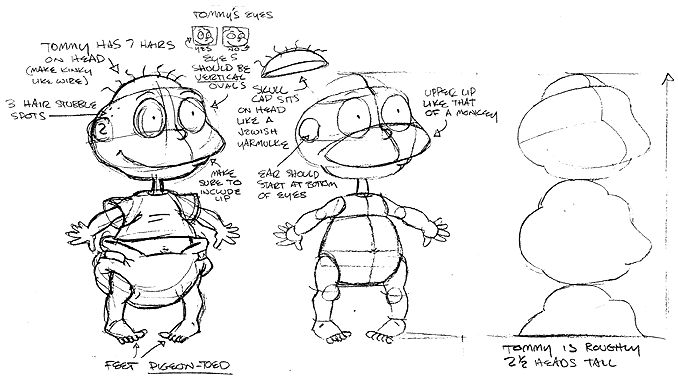
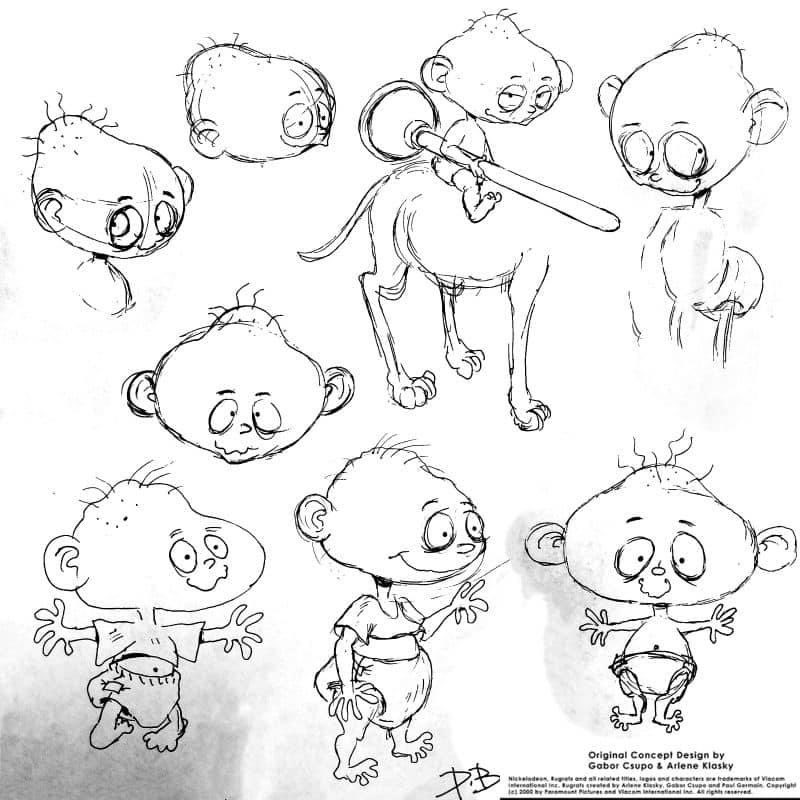
During the process of the previous two projects, I realised what my style of storytelling is i.e., how effective it is and what kind of audiences it caters to. Rugrats is the perfect example, as the show tackled with showing babies and their immaginations running all over the place. A brain child Kalsky Csupo. The show was ahead of its time. I came accross an article that explains why Rugrats was an effective show.

Baby Curiosities

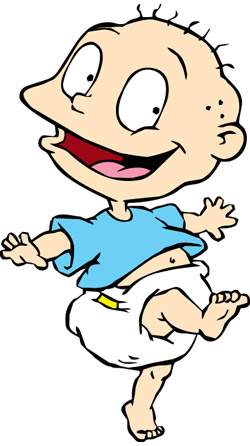
“Good morning, Champ!” a dad’s voice says while viewers look at a black background. As little Tommy Pickles open his eyes, his parents Stu and Didi exclaim, “Happy birthday, Tommy!” and shower him with confetti while blowing noisemakers. “You’re a whole year old today,” Didi coos. And with that, the Rugrats pilot begins. We go through a typical morning with Tommy, Daddy, Mommy, and Grandpa while they prepare for a birthday party. This includes getting Tommy into his party outfit and feeding him via the classic “airplane” trick while Tommy watches a dog food commercial on the nearby TV.

Tommy
Tommy.

In itself, this sounds cute but potentially boring. Tommy isn’t talking or moving much yet, and it would be unrealistic for him to do so, especially in front of the adults. But the pilot does a great job of showing us Tommy’s thoughts and intentions without much dialogue or action. In the commercial Tommy watches, the dog eating the advertised food immediately runs faster, jumps higher, and has more fun. Plus, his food looks pretty good. Tommy spots the exact same brand of food in his dog Spike’s bowl. A light glimmers off the bowl, and in Tommy’s eyes. Viewers know he’s formed his first baby curiosity: What is dog food? And, is it as fun as it looks?

Later, we find Tommy in his playpen with pals Chuckie, Phil, and Lil, and his cousin Angelica, who at three is 1-2 years older than the rest of the gang. He tells them he wants to get some dog food, and that maybe if they all eat some, they’ll turn into dogs. The kids jump on board, planning how they’ll do dog things like playing fetch and scratching fleas. Angelica loves the idea of biting the mailman. Even Chuckie, who we’ll find out later is hesitant about adventures, is convinced becoming a dog would be fun. The only problem is, these are babies and toddlers. With the exception of Angelica, they aren’t expected to leave the playpen without supervision, and there’s no way Angelica would ever admit to something as babyish as a desire to eat dog food. If anything, her emerging superior attitude indicates she’s only going along with “the babies” because of what’s in it for her. But Tommy is determined–“a baby’s gotta do what a baby’s gotta do,” after all.

Tommy heads out alone on Operation Dog Food, and manages to get close enough to Spike’s bowl to grab some a few times. However, an adult is always there to stop him and return him to the playpen so he can enjoy his party. The hilarious irony is, Tommy and friends are not at all interested in the activities the adults have planned. The harder the adults try to make Tommy’s birthday perfect, the worse the situation gets. The Red Riding Hood puppet show has a stage and puppets, but no puppeteers, so Stu and Tommy’s Uncle Drew agree to perform, but this devolves into them bickering and dredging up childhood history. Didi made a carrot cake from a health food recipe, which no one wants to eat. And Stu can’t get his gift for Tommy, a helicopter-like toy with about a billion buttons and gadgets, to work. “Tommy’s not old enough for that gizmo! Heck, I’m not even old enough for it,” Grandpa scoffs. Indeed, with the adults insisting on perfect party plans and fancy toys, viewers can’t help rooting for Tommy to get the dog food. At least then he’ll reach a goal and enjoy himself on his terms.

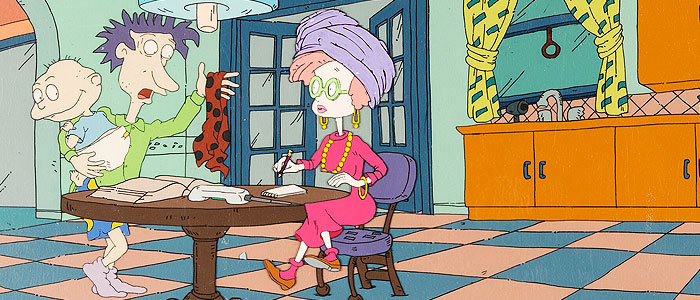
Tommy with his parents, Stu and Didi
Tommy with his parents, Stu and Didi.

Operation Dog Food goes a little awry, and then, as TV Tropes would put it, horribly right. Basically, Tommy gets the strap of his overalls caught in the helicopter toy, ends up flying all over the house, and crashes into the carrot cake before skidding to a halt directly in front of Spike’s bowl. The adults are oblivious; Grandpa and Stu are arguing, maternal grandparents Boris and Minka are complaining about the cake, and Didi is holding an impromptu therapy session with Stu and Drew, complete with puppets. Tommy and the gang take the perfect opening to chow down. They spit out the dog food in seconds, and lament they did not become canines. This disappointment in the clash of imagination and expectation vs. reality would become a common theme throughout Rugrats‘ run.

What makes the pilot and ensuing episodes great though, is that our baby protagonists don’t act like babies when disappointed. They don’t simply cry and wait for grown-ups to solve their problems. They actually enjoy the chaos birthed from the “ruined” birthday party, and realize it’s a lot more fun to be human. At the end of the episode, they become stars of some candid photos that delight the adults and shift the focus back to the positive–no matter what, a first birthday is a milestone and family is precious. Additionally, with the end of “Tommy’s First Birthday,” Rugrats sets up a winning formula. Each set of episodes will focus on an adventure that revolves around some mundane object or concept the babies need to integrate into their understanding of how life works. The integration may well be tough, and the truth of what they imagined will probably be boring or disappointing. But as long as our protagonists stick together, the journey is sure to stay fun.

Simple concepts like these kept the characters grand and the stories fresh and hence they were etched into the mindsets of every child or adult who grew up watching this show. The characters were drawn by Darrel Bowen, while Gábor Csupó acted as lead animator.

Another thing intersting about Rugrats was its art style. All the characters looked like crayon drawings and as if a child had drawn them. I do not know whether it was intentional or unintenional but effective however. I believe that this art style captures the innocence of a child and was drawn through point-of-view of a child and this is the approach that usually should be taken when tackling these type of stories. The animation itself could create and empathy factor with its audiennce.

References

Gibbs, L. (2021). Rugrats: 10 Best Life Lessons Fans Learned From The Show. [online] ScreenRant. Available at: https://screenrant.com/rugrats-wholesome-things-viewers-learned/ [Accessed 24 Jan. 2023].

the-artifice.com. (n.d.). Nickelodeon, Disney, and the Story of Growing Up. [online] Available at: https://the-artifice.com/nickelodeon/ [Accessed 24 Jan. 2023].

Reflective Blog #3 | Memory and Nostalgia

I faced a lot of challenges while working on this project. This project was supposed to be something from deep within me and the idea of making this project reflective led me astray. I got too caught up overthinking and experimenting with the concept that I did not have sufficient time to sketch my ideas into a video and hence, I had to settle for something that I was not entirely satisfied with just for the sake of the submission. There were some issues with my project. After discussing with my class, I realised that instead of working on a story I had worked on an event. Despite having some interesting visuals, the unmatched pace of the entire video made the interesting visuals less impactful. I was not satisfied with my work but I think it helped me develop a style as I subconsciously made it such that it followed along with my project “Places of mind”. If given time I will surely reattempt this project. I think I can improve it.

Decision Making | Storyboard

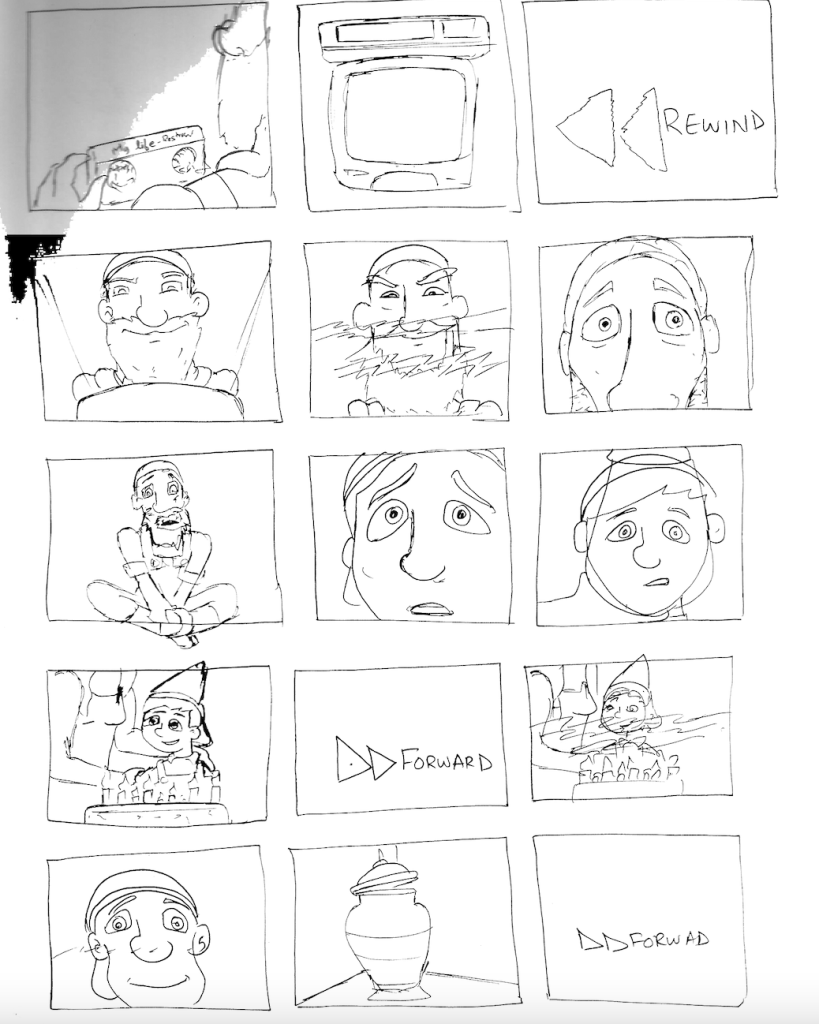
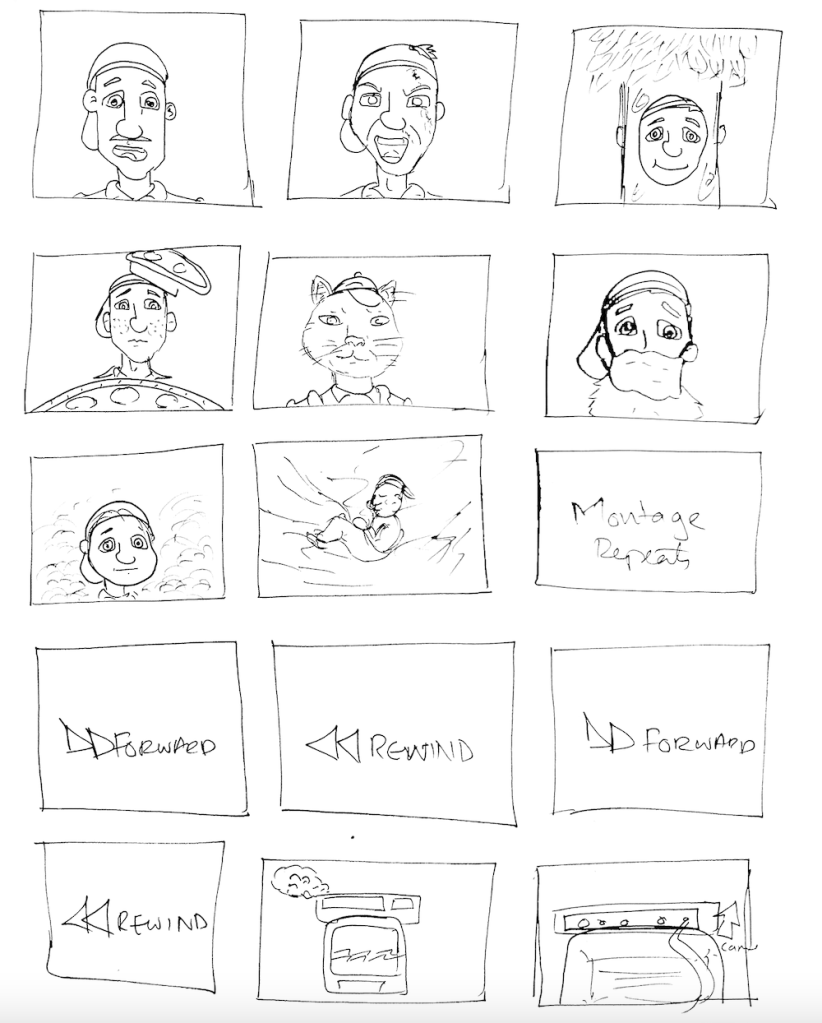
This is a concept that talks about how too much nostalgia can be a dangerous thing. The story is based in an attic where usually all of our memories are contained similar to the concept of a mind palace. Intially I got a bit carried away with the storyboard, so had to tone it down a notch as there were alot of complicated visuals I was aiming for, but I am short on time. A detailed storyboard is as follows.