The second concept is inspired by the life of Robbin Williams. A person who brought joy to the world at the extent of his own sadness. It was little known how depressed he was, regardless kept a smile on his face and use to entertain the world. Such is the story of a sad clown.
My story is somewhat similar. The story shows a contrast between the lives of a performer i.e. the face he shows to the world and the one he shows to only himself. On stage we see his different antics, while behind the scenes the polar opposite
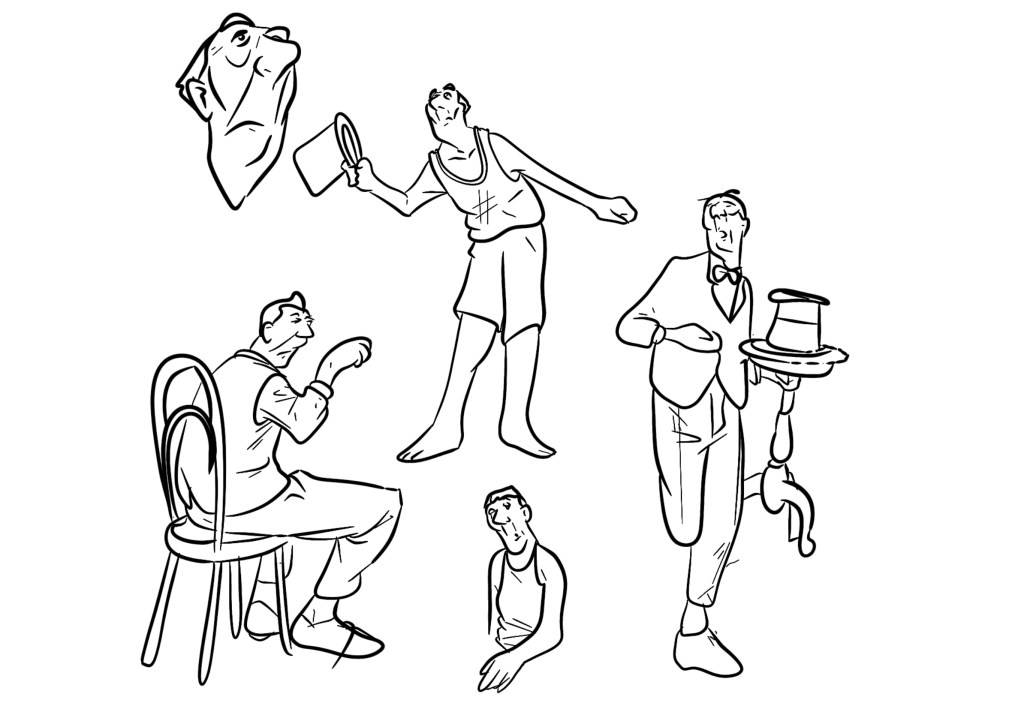
(Concept Art)
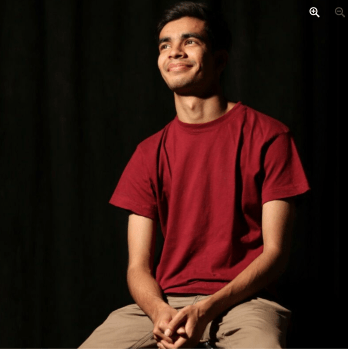
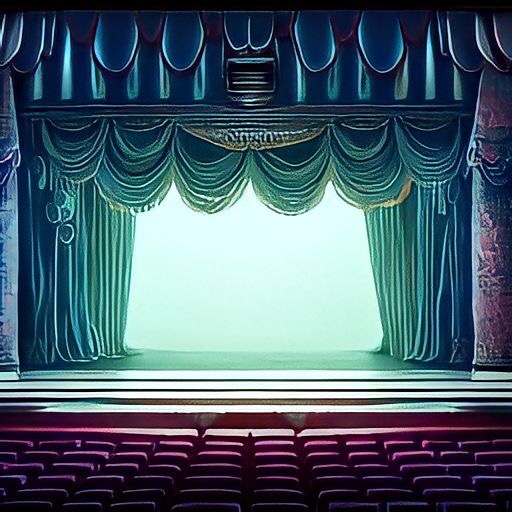
A rough sketch of the theatre stageThe ProtagonistMakeUP Room #1Make up Room #2
References
The Illusionist. 2010. [Film] Directed by Sylvain Chomet. France: Pathé, Django Films, Allied Filmmakers.
The last breif for the semester was lights and shadow. We have to create an animatic based on the principal of lights and shadow. There are several ways to creates stories on this and the most common one would be to use light and shadow in their literal interpretation. However, I think it should be used as a metaphor e.g. light being good and shadow being evil.
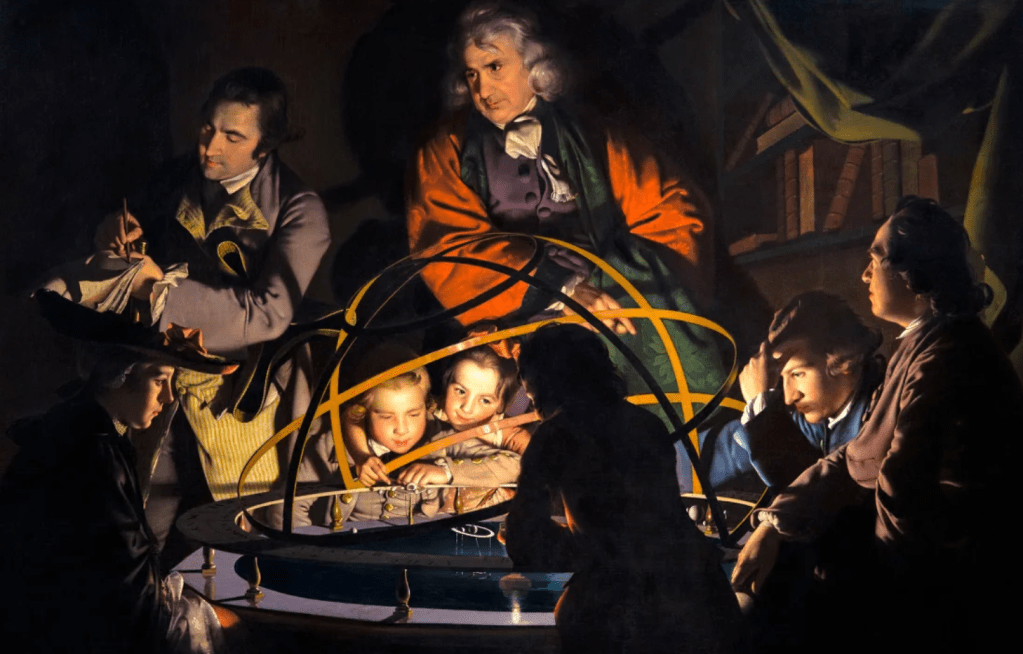
While attempting the assignment I took inspiration from the paintings of enlighment era. During the 17th and 18th centuries, the writings of influential philosophers and scientists formed the Enlightenment, a philosophical movement centered on rationalism, tolerance and liberty. Its influence was strongly felt in the art of the period, in work such as British artist Joseph Wright of Derby’s A Philosopher Lecturing on the Orrery, 1764-66. Its dramatic use of light was intended to show how inquiry and learning are profound and deeply solemn.
A Philosopher Lecturing on the Orrery, 1764-66.
It was during this period that artist tackled real world problems and used dramatic lighting to highlight the situation. Hence Lights and shadows were used as metaphors.
References
Wright, J., 1764-66. A Philosopher Lecturing on the Orrery. [Art].
n today’s world we are surrounded by 3D CGI films and traditional 2D animation has become a niche style, a lost art/craft of sorts. It has become harder for 2D animation to catch up with these trends and the scales of storytelling done by 3D animated films. It is a common practice to use both 3D and 2D technique in animated films and shows, but usually the characters are 2D and the environment is 3D or vice versa. Spider-Man into the spider verse was the first film to break this barrier and pushed the envelope as to what the medium could achieve. For example, although the characters were 3D models, their expressions were all 2D hand drawn frame-by-frame. The Netflix film pushed it even further.
Klaus – synopsis When Jesper stands out as the postal academy’s worst student, he is assigned to a frigid island beyond the Arctic Circle, where feuding people seldom exchange words, let alone mail. Jesper is about to give up when he meets Klaus, a strange carpenter who lives alone in a cabin filled of homemade toys, and finds an ally in a local teacher. These odd alliances bring joy back to Smeerensburg, building a new tradition of kind neighbours, mystical legend, and stockings carefully hung by the chimney. This demonstrates how a little act of generosity always inspires another, even in a freezing, distant land, much as when Jesper met toymaker Klaus, their presents dissolve an age-old animosity and deliver a sleigh full of seasonal traditions. Behind the scenes
When the animation process for “Klaus” began, it looked like an impressive 2D film. But then the animators went one step further to create a film that looked like this. Suddenly the characters looked three-dimensional. But unlike most animated movies these days, the characters in “Klaus” aren’t CGI and can’t even be considered 3D. It’s all just a trick of the light. About 300 people, including 40 animators, worked on the movie “Klaus,” which took over two years to make. And it was completed under the wire, just one month before it premiered on Netflix. So, why did it take so many people and so much time? To understand, we have to dial back to 2010, to when director Sergio Pablos came up with the idea. Because his story was about the origin of Santa Claus, it appealed to nostalgia. And he thought a nostalgic, 2D animation style like we saw in the ’90s Disney films would be a better fit for the story. But he also wanted to advance the look so his team at SPA Studios in Madrid added a few new crucial steps to the animation process. “I never looked at 3D as an evolution of 2D. I looked at it as a split, like there’s a new way of making animation now.” As claimed by by Sergio Pablos First, they storyboarded the script and made an animatic using temporary voices for the characters. They swapped these out later once the real cast was recorded. The next step was layout, where the team designed backgrounds and figured out the placement of the cameras. Animating the characters and coloring the backgrounds happened simultaneously. The characters were all hand drawn using digital tablets and a program called Harmony by Toon Boom. The animators used live-action reference videos of themselves as a guide. The initial sketches were very rough, but there was a cleanup stage in which artists refined the drawings with crisp, bold lines. Then they painted the characters with basic flat colors. While everything still looked very 2D, an important addition bought the characters to life with a very important addition usually reserved for 3D animation: lighting. They partnered with a French company called Les Films du Poisson Rouge to help advance the technology, which they called KLaS, short for Klaus Light and Shadow. Poisson Rouge was able to make the tool much more efficient and easier for the artists to work with. The KLaS tool allows the artists to paint with light using a num ber of different types of lighting in various combinations, like “key light” and “ambient light.” With 3D CGI, light is added automatically to objects, but it’s trickier with 2D. According to Pablos; the lines, with drawings, the computer needs a certain level of AI to even understand that this line corresponds to this line and this hand is also this hand. KLaS tracks movement of the characters so the light and shadows will move with it. The program takes a very educated guess, but it’s not 100% accurate, so the artists can go in and fine-tune it by hand. Painting with light allowed the artists to get creative with details down to the tiniest reflections in their eyes. The team used lighting not only to make the characters feel more real, but also to help tell the story. For example, when Jesper is handing out papers to the kids like a drug dealer, he’s always standing in the dark to illustrate his shady behavior. And when he’s exposed at the end of the film by his father, he’s the only one standing in the light, while the others are in the dark. Inspiration for detailed lighting techniques came from movies and TV shows, like using just a sliver of light to illuminate a character similar to “Apocalypse Now.” It’s important that the backgrounds also look three-dimensional and follow the same lighting pattern as the characters, so they used “color keys” as a guide. The team created a total of 3,160 scenic layouts for the movie. After they’d merged the characters with the backgrounds, they used a second major step that really gave the 3D characters that intricate detail to bring them to life: texture. With another tracking tool, they used contour, lighting, and motion to add various effects to specific parts of a character. In the end, the characters looked much more 3D and like a part of their environment, as opposed to looking like stickers on top of an elaborate painting. But it’s really a combination of the light and the texture that makes that illusion and sells the effect. While the majority of the film followed the 2D process, the animators did use 3D models for some characters and objects and combined the two seamlessly. And even though these were created using CGI, they were lit the same way as the 2D characters were: by hand. The whole process seems very daunting but quite enjoyable as well, as so much experimentation went into making the characters and backgrounds Avant Grande and this is whole purpose of art to keep reinventing itself. The look, feel and scope alone of the film affirmed my decision to become an animator and create stories for every generation to remember.
The recent trend for Transmedia is to adapt movie franchises into TV series (Rings of Power, Marvel shows, The Mandalorian), or to create spin-off content in various medium.
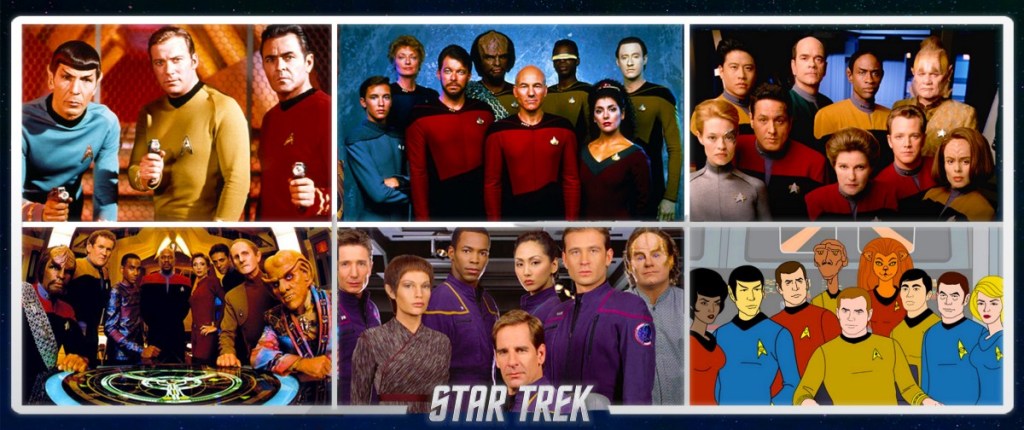
The concept of transmedia has been prevalent in the society for over a century. Initially this used to be limited to short stories and comic strips but in the developing world it has taken a more commercialised approach and has expanded to multiple mediums such as books to films, films to tv shows and their various merchandises. To video games and radio dramas just to name a few. Star Trek would be a very good example of this. After The tv series ended, the stories continued into an anthology of films, books and ever expanding tv series such as animated series and shorts. Such was the craze that people do cosplays and write their own fan fiction of the franchise. Much to this is partially due to the ever-evolving media and credit has to be given to online streaming giants such as Netflix, Amazon Prime, Paramount+ or be it Disney+. These modes of media have introduced a new generation of audience every time. Franchise such as DC, Marvel, Star Wars and doctor who are the top contenders.
Star Trek Franchise
But are these contents considered good Transmedia Storytelling?
If they did not sell, then the studios and production houses would stop making them. A very effective marketing strategy is the world building they do in these various spin offs and merchandises. Every iteration flaunts the idea that all these content interconnect and interact with each other, and they would all come together at the end. The viewer clearly buys into it. Whenever a new Star Trek media comes out, people rush so see it because they are afraid of missing out and not being able to catch up with the overall arc in the chapter.
Hence, I do not agree with this type of trans media as being good forms of storytelling. The key reason for the spin-offs being sub-par is the content has been mostly commercialized and when adapting in to different mediums it gets lost in translation. Another reason would be that they were not designed to co-exist with the source materials. Most of these contents were written after the original source has ended, and then the creators decided to add a backstory or sequel for a popular side character. They mostly serve as fan service.
Good Transmedia Storytelling should have consistent character development across the various media, and each medium should contribute to the story arc and the overall world-building.
To what extent does transmedia set limits and/or open up possibilities?
The stories mostly get lost in translation when translating to a different media, but then again, every media sets up its own limitations. One of the reasons would be is that we have transitioned into a franchise fatigue, as companies are milking the characters and stories. Most of the work have now become derivative and uninspiring. Most people would blame the budgets when transitioning into different mediums but I believe every story has a limit and after a while it starts to repeat itself. It is more or less the same story just being told in a different perspective. In an interview with Marvel Producer Nate Moore, he mentioned how Marvel never hires comic book writers or fans when adapting a film or tv show. The reason cited, is because they themselves have set the limit as opposed to hiring fairly unknown people, who get to bring their own flare to characters and stories.
There is no refuting that Transmedia as opens up limitless possibilities but have mostly become cash grabs for studios.
What would a transmedia version of your work look like?
If it was up to me, I would avoid going for a more transmedia route and would try that every story would be its own self-contained story, while the one next would honour the previous one. I think this method would keep the characters evergreen and the stories engaging.
I wanted to challenge myself with this project. I realized that I often lose focus while trying to do something different each time. Usually, my work is based on stories and events but this time I wanted to focus on my visuals. I worked on different visuals following the beats of the music. I drew whatever interesting visual came to my mind and the final video seemed visually appealing and was appreciated in class. However, I got too caught up with the visuals and the final product seemed to be somewhere between motion design and 2D animation. I did not have a proper thought process or storyline. By prioritizing the visuals I overlooked the rest of the factors which was looked down upon. Even though I had all the ingredients I was not able to bake the best cake as it lacked a flow and thought process which was visible. If I were to further develop this project I would have to start from scratch to make a proper storyline and adapt the visuals to it.
This project seemed like a good opportunity to test myself in evry aspect. Selection of music, its composition, different camera angles, a more niche approach. I wanted to take a more psychaedllic approach, wher one shape transforms into another i.e. a more abstract one. This time around I skipped the storyboard process and took more of a leeway here and improvising on the imagery and story. The visuals are basically based on the sound design rather the other way around.
The Music
Composing the music was the most fun part where, I collaborated my old colleage and learned various new insturmental combinations. I tried for a more orchestral music as I felt it as a certain gravitas value to it and could fit more in line with my concept. The music at its center has sitar music and incorporates an aousitc guitar to give a sense of chakras and give a sense of how balance is important in life.
The final selected music – with vocalsIdeation -2 Ideation – 3
The Concept
Ideatio – 4
Your life is supposed to be a roller coaster. There are good things and bad things. You need a ying to your yang, as life would be much mundane if you did not experience both sides. In order to experience those emotions and get a sense of realisation you need your ying to be a yang, so that you could truly appreciate what matters. You need vicious eyes to your sitar. I took inspirations from my friends who have mentals breakdowns once a month in their perfectly going lives and in those down moments only then they apprecaite their value and lifes.
Ideation and Research
I was really inspired by Aangs Harnessing Chakra scene form Avatar. It one of the basic lession in being a hero that yould must become one with yourself. I think that this would be a great pallette for the projcet.
The following is an animation project I did for a senior of mine. Altough I worked as a character animator, but was involved throughout the whole process. The concept was fairly similar of about accepting your flaws and being one with yourself.
References
Avatar The last Airbender. 2005. [Film] Directed by Bryan Konietzko Michael Dante DiMartino. s.l.: Nickelodeon.
Some times different visuals on the same piece of music can have differnt imapcts as well. For example the The Weekend music video – Save your tears. Both have the same music but the visuals are differnt i.e. one is live action while the other is animated. The live action one seems more upbeat as compared to the animation one, where is feels like more robust. Here is a link to both the videos. Try comparing them.
Save your tears – live action version
Save your tears – animated
For this assignment I will try to play it safe but will play along the above mentioned lines.
References
The Weekend – Save your Tears. 2021. [Film] Directed by Cliqua. s.l.: s.n.
The Weekend – Save your Tears. 2021. [Film] Directed by Jack Brown. s.l.: s.n.
I think good sound design/music can lift up any ordinary scene and give it graviats. For example what makes superhero films epic is the music. The is the real hero in media. For example;
The Avengers assemble scene
Avengers Endgame (2019)
The video depicts the showdown between the heroes and villains. Just the mere orchestral sound of trumpets made in ten times more impactful.
Not every music is meant to have the same impact. It must compliment the visuals as well. Here is a video that explains this very well. A sort of C grade student guide.
impact of music in films
Lets take a look at another example
The video excerpt is form the Lion King (1994) and how different music pieces have a different impact on films. For example the titanic music would show it as a much more emotional film while the subtle animation would suggest something else.
References
Avengers Endgame. 2019. [Film] Directed by Russo Brothers. s.l.: Marvel.
How Music Affects Film #17: The Lion King. 2017. [Film] Directed by Loud Son. s.l.: Youtube.
THE POWER OF MUSIC IN FILM – How music affects film. 2017. [Film] Directed by Jack Pierce. s.l.: Youtube.
In my opinion reality is a more subjective than objective i.e., people live in a bubble throughout their lives (whether it’s their environment or cultures) and it and perceive the world around them through this lens. For this blog post I am going I will try to compare the effectiveness of two different approaches to realism in two different films in two different media objects. One of these films is the animated short by PuffBall Studios Swipe and the other is an art film by Pakistani director Sarmad Khoosat, Zindagi Tamasha.
Both films raise a prevalent social issue about how people are forced to be oppressed by their religion and how these so-called care-takers of such religion give it a bad name. Before we begin, I wanted to introduce an Islamic concept known as Fatwa. A fatwa is basically a legal pronouncement. It is the opinion of someone called a mufti; that is an Islamic legal scholar who is capable of pronouncing his judgments, his opinions on any kind of legal issue with regard to Islam.
A summary of the two films
Swipe (animated film) – Swipe tells the story about how people have misconceptions about their own religion and have been given the tools by the so called custodiams of Islam that they have the right to pass their judgment and execute at their own will. In the film we are introduced to an app iFatwa that is an amalgamation of apps such as tinder and facebook where people can vote and decide who gets the axe. Swipe is an attempt confronting a growing crisis resulting from a culmination of the nexus of technology, extremism and fascism. At the heart of this story is a confrontation with increasingly hostile, alienating, divisive circumstances and a plea for greater empathy, before it’s too late.
Swipe – Animated short film
Zindagi tamasha – Rahat is a venerated old man who works in real estate and cares for his bedridden wife, as well as being a devout Muslim who writes, composes, and even records hymns praising the Prophet. One day, he unintentionally does a dance in front of his pals while attending the wedding of a friend’s son. His dance is captured on camera, posted to social media, and eventually aired on television. And the orderly existence he had started to become chaotic. Nobody else in the world, including his wife, is aware of Rahat’s situation. His neighbours and daughters criticise him, and his friends ignore him. A calm and thorough depiction of difficult themes in a conservative Muslim society is given in Circus of Life, which provides a calm and detailed picture of challenging issues, in a strict Muslim society and the search for the identity of an elderly man who gradually comes to realize his “minorities”.
Zindagi Tamsha – Official Trailer
Strategies for Realism in Swipe
As evident it is a combination of Animation in realism and immediacy. While watching the film you are subconsciously aware of the media but a minute in the story you are fully immersed and forget the existence of the medium i.e., the subject starts to take a toll on you and you start to empathise with the situation, because everyone has been at both the giving and receiving end at a certain point of their life. The story breaks the 4th wall and implies these same strategies through the lens of its characters. Swipe is a social commentary that how social media and technology has limited people to mindless zombies and click baits cause people to pass of their judgement quickly. The so-called custodians of Islam, “the muftis” have led people to believe that they have a right over everything i.e., can execute people at their will, impose any such laws and obligations on one another and how easy it is accusing the other as being blasphemous.The backdrop of the story is that people think they can control the earth and nature, which ends up turning it into an alienated society, and as a consequence only forces mankind to become hostile and use religion as a tool for warfare, which is a critical reflection of reality.
Strategies for Realism in Zindagi Tamasha
The film is a combination of Poetic mode and a pinch of social realism. The film is more like a character study and shows how people are forced to live their lives according to society norms and how religion has an effect on this living. Even a devotee Muslim is rendered emotionless e.g., he cannot smile, make obscene joke now and then. He has to express love and excitement in a specific way. How to dress, how to behave to name a few. The film tells a tale of woe revolves around conservatism and intolerance. It focuses on feelings and puts things into an abstract, more lyrical form. It shows how alienating things can get when you break the pattern. An example would be Soir Bleu by Impressionist painter Edward Hopper. The painting is about a sad clown in café surrounded by people of different statures. Just like this the film shows how hostile and shunning the society can get when you break its “rules”. The criticism ranges from memes on Facebook to active exclusion from events. Eventually, Rahat is reduced to a pariah in a society that once exalted him—even facing backlash from his daughter, who berates him for acting “beneath his station.” A critical state of society.
Two different forms of realist representation
Both have REPRESENTATION and this weighing expression immerses one into the story, tangibly understanding and feeling it, but the difference is that Swipe uses music and form to make you feel like you belong to the story too, enhancing the audience’s sense of belief in the world of the story, while Zindagi Tamsha makes you feel like you yourself are a listener to the older story from the perspective of a first-look interview. Realistic animation in animation can address real social issues in a unique and powerful way for the viewer, it can hit people straight in the heart with its story and use context to make the viewer reflect on real life. Biographies, on the other hand, tell the audience what happened to them through facts and statements.
To what extend is my work realism?
Whenever I approach any work, the biggest concern is, would peopl be able to empathise with it? The story that it should tell are real world stories whether they are symoblic or character driven. I do consider my work to be inspired by impressionist painters and how they did story telling. I follow the simple saying of “A picture is worth a thousand words”.



 Arsalan Awais